
As a doctor at Koshikaa Health Screening Centre, I often emphasize preventive health care, and one of the most underused yet powerful tools in our arsenal is the lipid profile test.
When you consider that heart disease and stroke are leading causes of premature death, a simple blood screening can make a profound difference. The lipid profile test of blood offers us a clear window into your cholesterol and fat levels, so we can act early, optimize your risk, and help you live healthier.
Understanding What the Lipid Profile Test Is
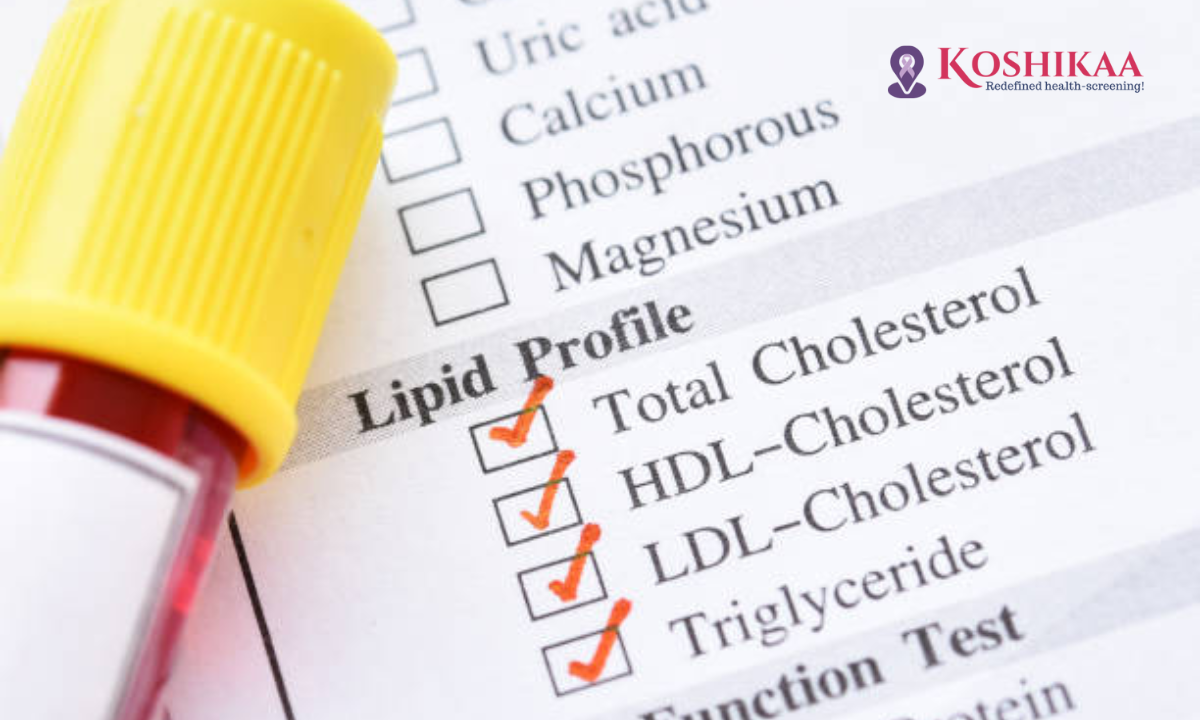
A lipid profile test (sometimes called a lipid panel) is a blood test that quantifies different types of fats in your bloodstream. In primary, cholesterol (total cholesterol, LDL “bad” cholesterol, and HDL “good” cholesterol) and triglycerides.
Since lipids travel in your blood and can accumulate in your arteries, the purpose of the lipid profile test becomes clear. This helps assess your cardiovascular health risk and guide prevention.
Why We Recommend the Lipid Profile Test and What It Detects
At Koshikaa, we ask: “What is the lipid profile test trying to tell us?” The answer lies in early detection and risk stratification. Conditions we evaluate using this blood test in Bangalore include:
- Elevated cholesterol or triglycerides, even in asymptomatic individuals.
- Screening those with a family history of heart disease, hypertension, diabetes, or obesity.
- Monitoring therapy if you are already on lipid-lowering medications or lifestyle interventions.
Ignoring this test is akin to driving a car without checking your fuel gauge. You may be heading toward an unseen problem.
When to Undergo a Lipid Profile Test?
I frequently encounter patients who say, “Should I really take a lipid profile test when I feel fine?”
The answer from our practice is yes, especially if you have risk factors. The lipid profile test, when to do it, often depends on your age, lifestyle, and comorbidities. Here’s our guideline at Koshikaa Health Screening Centre:
- Healthy adults: first screening in their 20s or 30s, then repeat every 4–6 years if no risk factors.
- Adults over 45 years old or with risk factors such as hypertension, diabetes, smoking, or obesity: annually or more frequently.
- Patients with prior abnormal results: as recommended by the physician, often every 6–12 months to monitor trends.
If you are in the Bangalore region and you seek a reliable blood test in Bangalore at a reputable health screening centre in Bangalore, selecting a facility tied to a recognized lab ensures accuracy and timely reporting.
What Happens During a Lipid Profile Test Procedure?
Here’s the step-by-step of how we perform the test at our clinic:
- You arrive, and we review your medications, fasting status, and any recent lifestyle changes.
- Typically, you fast for 9–12 hours (water allowed) before the test, unless we decide a non-fasting lipid profile is acceptable.
- A blood sample is drawn, usually from a vein in your arm. The process takes only a few minutes.
- The sample is sent for analysis, and the lipid profile test report is generated, listing total cholesterol, HDL, LDL, triglycerides, and sometimes VLDL.
- We review the results together and interpret your lipid profile test results in the context of your overall health, risk factors, and lifestyle.
How to Read Your Lipid Profile Test Report
When you receive your report, several numbers matter. Here’s how I guide patients at Koshikaa Health Screening Centre:
- Total cholesterol: best if less than 200 mg/dL (for many healthy adults).
- LDL cholesterol (“bad” cholesterol): lower is better; ideally under 100 mg/dL for most, under 70 mg/dL if you already have cardiovascular disease.
- HDL cholesterol (“good” cholesterol): higher levels are protective; ideally above 40–60 mg/dL.
- Triglycerides: best if under 150 mg/dL; elevated levels raise the risk of heart disease.
- Additional ratios (like total cholesterol/HDL) and context (age, gender, medical history) guide how we customize action.
We emphasize a single abnormal reading is not a sentence; it’s a prompt. We use the report as a starting point to plan lifestyle changes, medication if needed, and repeat testing to track progress.
Why Ignoring the Lipid Profile Test is a Risk You Shouldn’t Take
There are three major reasons why skipping this test can be dangerous:
- Silent Progression: High cholesterol and triglycerides often cause no symptoms until a major event happens (heart attack, stroke). The lipid profile test can alert us long before damage is done.
- Intervention Window: Early abnormal results give us the chance to act with diet, exercise, and medications, reducing risk significantly.
- Monitoring Effectiveness: If you undertake lifestyle changes or start therapy, repeat testing via the lipid profile test of blood helps us quantify improvement and fine-tune the strategy.
In Bangalore’s fast-paced environment, busy lifestyles, changing diets, and genetics are making dyslipidaemia more common, so preventive screening at a trusted health screening centre in Bangalore matters.
Wrapping Up
At Koshikaa Health Screening Centre, I’ve cared for many patients whose illuminated lipid profile test acted as the wake-up call they needed. By addressing abnormal lipids early, we avoid the cascading complications of cardiovascular disease, stroke, and organ damage. The lipid profile test isn’t just another blood test; it’s a vital screening tool with the power to change your health trajectory.
If you’ve not had your lipid profile test yet, ask your physician about booking it at a trusted health screening centre in Bangalore. Once you have the results, we will review them together, interpret your risk profile, and guide you through diet, exercise, medications (if needed), and lifestyle habits appropriate for your profile. Your future self will thank you for taking this step.
Remember: good health isn’t only about fixing what’s broken; it’s about protecting what is working. The lipid profile test gives us insight. Let’s use that insight to ensure your heart stays strong and your life stays full.
FAQs
Q: What is the lipid profile test?
The lipid profile test is a blood screening that measures different types of fats (lipids) in your blood. cholesterol (total, HDL, LDL) and triglycerides, to help assess your risk of cardiovascular disease.
Q: Is fasting required for the Lipid profile test?
In most cases, yes. We often ask for 9–12 hours of fasting before the test to ensure accurate levels, especially for triglycerides. However, non-fasting tests are possible in certain settings; please follow your doctor’s instructions.
Q: What should I expect during a Lipid profile test?
You’ll have a simple blood draw, usually from a vein in your arm. The procedure takes only a few minutes. Beforehand, you may need to fast as instructed by your healthcare provider.
Q: When should I do a lipid profile test?
If you’re an adult with no risk factors, every 4–6 years may suffice. But if you have conditions like diabetes, high blood pressure, obesity, or a family history of heart disease or are over 45, then annual or more frequent testing is advisable.