
As a physician at Koshikaa, I often explain how important it is to understand the results of your liver function tests. These are key tools that tell us how your liver is performing, whether there is damage, and how your body is managing overall health.
In this post I will cover the liver function test how is it done, what it means when the liver function tests blood results are abnormal, how the liver function tests enzyme levels play a role, how to read your liver function tests report, what the typical liver function tests normal values are, and how all this fits into checking your health through a blood test in Bangalore at a quality health screening centre in Bangalore.
What Are Liver Function Tests?
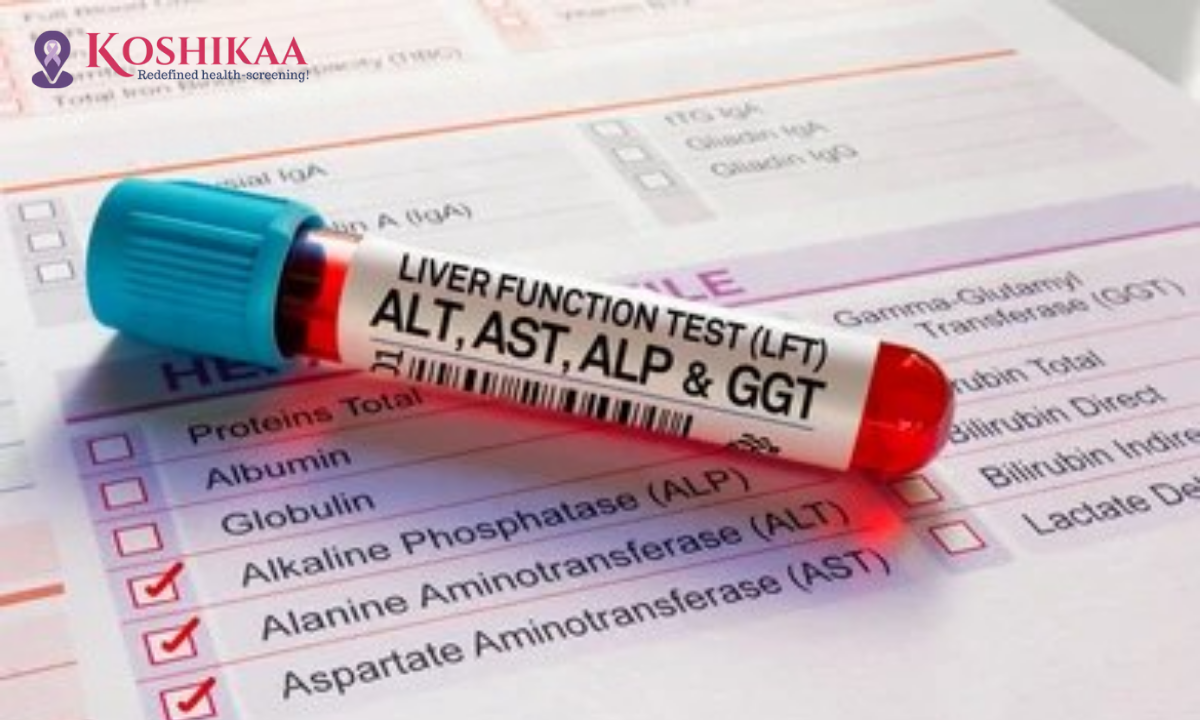
Let’s begin with what we mean by liver function tests. These are a series of blood tests designed to measure various substances produced by your liver—including enzymes, proteins, and waste products. They help assess how well your liver is working and if there is damage present.
When someone asks, “Liver function test, how is it done?”, the answer is relatively simple: a small sample of blood is drawn from a vein (usually in your arm) and sent for analysis. The lab looks at things like alanine aminotransferase (ALT), aspartate aminotransferase (AST), alkaline phosphatase (ALP) and bilirubin, which are key components.
Because the liver is central to metabolism, digestion and detoxification, the results of liver-function testing are crucial for your overall health.
How the Liver Function Tests Blood Results Help Diagnose Problems
When we examine the liver function tests enzyme levels, what we’re really looking for is how much “leakage” of liver cells (or stress to the liver) has occurred and how well the liver is carrying out its tasks of making proteins and clearing waste. For example:
- Elevated ALT and AST typically indicate hepatocellular damage (damage to the liver cells) rather than a purely bile-flow issue.
- Elevated ALP and bilirubin may point to cholestasis (a problem with bile flow) rather than only liver-cell damage.
- Low albumin or prolonged prothrombin time suggests that metabolic (synthetic) function is impaired.
Understanding your liver function tests report means putting together the pattern of values—for example, a high ALT with normal ALP suggests one kind of issue; high ALP and bilirubin with relatively normal ALT suggest another. I always explain to my patients that the results don’t tell us exactly which disease they have, but they give strong clues that direct further investigation.
It’s also important to remember that even normal values don’t guarantee the absence of disease—some conditions advance with minimal lab abnormality early on.
Typical Normal Values for Liver Function Tests
When discussing liver function tests’ normal values, it’s vital to emphasize that ranges vary by laboratory, age, sex, method, and local population. Here is a general guide:
- ALT: roughly 7–56 units/L
- AST: roughly 10–40 units/L
- ALP: roughly 44–147 units/L
- Bilirubin (total): approximately 0.1–1.2 mg/dL
- Albumin: roughly 3.5–5.0 g/dL
Again, these should only serve as approximate benchmarks. Your lab’s “normal range” should always be used for interpretation.
Why You Should Consider Getting These Tests Done
From a primary-care perspective, ordering liver function tests is part of routine screening if there are risk factors or symptoms. For instance:
- If you have fatigue, jaundice (yellowing of skin or eyes), dark urine, abdominal swelling, or pain, then blood tests, including a liver panel, are indicated.
- If you have risk factors like obesity, diabetes, or high alcohol intake, or are on medications that affect the liver, then verifying by blood test makes sense; this applies even if you’re simply attending a health screening centre in Bangalore.
- As part of a broader wellness blood test in Bangalore, these liver markers help show whether your metabolic and detoxification systems are functioning properly—thus shaping preventive care.
Interpreting and Acting on the Results
When I review results with patients, I emphasize the following:
- If enzyme levels (e.g., ALT/AST) are mildly elevated, we often investigate lifestyle factors—alcohol use, weight, medication, and viral hepatitis screening.
- If synthetic function markers (albumin, coagulation time) are compromised, we need to assess for more advanced liver disease and refer to hepatology.
- If patterns suggest cholestasis (ALP-dominant), imaging studies may be needed to look at the bile ducts or the gallbladder.
- If everything is within normal limits, but you have risk factors (e.g., non-alcoholic fatty liver disease), we still emphasize lifestyle modifications, repeat testing after some months, and possibly imaging.
- Above all, using these tests is not about anxiety but about empowerment—knowing your lab values gives you control to act.
Selecting a Good Lab for Blood Tests in Bangalore
If you are in Bangalore and considering a blood test in Bangalore, especially at a health screening centre in Bangalore, here are some tips:
- Ensure the laboratory is accredited and follows standard methods for liver function assays.
- Ask for a report that includes the reference (normal) ranges and units.
- Choose a centre that offers interpretation (physician review), not simply raw numbers.
- If abnormalities are found, the lab/centre should guide you towards appropriate follow-up.
- Part of your health screening should always combine blood tests like the liver panel with other assessments (ultrasound imaging, metabolic profile) for a full picture.
Final Thoughts
In conclusion, liver function tests are among the most important blood panels we use to assess your overall health, particularly the health of your liver, which plays a vital role in metabolism, detoxification and digestion.
Knowing how the liver function test is done and what it measures (enzymes, proteins, bile products) helps demystify the process. Interpreting liver function tests, blood results, and liver function tests enzyme levels allows us to identify early liver stress or disease.
Understanding your liver function tests report and comparing it with the liver function tests’ normal values gives you a foundation for action.
If you’re getting screened in Bangalore, selecting a reliable centre like Koshikaa in a robust health screening centre in Bangalore will help ensure accurate results and meaningful follow-up. Let’s use these tools not just reactively but proactively, so you can maintain health rather than only respond to illness.
Frequently Asked Questions (FAQs)
Q1. Are liver function tests painful or risky?
A1. No, they involve a simple blood draw—similar to other routine tests. The risk is minimal, though you may feel a slight sting when the needle is inserted.
Q2. Does an abnormal result on liver function tests mean I have liver disease?
A2. Not always. An elevation in an enzyme like ALT or AST may reflect many things, including muscle injury, medications or fatty liver. The pattern matters, and we must interpret results in context with symptoms and imaging.
Q3. How often should I repeat liver function tests?
A3. It depends on your risk profile. If you have risk factors (obesity, diabetes, alcohol use, known liver disease), we might repeat annually or as guided. If there is a known liver condition, we may repeat more frequently under specialist supervision.
Q4. Can lifestyle changes help improve abnormal liver function tests?
A4. Absolutely. Reducing alcohol, managing weight, controlling diabetes, staying physically active, and avoiding unnecessary medications are powerful ways to improve liver health and improve test results.
Q5. How do I choose a good centre for these tests in Bangalore?
A5. Choose one where you get comprehensive blood work along with expert interpretation, quick reporting, clear reference ranges, and guidance on follow-up. A health screening centre in Bangalore that offers such care ensures your liver panel is used effectively.