
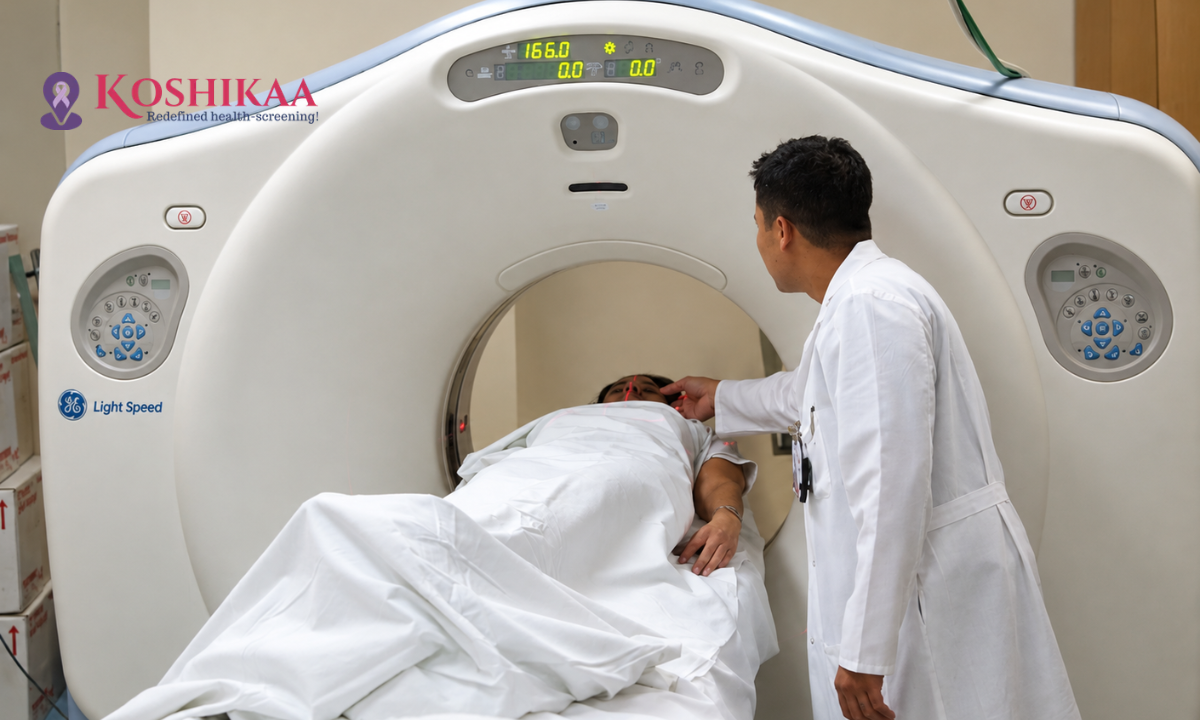
Blog Summary: CT scans are powerful diagnostic gear, however many patients fear approximately radiation publicity. This weblog breaks down What Is CT Radiation Exposure, Why Does CT Radiation Matter, the actual health dangers it can pose, How Do Doctors Decide If a CT Scan Is Really Necessary, steady limits at the range of scans, sensitive organs that may be affected, and sensible techniques you could use to Protect Myself From CT Radiation. Written in a sincere, reassuring tone, this newsletter is supposed for each person who wishes to go through a CT experiment or is looking for a CT experiment center in Bangalore.
If someday your clinical health practitioner tells you that you need to have a CT test, the number one concept that pops into your head might not be about what situations the check can discover, nor worry about the imminent analysis, but right away fixating on the phrase “radiation.” “Is this test safe? How much radiation will I be exposed to? Could this radiation leave lasting results on my body decades from now?” These questions are absolutely ordinary; every person who has to lie down in a scanner can’t assist however ask them.
This blog aims to fill that hole. We will explain the entirety you really need to recognize about CT Radiation Exposure in plain language. We won’t throw around a collection of incomprehensible medical jargon to sound professional, nor can we create pointless panic to capture interest. We will certainly help you type out all of the statistics you want to realise with peace of thoughts.
What Is CT Radiation Exposure?
A CT test, additionally known as Computed Tomography, uses X-rays to generate precise go-sectional photographs of additives of your frame, as if your body have been sliced into skinny pieces, with each element of every slice surely seen. An everyday X-ray simplest takes a flat picture, in which all organs and bones are stacked on the identical image, making much info no longer possible to differentiate. CT is one-of-a-kind: it rotates round your body, taking an image from dozens or perhaps hundreds of different angles, after which stitches a number of these separate pics together right right into a three-D stereoscopic view, so any abnormalities inside your body are in reality visible. Precisely due to this functionality, CT can hit upon issues that everyday X-rays can not—from internal bleeding and tumors to fractures hidden deep inside bones that normal X-rays can’t pick out up, imparting medical doctors with the maximum vital clues for analysis.
But shooting such clear data comes at a fee. The radiation applied in CT scans is ionizing radiation, belonging to the identical elegant class because the radiation used in normal X-rays. It inherently consists of energy that could damage cells, however because CT takes many snap shots, the full cumulative radiation dose is a lot better than that of a single normal X-ray. This extra dose is the inspiration for absolutely everyone’s safety issues, and your fear is really low priced, now not a needless over problem.
Why Does CT Radiation Matter?
Let’s be sincere, no empty communication: if you are uncovered to an excessive enough dose of ionizing radiation, it could indeed damage the DNA on your cells—the genetic cloth that governs mobile replication and characteristics. Generally, the human frame has a strong self-repair ability. A small amount of occasional DNA harm can be repaired via the body on its very own, leaving no lasting outcomes. But if you are uncovered to radiation again and again over a protracted length, or get hold of an immoderate dose unexpectedly, the frame’s restore capability cannot maintain up, and the theoretical threat of developing high-quality cancers some years later will grow slightly.
For maximum humans, the gain of having an important medical scenario detected early through CT so that you can keep a well timed remedy and preserve your lifestyles a long manner outweighs this minuscule radiation chance. Only in times wherein there can be no clinical necessity, and you over and over go through many CT scans in a short duration simply for “peace of mind,” does the cumulative dose make the danger actually well worth stressful. This is why all doctors are skilled to cautiously weigh the pros and cons earlier than ordering a CT experiment, and by no means order the test for an affected man or woman casually.
The Real Risks
Regarding the dangers of CT radiation, we will no longer exaggerate or disguise them—we can explain immediately what the dangers are and under what times you want to be worried.
- First, radiation accumulates:
Every time you’ve got a CT scan in Bangalore take a look at, the general lifetime radiation dose you bought will grow slightly, and the capability outcomes of this radiation growth on your frame. What simply matters is by no means a single CT test you had, but the normal quantity of radiation you have amassed over the years; the complete dose is the central problem that determines the quantity of threat.
- Second, the threat of cancer increases barely:
big-scale international research has found that if your cumulative lifetime radiation dose is just too immoderate, the statistical chance of growing most cancers will upward thrust slightly. This is specifically noticeable for those who go through common CT scans throughout youth, because their bodies are however growing, so the threat is more mentioned than for those uncovered to radiation as adults.
- Third, children are extra sensitive to radiation:
Children’s cells divide an entire lot quicker than adults’, their tissues are nevertheless growing, so their tolerance to radiation is some distance lower than adults’—that means they are extra prone to radiation. That is why whilst children go through CT scans now, specialised pediatric scanning protocols are used, with radiation doses much lower than those for adults, to restrict the hazard as masses as viable.
- Finally, there are radiation dangers inside the path of being pregnant:
Until it’s genuinely unavoidable, CT scans are avoided at some stage in being pregnant, specially CT scans of the stomach or pelvis. These areas are too close to the fetus in the womb, and there is a problem that immoderate radiation must harm the growing fetus, causing irreversible harm.
How Do Doctors Decide If a CT Scan Is Really Necessary?
This is probably the most reassuring part of the complete situation depending—you do not want to worry that a clinical medical doctor will order a CT test for you casually.
Before formally recommending which you have a CT scan in Bangalore, a medical physician will generally weigh numerous elements before ordering the check:
The first : Is whether or not there can be a more secure opportunity, which includes an ultrasound or MRI. Neither of those exams include ionizing radiation, so if both can deal with the identical scientific trouble and hit upon your fitness problem, a CT will definitely no longer be ordered.
The 2nd: Is whether or not the suspected condition is extremely sufficient that simplest early and accurate detection can modify your remedy plan and treat the infection. If it is also a trivial minor sickness, there may be no need to tackle even the slightest radiation risk.
The 3rd: Is to invite approximately your age, clinical records, and whether or not or not you have formerly long gone through other exams related to radiation, to maintain a song of the entire radiation you’ve amassed.
The 4th: Is whether or not a low-dose CT protocol may be utilized in location of a massive-dose one, particularly for study-up imaging or lung cancer screening, where low-dose radiation is enough, and there may be no need for a better dose.
Doctors will no longer order CT scans casually to keep time or strive; they order this test best due to the reality, in your particular state of affairs, the risk of delaying the CT test and final doubtful approximately what is wrong collectively together with your body is greater than the danger of the radiation itself, just so they advise you to have the check.
How Many CT Scans Are Safe? Is There a Limit at the Number?
Many people want to ask: what’s the maximum variety of CT scans someone could have in their lifetime? Is there a hard and fast wide variety that is risky to exceed? To be sincere, there truly isn’t always any consistent range that applies to every person.
Here is a popular reference you could use to evaluate your own state of affairs:
- If you best need a CT test as soon as every a few years because of a proper scientific condition, the additional hazard it poses is negligible, nearly no longer feasible to diploma.
- If you need frequent scans in a quick duration, which include numerous times a 12 months to display a condition, this is most effectively advocated whilst the clinical need may be very important.
- For instance, if you have maximum cancers and want ordinary CT scans to show an active most cancers that are being handled, in that case the danger of now not having the CT scan is a long way extra than the radiation threat, so medical docs will arrange for commonplace checking out.
If you have already had several CT scans these days and are unsure whether or not to have any other, you could in reality ask your physician without delay if you may switch to every other imaging approach that does not use radiation. Asking this question is not out of line—it’s far from your right as a patient.
Are There Sensitive Organs That Can Be Affected?
Yes, there are certainly some organs and tissues within the human frame which can be more sensitive to radiation than others, which means they’re much less capable of facing radiation publicity. When scanning regions near these organs, radiologists will take more protective measures to reduce the quantity of radiation those organs acquire as an awesome deal as feasible.
- The Thyroid: The Thyroid is especially sensitive to radiation, and this is even extra actual for the thyroid in kids and more youthful humans, due to the reality it’s miles despite the fact that it is growing and has a decreased tolerance. If the vicinity to be scanned is near the thyroid, together with a CT experiment of the chest or neck, a specialised defensive shield is commonly placed over the thyroid to dam pointless radiation.
- The Reproductive organs: The ovaries and testes are each touchy to radiation. So as long as the experiment is of a place near the pelvis, and the reproductive organs are not the focal point of this check—that means their scenario no longer wants to be imaged certainly—they will be shielded with a shielding system fabricated from lead. Lead can block ionizing radiation, minimizing the amount of radiation they’re exposed to.
- Bone marrow: Bone marrow is chargeable for blood production, continuously dividing to create new blood cells, so it’s far more sensitive to radiation than many distinctive frame tissues. This is one of the central reasons why cumulative lifetime radiation dose is essential: a completely high cumulative dose can harm the bone marrow’s ability to supply blood cells.
- The lens of the eye: In case you time and again undergo CT scans of the pinnacle or face, it could theoretically damage the attention’s lens, probably causing problems like cataracts. So at the same time as conditions allow, defensive measures may also be used for the eyes.
- The developing fetus: As cited in advance, the fetus is quite sensitive to radiation. That is why except there is no safer opportunity, and a CT test is important to hit upon a pregnant man or woman’s state of affairs and protect their safety, CT scans of the abdomen and pelvis are averted throughout pregnancy, to prevent harm to the unborn toddler.
Before performing a CT test, a legitimate diagnostic middle will constantly ask about your being pregnant, current test records, and relevant medical records. This is to make certain some of those protective measures are carried out, so that you aren’t unnecessarily uncovered to any extra radiation.
How Can I Protect Myself From CT Radiation?
Many people assume that in relation to scientific checks, you want to do it regardless of what the medical doctor says and can best passively take transport of it. That is not real—you’ve got a number of organizations in this count wide variety. There are several realistic steps you could take to lessen unnecessary radiation publicity without delaying the remedy you need, taking control of the situation.
- First, you must ask virtually if this test is clearly vital: an outstanding doctor will no longer assume you are being tough or distrusting of their expert judgment through asking this. On the contrary, they’ll welcome your query, as it indicates you are taking duty for your non-public body. You also can ask alongside the manner if an ultrasound or MRI may be used to cope with the same medical trouble without radiation. If there is an opportunity, you can virtually select the greater stable preference.
- Second, if conditions permit, proactively request a low-dose protocol: some scans, in particular comply-with-up or screening tests, no longer require an immoderate radiation dose to seize a usable pix. The diagnostic miracle of a low-dose CT may be as accurate as a widespread CT, however it makes use of only a fraction of the radiation, so any reduction in publicity is beneficial.
- Third, keep a private record of your imaging assessments: it does no longer need to be complicated. Just write down the date of each CT experiment and the part of the body scanned in your smartphone’s notes app or a small notebook. Later, in case you see a modern physician or go to a distinct health center, at the same time as your new medical health practitioner is ordering exams, you could show them this document. The scientific health practitioner will without delay recognize how a good deal of radiation you’ve already been exposed to, and couldn’t casually order pointless checks.
- Fourth, select a legitimate center with the correct device: Modern CT scanners are way more radiation-efficient than older machines from a decade or more ago. They can capture pixels of the same readability while the usage of a lousy lot of radiation. Reliable CT test centers in Bangalore use up to date, well-calibrated new devices, now not antique vintage machines that would divulge you to useless greater radiation. They produce the same remarkable pics, however with masses decrease radiation doses.
- Fifth, inform the scanning technician earlier if you are pregnant or approximately any recent scans you’ve had: this has to be referred to in advance before the check begins, not after you have laid down and been scanned. Telling them earlier allows the technician to alter the scanning protocol or put in force necessary protection measures in time—ready too overdue will make it not viable.
- Sixth, proactively ask approximately protecting measures: if the area to be scanned this time is close to the thyroid or reproductive organs, ask the technician if protective shields can be used for those touchy organs. There is not any need to enjoy being embarrassed about making this request; it’s far from the safety you are entitled to.
So, Is CT Scanning Safe?
For the sizable majority of sufferers, the answer is certain: CT is safe. “Is CT scanning stable” is a rather searched query online, and it’s far from completely cheap that quite a few humans search for it.
Everyone wants to take an obligation for his or her very personal frame. The honest solution, primarily based totally on present research evidence, is that the gain of having an accurate diagnosis from a CT test nearly continuously outweighs the small radiation hazard of an occasional CT take a look at.
It has saved countless lives, helped endless human beings detect health troubles early, and go back to their regular lives.
Where to Find the Best CT Scan Centre in Bangalore: Koshikaa
If you are currently seeking out a reliable, actually prepared CT test centre in Bangalore, Koshikaa, located in Banashankari, is definitely really worth your attention. Patients from the course of Bangalore come to this facility for their scans, trusting it for its accurate test effects and absolutely steady operation.
For a CT centre in Bangalore to definitely locate people at ease, it can’t rely absolutely on having a complicated piece of system. It must deal with every step of the manner, from beginning to finish, with proper care and attention. At Koshikaa, this willpower starts off evolved with its center tool: it uses more modern CT technology that regulates radiation dosage. This technology captures diagnostic pix clean enough to guide correct scientific judgments, at the same time as reducing the radiation exposure of examinees to the lowest lower priced diploma, in order that patients no longer go through useless radiation damage. Beyond CT scans, Koshikaa moreover gives a whole suite of fitness screening services. If you need extra than actually one diagnostic test, and this unmarried CT test isn’t always all you require, you could now not want to go on an excursion among a couple of unique facilities to finish all of your exams, saving you a fantastic deal of problems. Furthermore, all pricing at the centre is completely transparent, without any hidden expenses in any respect. The appointment manner for scans is also easy and simple. The middle purpose of the entire group is to expose the disturbing, daunting medical checking out method that
FAQ’s
Is the radiation from a CT test dangerous to the body?
A single CT scan handiest exposes someone to a small quantity of radiation, and for maximum people, the diagnostic value of this examination some distance outweighs the minimal chance posed by means of that radiation. You most effectively want to worry about potential damage in case you go through pointless CT scans regularly inside a quick period of time; having one experiment every so often for a clear clinical need is completely secure.
What is a low-dose CT test? When is it typically used?
A low-dose CT scan adjusts its radiation parameters downward, but the resulting imaging details are still sufficient to assist accurate medical analysis and could no longer impede a health practitioner’s capability to assess an affected person’s condition. It is usually used for lung cancer screening, ordinary comply-with-up imaging examinations, or any scenario that requires repeated scans and lengthy-time period tracking of fitness repute.
How do I remove radiation from my body after having a CT scan?
Many people have this query, traumatic that radiation will remain off their frame and cause health problems, but in truth, there’s no residual radiation that needs to be eliminated. After a routine CT scan is finished, no radioactive materials are left in the frame. You are only exposed to radiation at some stage in the scan itself; once the examination ends, there’s no residual radiation ultimate to your body at all, so there’s virtually no want to take more steps to “detoxify”.
Is CT safe for youngsters?
Great caution is exercised when acting CT scans on youngsters. A baby’s nevertheless-developing body tissues are always greater sensitive to radiation than adults’ tissues; even the same dose of radiation may have an extra potential impact on a child. Specialized paediatric CT protocols lessen the radiation dose to very low ranges. If an ultrasound or MRI can produce the same diagnostic effects, doctors will commonly prioritize those examinations that deliver no issues about ionizing radiation, and will now not rashly prescribe a CT test for a kid.
What is the maximum quantity of CT scans someone can thoroughly have in their lifetime?
There is currently no universally familiar worldwide lifetime restriction at the range of scans. There is no fixed variety that definitively states exceeding that wide variety is truly dangerous. The safe range of scans need to be decided based on the unique body component scanned whenever, the medical purpose for the examination, and every affected person’s particular medical history. For non-urgent CT scans, medical doctors will increase the interval among examinations to limit the quantity of radiation the body accumulates in a brief duration. If repeated imaging scans are needed to monitor a circumstance, low-dose protocols will also be followed as much as possible to keep the impact of radiation to an absolute minimum.
Which organs are maximum touchy to the radiation from CT scans?
The thyroid gland, reproductive organs, bone marrow, and the lens of the eye are all greater touchy to radiation than different frame tissues, and are extra liable to the consequences of radiation than other parts of the body. If these areas no longer need to be captured at some stage in the test, lead shielding gear is generally used to guard and protect those regions throughout the examination, maintaining pointless radiation exposure as close to zero as possible.
Is the radiation from a CT test harmful to the body?
A single CT check best exposes a person to a small quantity of radiation, and for maximum humans, the diagnostic price of this examination a long way outweighs the minimal chance posed through that radiation. You best need to fear potential harm if you undergo useless CT scans frequently within a brief time; having one test on occasion for a clean scientific need is truly secure.
What is a low-dose CT experiment? When is it usually used?
A low-dose CT experiment adjusts its radiation parameters downward, but the ensuing imaging statistics are nonetheless sufficient to aid correct clinical analysis and could now not impede a physician’s capability to evaluate an affected man or woman’s circumstance. It is commonly used for lung cancer screening, ordinary comply-with-up imaging examinations, or any state of affairs that calls for repeated scans and long-time period monitoring of fitness repute.
How do I put off radiation from my frame after having a CT test?
Many human beings have this query, stressing that radiation will live off their frame and cause health problems, but in truth, there may be no residual radiation that wants to be eliminated. After a normal CT test is completed, no radioactive substances are left inside the body. You are quality uncovered to radiation in the course of the test itself; once the examination ends, there may be no residual radiation final to your frame in any respect, so there may be honestly no want to take greater steps to “detoxify”.
Is CT safe for children?
Great warning is exercised even as CT scans on youngsters. An infant’s nonetheless-growing body tissues are always extra sensitive to radiation than adults’ tissues; even the equal dose of radiation can have a more capacity impact on a toddler. Specialized paediatric CT protocols reduce the radiation dose to very low stages. If an ultrasound or MRI can produce the equal diagnostic consequences, medical doctors will commonly prioritize those two examinations that deliver no worries approximately ionizing radiation, and will no longer rashly prescribe a CT scan for a kid.
What is the maximum variety of CT scans a person can very well have in their lifetime?
There is currently no universally traditional worldwide lifetime restriction at the variety of scans. There is not any fixed wide variety that definitively states exceeding that quantity is surely dangerous. The stable variety of scans have to be decided based on the precise body element scanned whenever, the clinical cause for the exam, and every affected person’s specific scientific history. For non-urgent CT scans, doctors will increase the c programming language amongst examinations to restrict the amount of radiation the frame accumulates in a short length. If repeated imaging scans are hard to display a situation, low-dose protocols may also be followed as a good buy as feasible to keep the effect of radiation to an absolute minimum.
Which organs are most sensitive to the radiation from CT scans?
The thyroid gland, reproductive organs, bone marrow, and the lens of the attention are all extra sensitive to radiation than special frame tissues, and are more liable to the outcomes of radiation than different elements of the body. If those regions do not need to be captured for the duration of the scan, lead protecting gear is typically used to shield and protect those regions at some point of the exam, preserving needless radiation publicity as close to zero as viable.
If I am concerned about radiation, can I refuse to have a CT experiment?
Yes. You can really percentage your worries together with your clinical medical doctor. You do not ought to force yourself to go through an examination you’re concerned about. You also can ask if more secure opportunity examinations which consist of an ultrasound or MRI may be used to address the same scientific problem that was delivered about the CT test being prescribed. A responsible doctor will offer a reason behind why a CT experiment is normally encouraged, and make clear that the advantages of undergoing the exam some distance outweigh the dangers, and could not disregard your worries lightly.
Is it steady to have a CT test sooner or later of being pregnant?
CT scans are generally avoided at some point of being pregnant, until the examination is virtually important to the pregnant man or woman’s health, and can’t be foregone to evaluate their condition and deliver treatment. In particular, CT scans associated with the stomach or pelvis must be averted, because even a small amount of radiation exposure to a growing fetus contains intense sensitivity that can impair the fetus’s ordinary increase and improvement.