
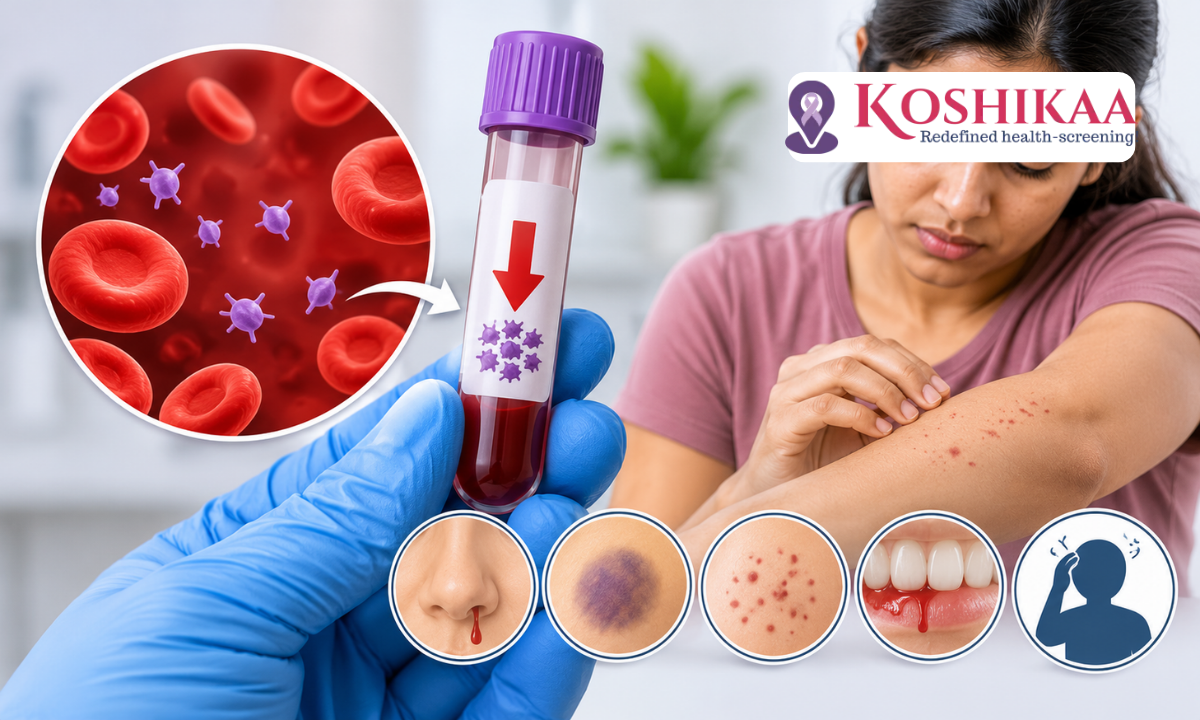
Platelets are tiny cell fragments in your blood that help stop bleeding. When you cut yourself, platelets rush to the site, stick together and help form a clot. A low platelet count, known medically as thrombocytopenia, means you have fewer platelets than expected, which can make bruising and bleeding more likely.
In Bangalore, low platelets are often discussed during the monsoon months, when dengue cases tend to rise. However, dengue is only one of many possible causes. A low platelet count can result from other viral infections, certain medicines, nutritional deficiencies, liver conditions, immune problems and, less commonly, bone marrow disorders. Sometimes, a low result is not real at all and is caused by platelets clumping in the sample.
This guide explains the normal platelet range, common causes of low platelets, symptoms to look out for, how doctors investigate the problem and, most importantly, when a low platelet count needs urgent medical attention. If your doctor has advised a blood test in Bangalore to check your platelets, or you want a routine checkup at a trusted health screening centre in Bangalore, it also helps to understand how the platelet test and related blood counts are reported.
What Is a Low Platelet Count?
How Platelets Work
Platelets are made in the bone marrow and circulate in the blood for about seven to ten days. When a blood vessel is damaged, they gather at the site, stick together and work with clotting proteins to seal the injury. Without enough platelets, small injuries may bleed for longer and bruises may appear more easily.
What Counts as Low?
A platelet count below the lower limit of the laboratory’s reference range, typically around 1.5 lakh (150,000) per microlitre, is considered low. Many people with a mildly low count have no symptoms at all, and the result is found during a routine blood test. The risk of bleeding generally increases as the count falls further.
What Is the Normal Platelet Count Range?
A typical adult platelet count is about 1.5 to 4.0 lakh per microlitre (150,000 to 400,000/µL), although some laboratories use a slightly higher upper limit. Always use the reference range printed on your own report.
As a general guide, platelet counts are often described in broad bands:
| Platelet Count | General Interpretation |
| 1.5 to 4.0 lakh/µL | Common adult reference range (some laboratories use up to 4.5 lakh) |
| 1 to 1.5 lakh/µL | Mildly low; often causes no symptoms |
| 50,000 to 1 lakh/µL | Moderately low; bruising or bleeding may occur in some people |
| Below 50,000/µL | Bleeding risk rises, particularly with injury or procedures |
| Below 20,000/µL | Higher risk of spontaneous bleeding; needs prompt medical assessment |
These bands are only a guide, not automatic treatment thresholds. Whether repeat testing, specialist referral or hospital care is needed depends on the cause, your symptoms, how quickly the count is falling, your medicines and your overall health. The platelet count is part of a CBC blood test, which also checks red and white blood cells.
What Causes Low Platelets?
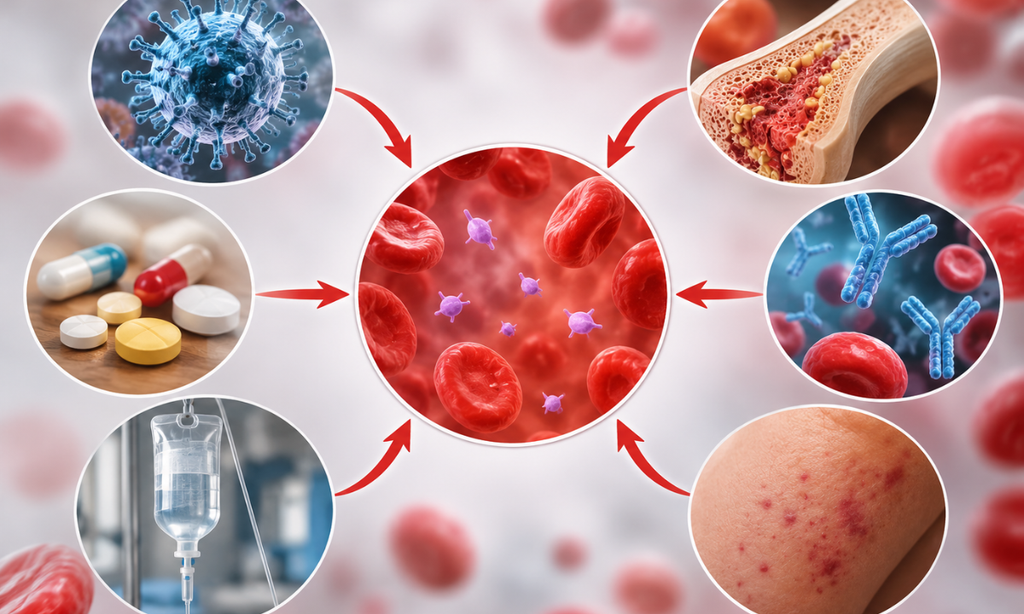
Low platelets usually happen for one of three reasons: the bone marrow makes too few platelets, the body destroys or uses up platelets too quickly, or platelets become trapped in an enlarged spleen.
Infections
• Dengue fever: one of the most common causes of low platelets in India. The count typically falls a few days into the illness, often around the time the fever starts to settle.
• Other viral infections: such as viral fevers, chikungunya, hepatitis and HIV
• Malaria and severe bacterial infections: including sepsis
Medicines and Treatments
Some medicines can lower platelets, including certain antibiotics, heparin, some anti-seizure medicines and chemotherapy. Heavy alcohol use can also reduce platelet production.
Immune Conditions
In immune thrombocytopenia (ITP), the immune system mistakenly destroys platelets. Platelets can also be affected in autoimmune conditions such as lupus.
Nutritional Deficiencies
Low levels of vitamin B12 or folate can contribute to reduced platelet production, usually alongside anaemia. They are a less common cause on their own.
Liver Disease and an Enlarged Spleen
Long-term liver disease can enlarge the spleen, which then holds on to more platelets than usual. The liver also produces a hormone that helps the body make platelets, so liver disease can reduce production too.
Pregnancy
A mild fall in platelets can occur in late pregnancy and is often harmless, a condition known as gestational thrombocytopenia. However, a clinical assessment is needed to distinguish this from more serious conditions such as pre-eclampsia, so pregnant women should always discuss a low result with their doctor.
Bone Marrow Conditions
These are less common but important causes. Low platelets can be caused by conditions affecting the bone marrow, such as leukaemia, lymphoma, aplastic anaemia or myelodysplastic syndromes. These are usually accompanied by changes in other blood counts.
Pseudothrombocytopenia: When the Result Is Not Real
Sometimes platelets clump together in the blood sample tube, causing the analyser to count fewer than are actually present. This is called pseudothrombocytopenia and is harmless. If a low count is unexpected, the laboratory or your doctor may repeat the test using a different type of tube or examine a blood smear under a microscope.
What Symptoms Can Occur With Low Platelets?
Many people with mildly low platelets have no symptoms. When symptoms do occur, they may include:
• Easy or unexplained bruising
• Tiny red or purple dots on the skin, called petechiae, often on the legs
• Bleeding gums or frequent nosebleeds
• Heavier or longer menstrual periods
• Prolonged bleeding from small cuts
• Blood in the urine or stools, or black stools
Symptoms of the underlying cause, such as fever, body aches and rash with dengue, may also be present.
How Do Doctors Investigate a Low Platelet Count?
Confirming the Result
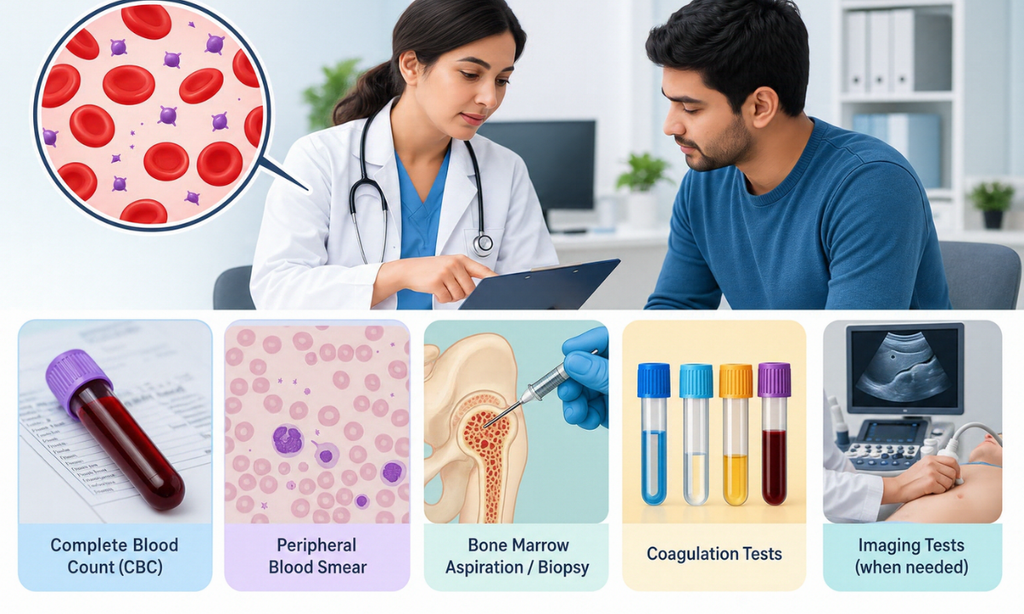
The first step is often to repeat the platelet count and check whether the low result is real. A peripheral blood smear, in which a specialist looks at the blood under a microscope, can confirm the platelet count and look for clumping or abnormal cells.
Looking for the Cause
Depending on your symptoms and history, your doctor may recommend:
- A complete blood count to check red and white blood cells
- Dengue tests, such as NS1 antigen or antibody tests, if you have a fever
- Malaria tests and other infection tests
- Vitamin B12 and folate levels
- Liver function tests
- An abdominal ultrasound to check the size of the liver and spleen
- In selected cases, specialist tests such as a bone marrow examination
Reviewing Your Medicines
Your doctor will review any medicines and supplements you take, as stopping a medicine that lowers platelets can allow the count to recover.
When Is a Low Platelet Count Urgent?
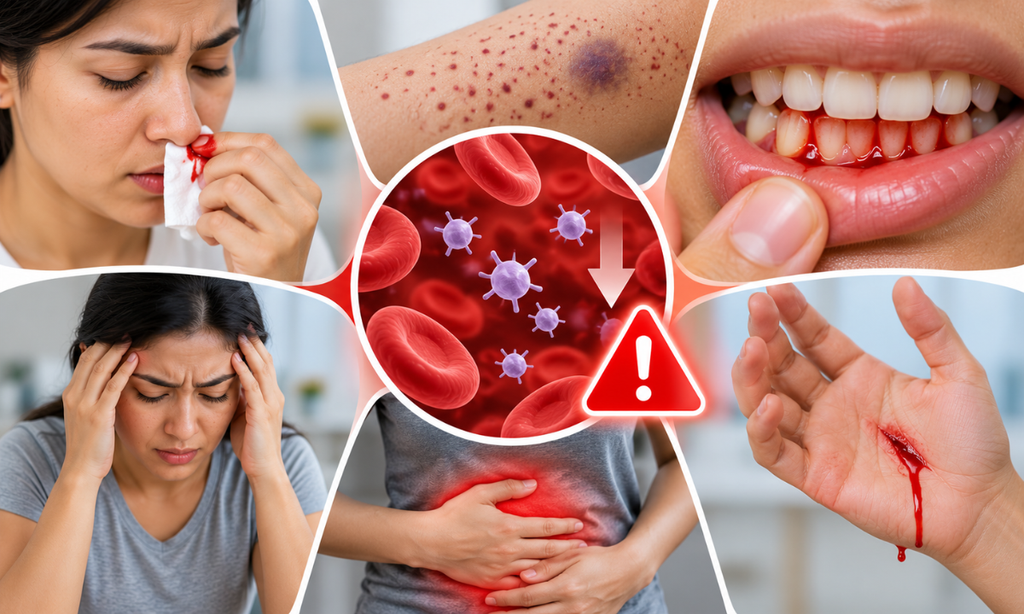
Seek urgent medical care if you have a low platelet count and:
• Bleeding that will not stop, such as a persistent nosebleed or bleeding gums
• Vomiting blood, or passing black or bloody stools
• Blood in the urine
• A severe headache, confusion or drowsiness, which can be signs of bleeding in the brain
• Widespread bruising or petechiae appearing quickly
If you have dengue, seek medical help immediately if you notice any warning signs:
• Severe abdominal pain or tenderness
• Persistent vomiting
• Bleeding from the gums or nose, blood in vomit, or black, tarry stools
• Red spots or bleeding under the skin
• Lethargy, restlessness, irritability or confusion
• Cold, clammy or pale skin
• Passing much less urine than usual
• Difficulty breathing
These warning signs often appear around the time the fever settles, so do not assume you are recovering just because the fever has gone. A falling platelet count on its own does not mean dengue is severe, and a normal count does not rule dengue out. Platelets are monitored as one part of a wider clinical assessment.
How Is the Underlying Cause Managed?
Treatment depends entirely on the cause:
• Viral infections such as dengue: most people recover with rest, fluids and careful monitoring of platelets and other blood counts, as advised by a doctor. Platelet transfusion is needed only in specific situations.
• Medicine-related causes: the doctor may stop or change the medicine responsible.
• Nutritional deficiencies: vitamin B12 or folate supplements, as prescribed.
• Immune thrombocytopenia: may be monitored or treated with specific medicines, depending on severity.
• Liver disease or bone marrow conditions: need specialist management.
If your platelet count is low, do not start aspirin, ibuprofen or other NSAID painkillers without advice from a doctor or pharmacist, as they can affect how platelets work and increase the risk of bleeding. Paracetamol is often preferred for fever or pain, but the dose and suitability should be confirmed with a clinician, particularly during suspected dengue. Be cautious about home remedies or supplements that claim to raise platelets quickly; they should never replace medical care.
Practical Precautions While Your Platelets Are Low
If your doctor has told you your platelet count is low, simple everyday precautions can help reduce the risk of bleeding while the cause is being treated:
• Use a soft toothbrush and be gentle when flossing
• Use an electric razor rather than a blade
• Avoid contact sports and activities with a high risk of falls or injury
• Take care when using knives, tools or garden equipment
• Tell your dentist and any other doctor about your low platelets before procedures
• Avoid alcohol, which can lower platelet production further
• Do not take new medicines or supplements without checking with your doctor
These precautions are especially important when platelets are very low. Your doctor will advise how strict you need to be based on your count and its cause.
How Is a Platelet Count Test Done?
A platelet count is measured from a small blood sample taken from a vein in your arm, usually as part of a CBC. The test takes only a few minutes, and no fasting is needed unless other tests require it. If you are being monitored during an illness such as dengue, home sample collection can make repeated testing easier, and comparing results over consecutive days helps your doctor see whether your count is falling or recovering.
Frequently Asked Questions
What platelet count is dangerous?
Bleeding risk rises as platelets fall below about 50,000 per microlitre, and spontaneous bleeding becomes more likely below about 20,000. However, any low platelet count with bleeding or warning signs needs prompt medical assessment, whatever the number.
Does a low platelet count always mean dengue?
No. Dengue is a common cause in India, but low platelets can also result from other infections, medicines, nutritional deficiencies, liver disease, immune conditions and bone marrow problems.
Can low platelets be temporary?
Yes, in many cases. Platelets often recover once the underlying cause, such as a viral infection or a medicine, is treated or resolved. After dengue, for example, counts usually start to rise as the person recovers.
How often should platelets be checked during dengue?
Your doctor will decide, but platelet counts are often checked daily or every few days during the critical phase of dengue, alongside other blood counts.
Can a low platelet count be a lab error?
Sometimes. Platelets can clump in the sample tube and give a falsely low result, called pseudothrombocytopenia. A repeat test or blood smear can confirm the true count.
Do I need to fast for a platelet count test?
No. Fasting is not needed for a platelet count or CBC unless other tests requiring fasting are collected at the same time.
Conclusion
A low platelet count can have many causes, from common viral infections such as dengue to medicines, nutritional deficiencies and, less often, more serious conditions. Many people with mildly low platelets have no symptoms, but bleeding or dengue warning signs need urgent medical attention. Understanding your result in context, with the help of your doctor, is the best way to decide on the right next step.
If you need a platelet count or CBC, explore Koshikaa’s blood test services in Bengaluru, with home sample collection available, or call our Banashankari centre on +91 7996666106.
References