
Seeing “ESR: High” on a blood test report can be worrying, especially if you feel well. The good news is that high ESR levels are common, and in many cases the cause is mild, temporary or easy to explain. At the same time, a raised ESR can be an important clue that something needs attention, so it is worth understanding what the result means.
ESR, or erythrocyte sedimentation rate, is a simple blood test that measures how quickly red blood cells settle to the bottom of a test tube. When there is inflammation in the body, certain proteins in the blood make red cells clump together and sink faster, which raises the ESR.
The key point to remember is that ESR is a non-specific test. It can show that inflammation may be present, but it cannot tell your doctor where the inflammation is or what is causing it. This guide explains the normal ESR range, common causes of a high result, which other tests your doctor may recommend, such as a CBC blood test, and when to seek medical advice. If you need a blood test in Bangalore to follow up on your result, or a routine checkup at a trusted health screening centre in Bangalore, understanding your report first will help you ask your doctor the right questions.
What Is an ESR Blood Test?
How the ESR Test Works
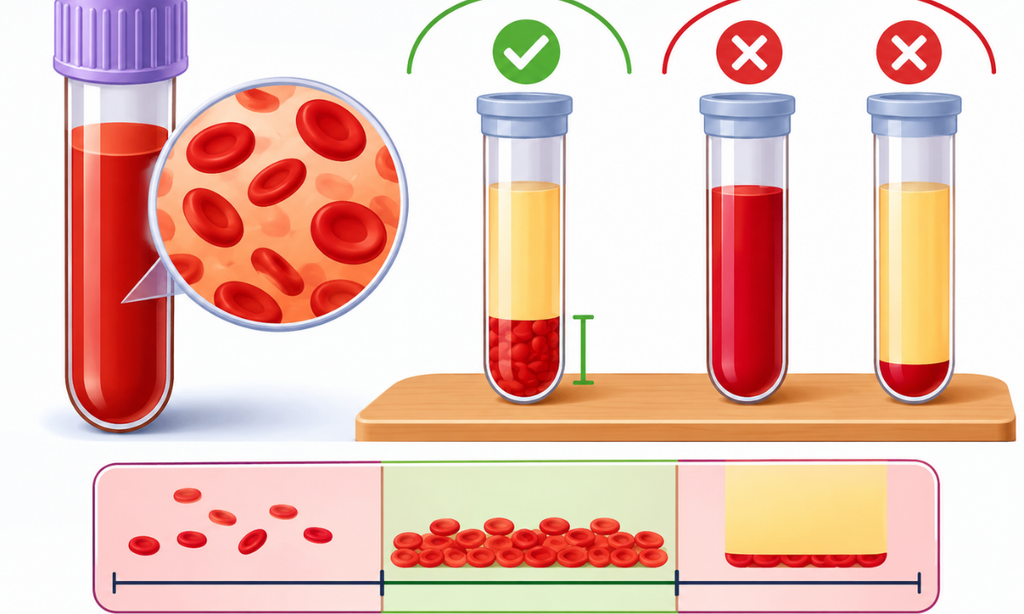
For an ESR test, a small sample of blood is placed in a tall, thin tube. The laboratory measures how far the red blood cells fall in one hour, and the result is reported in millimetres per hour (mm/hr). The most widely used method is the Westergren method.
Normally, red blood cells settle slowly. During inflammation, proteins such as fibrinogen and immunoglobulins increase in the blood. These proteins cause red cells to stick together in stacks, which are heavier and settle faster, giving a higher ESR.
Why Do Doctors Order an ESR Test?
Doctors may request an ESR test to:
• Look for signs of inflammation when symptoms are unclear, such as persistent fever, fatigue or weight loss
• Help assess suspected inflammatory conditions, such as rheumatoid arthritis or polymyalgia rheumatica
• Monitor how an inflammatory condition is responding to treatment
• Support the investigation of certain infections, including tuberculosis
ESR is often requested together with a complete blood count as part of a routine panel. Our guide to the Hb, TC, DC, ESR and platelet test explains how these tests work together.
What Is the Normal ESR Range?
Typical ESR Reference Ranges
Normal ESR values vary with age and sex. Typical upper limits using the Westergren method are:
• Men under 50: up to 15 mm/hr
• Men 50 and over: up to 20 mm/hr
• Women under 50: up to 20 mm/hr
• Women 50 and over: up to 30 mm/hr
Some clinicians use a rough age-based guide: age divided by two for men, or age plus 10 divided by two for women. This is only an approximation. Always interpret ESR using your laboratory’s reference range and your doctor’s assessment.
Why ESR Changes With Age, Sex and Pregnancy
ESR naturally rises with age and is generally higher in women than in men. It also increases during pregnancy, particularly in the later months. This means a mildly raised ESR in an older adult or a pregnant woman may be entirely normal. Always compare your result with the reference range printed on your own report.
What Can Cause High ESR Levels?
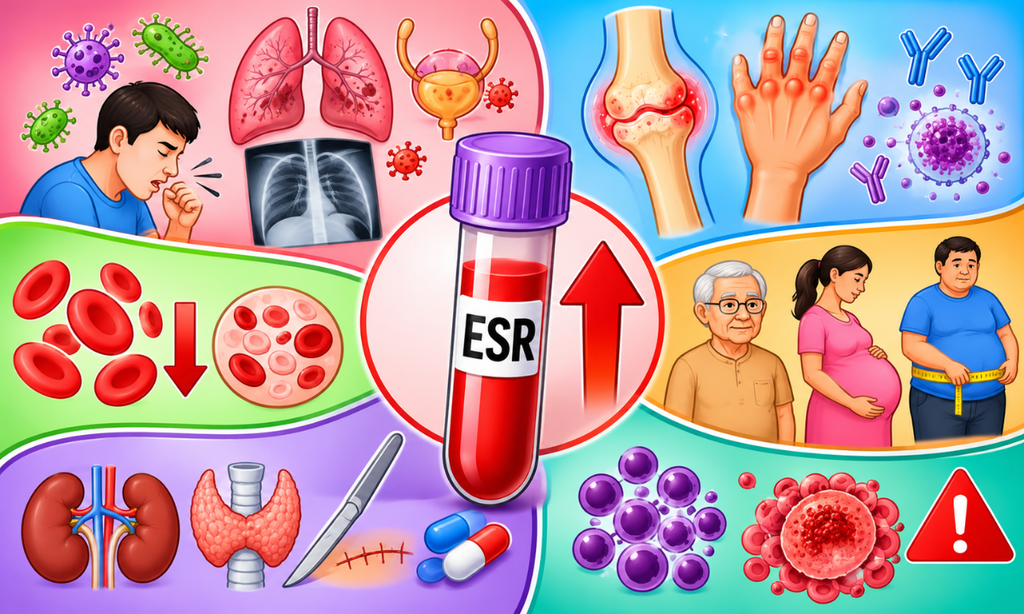
A high ESR has many possible causes. Some are serious, but many are common and manageable.
Infections
Bacterial infections, such as pneumonia, urinary tract infections, bone infections and infections of the heart valves, can raise ESR. In India, tuberculosis is an important cause to consider when ESR is persistently high, particularly with a long-standing cough, fever, night sweats or weight loss. However, a raised ESR cannot confirm TB or identify which infection is present; specific tests are needed.
Autoimmune and Inflammatory Conditions
Conditions in which the immune system attacks the body’s own tissues often raise ESR. These include rheumatoid arthritis, lupus, polymyalgia rheumatica and giant cell arteritis, an inflammation of blood vessels that usually affects people over 50. Because ESR is non-specific, it can support but never confirm these diagnoses.
Anaemia and Other Blood Factors
Anaemia can increase ESR, because fewer red cells settle more quickly. Changes in blood proteins, such as in kidney disease, can also raise the result.
Other Common Causes
• Older age and pregnancy
• Obesity
• Chronic kidney disease
• Thyroid conditions
• Recent surgery or injury
•Some medicines
Less Common but Important Causes
A very high ESR, particularly above 100 mm/hr, is more likely to have a significant cause, such as a serious infection, an autoimmune or inflammatory condition, or, less commonly, certain blood cancers. A very high ESR is not diagnostic of any one condition, and most people with a raised ESR do not have cancer, but a very high result always needs prompt medical assessment.
Does a High ESR Always Mean Infection?
No. Infection is only one of many causes. ESR can rise with autoimmune conditions, anaemia, kidney disease, pregnancy, older age and other factors. In some people, a mildly raised ESR is found on a routine test with no underlying illness at all.
Equally, a normal ESR does not rule out infection or inflammation. Some conditions, particularly in the early stages, may not raise ESR, and occasionally ESR can be normal even in giant cell arteritis. This is why doctors always interpret the result alongside your symptoms, examination findings and other tests.
What Other Tests Might a Doctor Recommend?
If your ESR is high, your doctor may select further tests based on your symptoms, examination and history. Not every raised ESR needs further testing, and the examples below are chosen case by case:
• C-reactive protein (CRP): another inflammation marker that rises and falls more quickly than ESR, making it useful for tracking recent changes
• Complete blood count (CBC): to check for anaemia, infection or blood disorders. Read our guide to the CBC blood test to learn more.
• Kidney and liver function tests: to look for organ-related causes
• Rheumatoid factor, anti-CCP or ANA: only if symptoms or examination suggest an autoimmune condition
• Urine tests: to check for infection or kidney problems
• Chest X-ray or tests for tuberculosis: only if exposure, symptoms or findings suggest a chest infection or TB
• Serum protein electrophoresis: in selected cases, to look for abnormal proteins
Not everyone needs all of these tests. Your doctor will choose the most relevant ones based on your situation.
How Are High ESR Results Evaluated?
Looking at the Whole Picture
Doctors rarely act on an ESR result alone. They consider how high the ESR is, your age and sex, your symptoms, physical examination and other blood test results. A mildly raised ESR in someone who feels well may simply be monitored, while a very high ESR with symptoms needs prompt investigation.
Repeating the Test
ESR changes slowly, so your doctor may repeat the test after a few weeks to see whether it is rising, falling or stable. Bringing previous reports to your appointment helps your doctor compare results and spot a trend. After an infection, ESR can stay raised for several weeks even when you are feeling better.
Monitoring Treatment
For people with known inflammatory conditions, such as rheumatoid arthritis or polymyalgia rheumatica, ESR is often used alongside CRP and symptoms to check how well treatment is working.
What Does a Low ESR Mean?
A low ESR is much less common as a concern and is usually not significant on its own. It may be seen in conditions that change the number or shape of red blood cells, such as polycythaemia, where the blood contains too many red cells, or sickle cell disease. Very high white blood cell counts and some protein abnormalities can also lower ESR. If your ESR is low but you feel well and your other results are normal, it is unlikely to need further action.
How Is the ESR Test Done?
The ESR test uses a small sample of blood taken from a vein in your arm, usually at the same time as other blood tests. The collection takes only a few minutes. No special preparation is needed, and you can eat and drink normally unless other tests require fasting. Tell the team if you are pregnant, have had a recent illness or take any regular medicines, as these can influence the result.
Can You Lower a High ESR?
ESR is a marker, not a disease, so it cannot be treated directly. Instead, the aim is to find and manage the underlying cause. When an infection is treated, anaemia is corrected or an inflammatory condition is controlled, ESR usually falls over time.
General healthy habits, such as maintaining a healthy weight, staying active, eating a balanced diet and not smoking, support overall health, but they are not a substitute for investigating a high ESR. Avoid starting supplements or remedies that claim to lower ESR without speaking to your doctor.
When Should You Seek Medical Advice?
Speak to your doctor if your ESR is high, especially if you also have:
• Fever lasting more than a few days
• Unexplained weight loss or night sweats
• A persistent cough
• Joint pain, swelling or morning stiffness
• Persistent tiredness or weakness
If you are over 50 and develop a new persistent headache, jaw pain when chewing, scalp tenderness, or any change or loss of vision, seek urgent medical care. These symptoms can sometimes indicate giant cell arteritis, an inflammatory condition that needs prompt assessment to protect your eyesight.
Frequently Asked Questions
What is considered a high ESR level?
It depends on your age and sex. As a general guide, an ESR above 15 mm/hr in men under 50 or above 20 mm/hr in women under 50 is considered raised. Upper limits are higher in older adults.
Is a high ESR dangerous?
Not necessarily. A mildly raised ESR is common and often linked to minor or temporary causes. A very high ESR, especially above 100 mm/hr, is more likely to have a significant cause and needs prompt assessment.
Can stress cause a high ESR?
Stress itself is not a recognised direct cause of a high ESR. However, illness, poor sleep and other factors that often accompany stress may affect your health. If your ESR is high, your doctor will look for a medical cause.
Can ESR be high with no symptoms?
Yes. A mildly raised ESR is sometimes found on a routine test in people who feel well, particularly older adults and pregnant women. Your doctor may simply repeat the test or check for common causes such as anaemia.
Does a high ESR mean cancer?
Rarely. Most high ESR results are caused by infection, inflammation, anaemia, pregnancy or older age. Some cancers can raise ESR, but a high result alone does not mean cancer.
How long does it take for ESR to return to normal?
ESR changes slowly. After an infection or flare-up, it may take several weeks to return to normal, even when you feel better.
Do I need to fast for an ESR test?
No. Fasting is not needed for an ESR test unless other tests requiring fasting are collected at the same time.
Conclusion
A high ESR is a sign that inflammation may be present somewhere in the body, but it does not identify the cause. Many high results are linked to common, treatable conditions, while a very high ESR needs prompt investigation. Your doctor will interpret the result with your symptoms, examination and other tests to decide on the right next step.
If you need an ESR test or a complete blood count, explore Koshikaa’s blood test services in Bengaluru or call our Banashankari centre on +91 7996666106.
References