
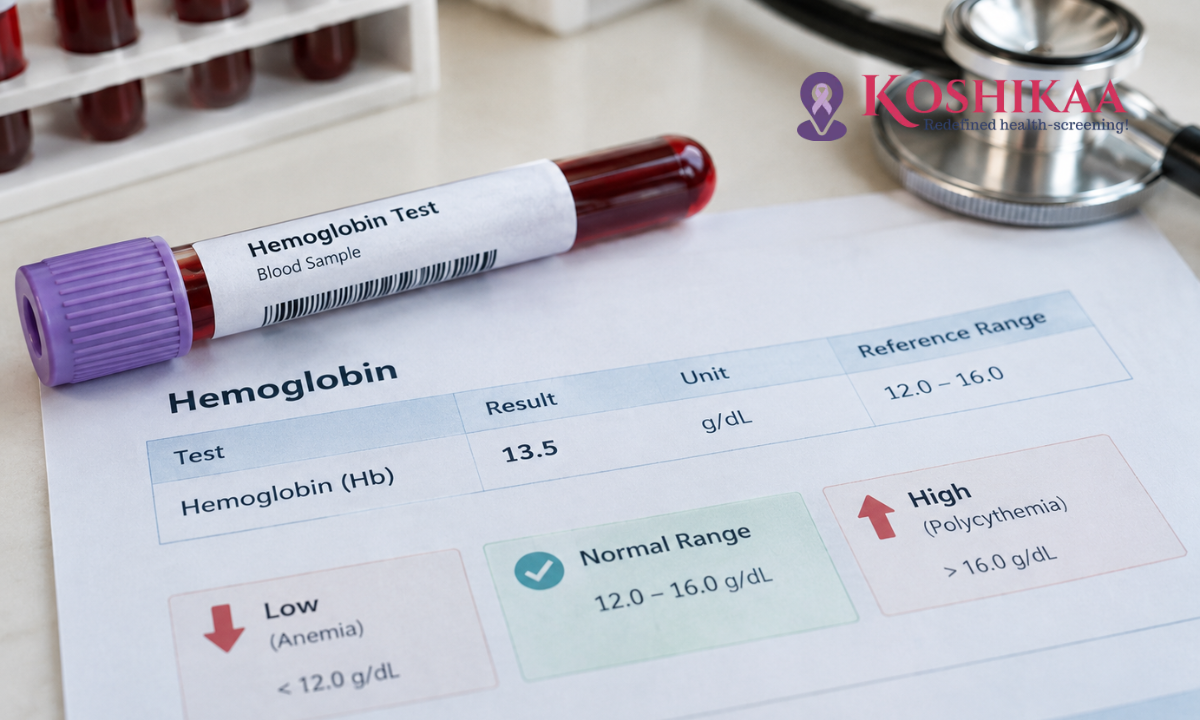
Haemoglobin is the iron-rich protein inside your red blood cells that carries oxygen from your lungs to every part of your body and helps carry carbon dioxide back to the lungs. When haemoglobin levels fall too low, your tissues receive less oxygen, which can leave you feeling tired, weak or breathless.
A haemoglobin test measures how much haemoglobin is in your blood. It is one of the most common blood tests in India, where anaemia affects a large proportion of the population, particularly women and children. The test is usually done as part of a complete blood count, but it can also be requested on its own. It is different from the HbA1c test, which measures glycated haemoglobin to show your average blood sugar over the past few weeks.
This guide explains what the haemoglobin test measures, normal ranges for adults, children and pregnancy, what low and high levels may mean, how the test is done and when to speak to a doctor. As with any blood test, a single result should always be interpreted alongside your symptoms and medical history by a doctor, such as the specialists at Koshikaa Group.
What Is a Haemoglobin Test?
What Does the Test Measure?
The haemoglobin test, often written as Hb or Hgb on reports, measures the concentration of haemoglobin in your blood. It is reported in grams per decilitre (g/dL). Some laboratories report it in grams per litre (g/L), where 12 g/dL is the same as 120 g/L.
Why Is Haemoglobin Important?
Every cell in your body needs oxygen to function. Haemoglobin picks up oxygen in the lungs and releases it in the tissues. If you do not have enough haemoglobin, your heart and lungs have to work harder to deliver oxygen, which explains many of the symptoms of anaemia.
Why Might a Doctor Recommend a Haemoglobin Test?
A doctor may recommend a haemoglobin test to:
• Investigate tiredness, weakness, breathlessness, dizziness or pale skin
• Check for anaemia during routine health check-ups
• Monitor pregnancy, when haemoglobin levels are checked regularly
• Monitor long-term conditions such as kidney disease, chronic inflammatory conditions or some cancers
• Check blood levels before surgery
• Monitor treatment for anaemia, such as iron supplements
Haemoglobin is usually measured as part of a CBC blood test, which also reports red cell indices, white blood cells and platelets.
What Is the Normal Haemoglobin Range?
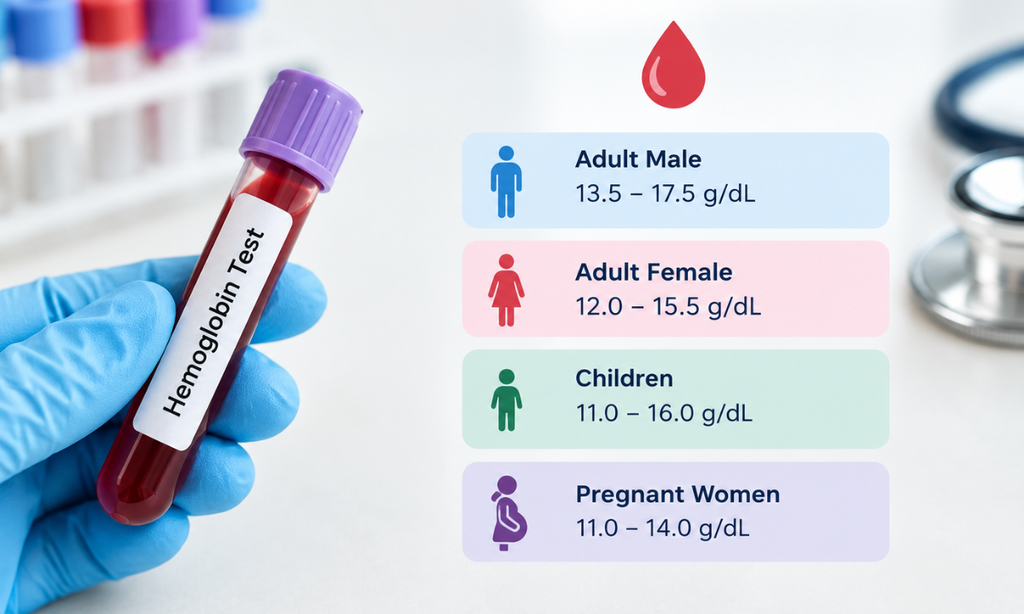
Normal haemoglobin levels vary with age, sex, pregnancy and altitude, and laboratories may use slightly different reference ranges. Always use the reference range printed on your own report.
Normal Adult Ranges by Sex
| Group | Typical Reference Range |
| Adult men | 13.0 to 17.0 g/dL |
| Adult women (not pregnant) | 12.0 to 16.0 g/dL |
Women generally have lower haemoglobin than men, partly because of blood loss during menstruation and differences in hormone levels.
Haemoglobin Levels in Children and Pregnancy
Haemoglobin levels in children change with age. Newborn babies have much higher levels than adults, which then fall during the first months of life and gradually rise through childhood towards adult values. Your child’s doctor will interpret results using age-specific ranges.
During pregnancy, the volume of blood plasma increases more than the number of red blood cells, so haemoglobin naturally falls slightly. WHO thresholds for anaemia in pregnancy vary by trimester: below 11.0 g/dL in the first and third trimesters, and below 10.5 g/dL in the second trimester. Your doctor will interpret your result alongside your stage of pregnancy and other blood tests. Pregnant women in India are routinely checked for anaemia and are often advised to take iron and folic acid supplements as part of antenatal care.
What Causes Low Haemoglobin?
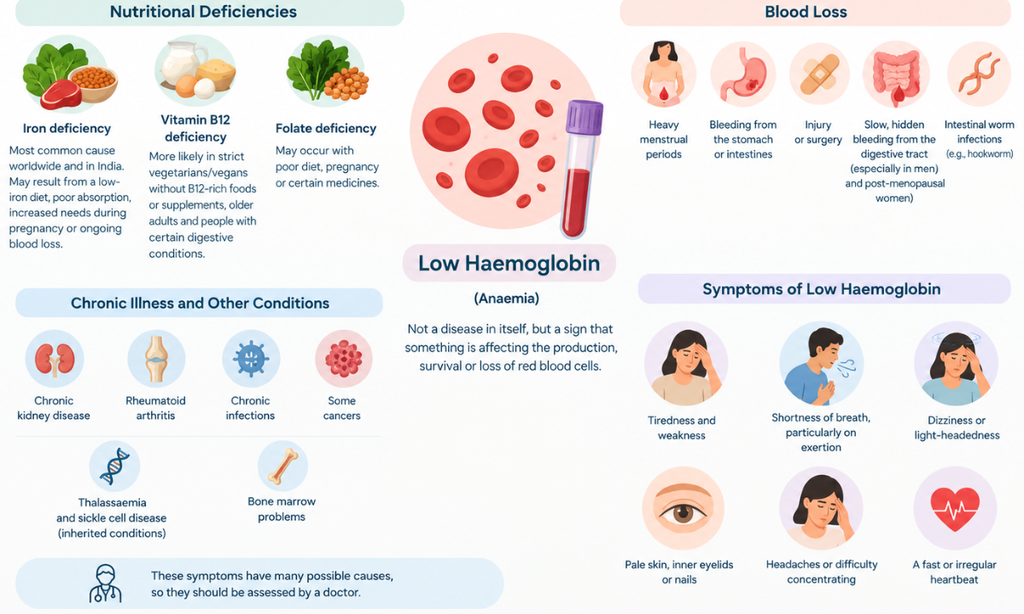
Low haemoglobin is called anaemia. It is not a disease in itself but a sign that something is affecting the production, survival or loss of red blood cells.
Nutritional Deficiencies
•Iron deficiency: the most common cause of anaemia worldwide and in India. It may result from a diet low in iron, poor absorption, increased needs during pregnancy or ongoing blood loss.
•Vitamin B12 deficiency: more likely in people following a strict vegetarian or vegan diet without B12-rich foods or supplements, older adults and people with certain digestive conditions. It typically causes enlarged red blood cells, with or without anaemia.
•Folate deficiency: may occur with poor diet, pregnancy or certain medicines.
Blood Loss
Heavy menstrual periods, bleeding from the stomach or intestines, injury or surgery can all reduce haemoglobin. Slow, hidden bleeding from the digestive tract is an important cause to rule out, particularly in men and in women after menopause. Intestinal worm infections, such as hookworm, can also cause slow blood loss and remain a cause of iron deficiency in some parts of India.
Chronic Illness and Other Conditions
Long-term conditions such as chronic kidney disease, rheumatoid arthritis, chronic infections and some cancers can lower haemoglobin. Inherited conditions such as thalassaemia and sickle cell disease, as well as bone marrow problems, can also cause anaemia.
Symptoms of Low Haemoglobin
Mild anaemia may cause no symptoms. As levels fall, you may notice:
• Tiredness and weakness
• Shortness of breath, particularly on exertion
• Dizziness or light-headedness
• Pale skin, inner eyelids or nails
• Headaches or difficulty concentrating
• A fast or irregular heartbeat
These symptoms have many possible causes, so they should be assessed by a doctor.
What Can High Haemoglobin Levels Mean?
High haemoglobin is less common than low haemoglobin. It means there is more haemoglobin in a given volume of blood than expected.
Common Causes of High Haemoglobin
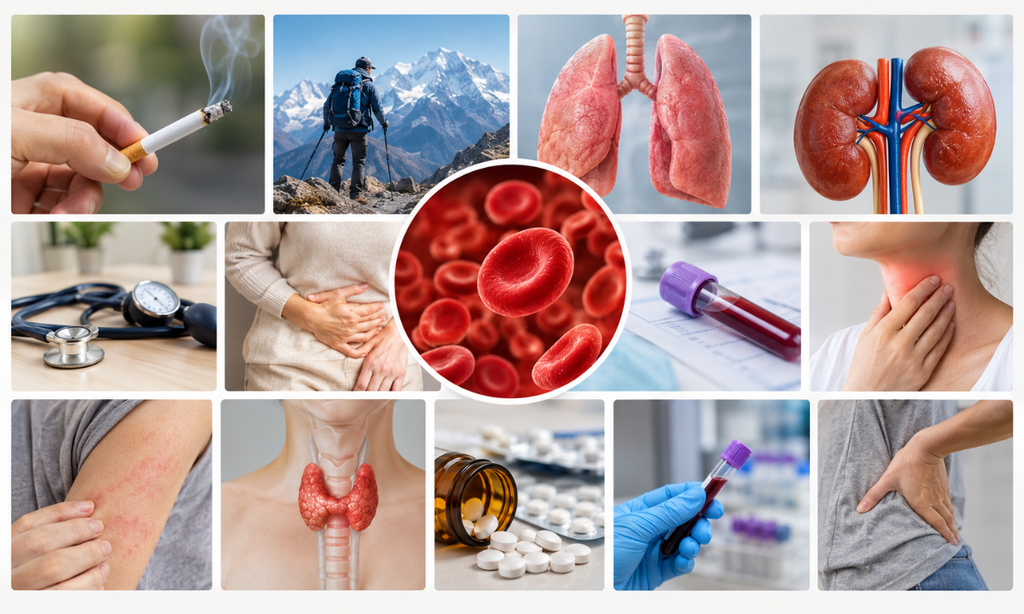
•Dehydration: less fluid in the blood makes haemoglobin appear higher, and levels return to normal once you are rehydrated
•Smoking: the body produces more red blood cells to compensate for carbon monoxide exposure
•Living at high altitude: lower oxygen levels prompt the body to make more red blood cells
•Long-term lung or heart conditions: such as chronic obstructive pulmonary disease (COPD)
•Certain medicines: including testosterone therapy
Rarer Causes
Rarely, high haemoglobin is caused by a bone marrow condition called polycythaemia vera, in which the body produces too many red blood cells. Some kidney conditions can also increase red blood cell production. Very high haemoglobin can thicken the blood and increase the risk of clots, so it always needs medical assessment.
How Is the Hb Test Performed?
Sample Collection
A trained phlebotomist takes a small sample of blood from a vein in your arm. The process takes only a few minutes, and you may feel a brief pinch. In some settings, a finger-prick test is used for quick screening, but a laboratory test from a vein is more accurate.
Do You Need to Prepare?
No special preparation is usually needed for a haemoglobin test, and fasting is not required unless other tests, such as blood sugar or a lipid profile, are being collected at the same time. Drink water as normal, as dehydration can affect the result. Tell the team about any iron or vitamin supplements, recent blood transfusions or pregnancy.
When Will You Get Your Results?
At Koshikaa, most blood test reports are available within 24 to 48 hours.You can book a haemoglobin test or CBC through our blood test services in Bengaluru, with the option of home sample collection.
How to Read Your Haemoglobin Test Report
Your report will show your haemoglobin result, the unit and the laboratory’s reference range. A result marked low (L) or high (H) falls outside that range.
A mildly low or high result is not always a cause for concern, especially if you feel well. Your doctor will look at your haemoglobin together with other values in your report, such as MCV, which shows the average size of your red blood cells. Small red cells may point to iron deficiency or thalassaemia trait, while large red cells may suggest vitamin B12 or folate deficiency. Comparing your result with previous reports can also show whether levels are changing over time. If your haemoglobin is low, your doctor may recommend follow-up tests such as serum ferritin and iron studies, vitamin B12 or folate levels, a reticulocyte count or haemoglobin electrophoresis, depending on the clinical picture, to find the cause before starting treatment.
For a broader look at blood counts reported alongside haemoglobin, see our guide to the Hb, TC, DC, ESR and platelet test.
How Can You Support Healthy Haemoglobin Levels?
If your haemoglobin is low because of a nutritional deficiency, diet can help alongside the treatment your doctor recommends:
•Iron-rich foods: green leafy vegetables, pulses and legumes, millets such as ragi and bajra, eggs, meat, poultry and fish
•Vitamin C: pair plant-based iron sources, such as dal, beans, spinach and fortified cereals, with vitamin C-rich foods such as lemon, amla, guava, citrus fruits or capsicum to support absorption
•Vitamin B12 and folate: dairy products, eggs, fish and meat provide B12, while leafy greens and legumes provide folate
•Timing of tea and coffee: if you are trying to improve iron levels, have tea or coffee between meals rather than immediately with iron-rich meals or iron supplements, unless your clinician advises otherwise
Diet alone will not correct every type of anaemia. Do not start iron, vitamin B12 or other supplements based on a single low haemoglobin result. The right test and treatment depend on the cause, and inappropriate supplementation can delay diagnosis or cause side effects. Supplements should be guided by a clinician, especially when the cause is blood loss, thalassaemia or a chronic condition.
When Should You Consult a Doctor About Your Results?
Speak to a doctor if:
• Your haemoglobin is outside the reference range on your report
• You have persistent tiredness, breathlessness or dizziness
• You notice signs of bleeding, such as black stools, blood in stools or very heavy periods
• Your levels remain low despite treatment
• You have a long-term condition that affects your blood counts
Seek urgent medical care if you have chest pain, severe breathlessness or fainting.
Frequently Asked Questions
What is a normal haemoglobin level for women?
For adult women who are not pregnant, a typical reference range is about 12.0 to 16.0 g/dL, although laboratories vary. During pregnancy, WHO thresholds for anaemia are below 11.0 g/dL in the first and third trimesters and below 10.5 g/dL in the second. Always use the range on your own report.
What is a normal haemoglobin level for men?
For adult men, a typical reference range is about 13.0 to 17.0 g/dL, although laboratories may use slightly different limits.
What is a dangerously low haemoglobin level?
There is no single number that applies to everyone. Very low levels, often below about 7 to 8 g/dL, or a rapid fall, may need urgent assessment, particularly with symptoms such as breathlessness, chest pain or fainting. Your doctor will consider the cause, your symptoms and your overall health.
Can dehydration affect haemoglobin?
Yes. Dehydration reduces the fluid in your blood, which can make haemoglobin appear higher than it really is. Drinking water as normal before your test helps give an accurate result.
Do I need to fast for a haemoglobin test?
No. Fasting is not needed for a haemoglobin test alone, unless other tests that require fasting are being done at the same time.
Can low haemoglobin be corrected?
Yes, in most cases. Treatment depends on the cause, such as iron or vitamin supplements for deficiencies, or treating the source of blood loss or an underlying condition. Your doctor will recommend the right approach.
Is a haemoglobin test the same as a CBC?
No. Haemoglobin is one part of a CBC. A CBC also measures red blood cell count, red cell indices, white blood cells and platelets.
How often should I check my haemoglobin?
It depends on your health. Many people have it checked during routine health check-ups, while pregnant women and people with anaemia or long-term conditions may need more frequent monitoring as advised by their doctor.
Conclusion
The haemoglobin test is a simple but valuable blood test that shows how well your blood can carry oxygen. Low haemoglobin, or anaemia, is common and often linked to treatable causes such as iron deficiency, while high haemoglobin is less common but still needs assessment. Your result is most meaningful when reviewed with a doctor alongside your symptoms and other blood count values.
To book a haemoglobin test or CBC, visit Koshikaa at 2nd Floor, 2227, 9th Main Road, Karesandra, Banashankari Stage II, Bengaluru, or call +91 7996666106.
References