

Your kidneys are your body’s most sophisticated filtration system, working relentlessly to remove toxins, filter waste, and maintain your overall fluid balance.
Yet, despite their critical role, they are incredibly vulnerable to silent decline. At Koshikaa, we believe that true longevity requires a proactive approach, which is why understanding the right tests for chronic kidney disease is a non-negotiable part of your wellness strategy.
Rather than waiting for severe, irreversible symptoms to appear, early screening empowers you to protect your long-term health.
Whether you are scheduling a routine Blood test in Bangalore or opting for a comprehensive age-wise checkup, establishing a clear baseline today ensures your kidneys continue to function optimally for decades to come. In this guide, we will break down exactly how these essential diagnostics work and why they are the key to safeguarding your renal health.
Medical Disclaimer
The clinical information, diagnostic protocols, and kidney function metrics discussed in this guide are intended strictly for educational and informational purposes. This content does not constitute professional medical advice, a formal diagnosis, or a personalized treatment plan. Kidney function and disease progression vary significantly based on individual genetics, underlying conditions (such as diabetes or hypertension), and lifestyle factors. Always consult a qualified healthcare provider or a board-certified nephrologist to interpret your specific laboratory results and to design a safe, appropriate medical or dietary strategy. Never delay seeking professional clinical care or alter prescribed medications based on the information read in this article.
The Silent Threat: Why You Cannot Wait for Symptoms
When we think of a major organ failing, we typically expect clear, undeniable physical warning signs. The kidneys, however, are dangerously resilient. They are designed to compensate for damage so effectively that chronic kidney disease (CKD) has earned a notorious reputation in the medical community as a “silent killer”.
The unsettling reality of renal health is that a person can lose up to 90% of their kidney function before they ever experience severe, noticeable symptoms like extreme fatigue, swollen ankles, or shortness of breath. In the early stages (Stages 1 and 2), you may feel perfectly healthy, completely unaware that your body’s internal filtration system is struggling.
By the time physical symptoms finally appear, the disease has usually progressed to Stage 3 or 4, where the damage is permanent and irreversible. This is precisely why relying on how you “feel” is a flawed strategy for kidney health.
The only definitive way to know the true status of your renal function is through proactive, clinical testing. Catching a slight dip in performance early gives you the powerful opportunity to halt the progression entirely through targeted nutrition, hydration, and lifestyle adjustments.
The Diagnostic Duo: What are the 2 main tests for kidney disease?
When patients realize the importance of proactive screening, the immediate question is almost always: What are the 2 main tests for kidney disease?
The answer lies in a globally recognized clinical protocol. To get a complete, 360-degree view of your renal health, your doctor does not need highly invasive procedures. Instead, they rely on a powerful “diagnostic duo.” These two tests provide entirely different, yet equally critical, perspectives on how well your kidneys are functioning:
- The Blood Perspective (Filtration Power): This test checks how efficiently your kidneys are pulling waste products out of your bloodstream.
- The Urine Perspective (Structural Integrity): This test checks if your kidney filters are physically damaged, causing essential proteins to leak into your urine.
To put it simply, evaluating your kidneys with only a blood test is like checking the engine of a car but ignoring a massive oil leak. You absolutely need both tests to understand the complete picture.
Here is a quick breakdown of the Diagnostic Duo:
| The Test | What It Measures | What It Looks For | Why It Matters |
|---|---|---|---|
| 1. The eGFR (Blood Test) | Glomerular Filtration Rate | Creatinine: A natural waste product from muscle breakdown. | High creatinine in the blood means the kidneys are losing their ability to filter waste effectively. |
| 2. The uACR (Urine Test) | Albumin-to-Creatinine Ratio | Albumin: A vital protein that should stay entirely inside the body. | Protein leaking into the urine is often the very first sign of microscopic kidney damage, appearing long before blood tests show an issue. |
The Koshikaa Insight: According to the Kidney Disease: Improving Global Outcomes (KDIGO) international guidelines, identifying a slight abnormality in either of these two metrics gives us the exact window of opportunity needed to stop the progression of the disease through proactive lifestyle management.
Evaluating Filtration: Blood Tests for Kidney Disease
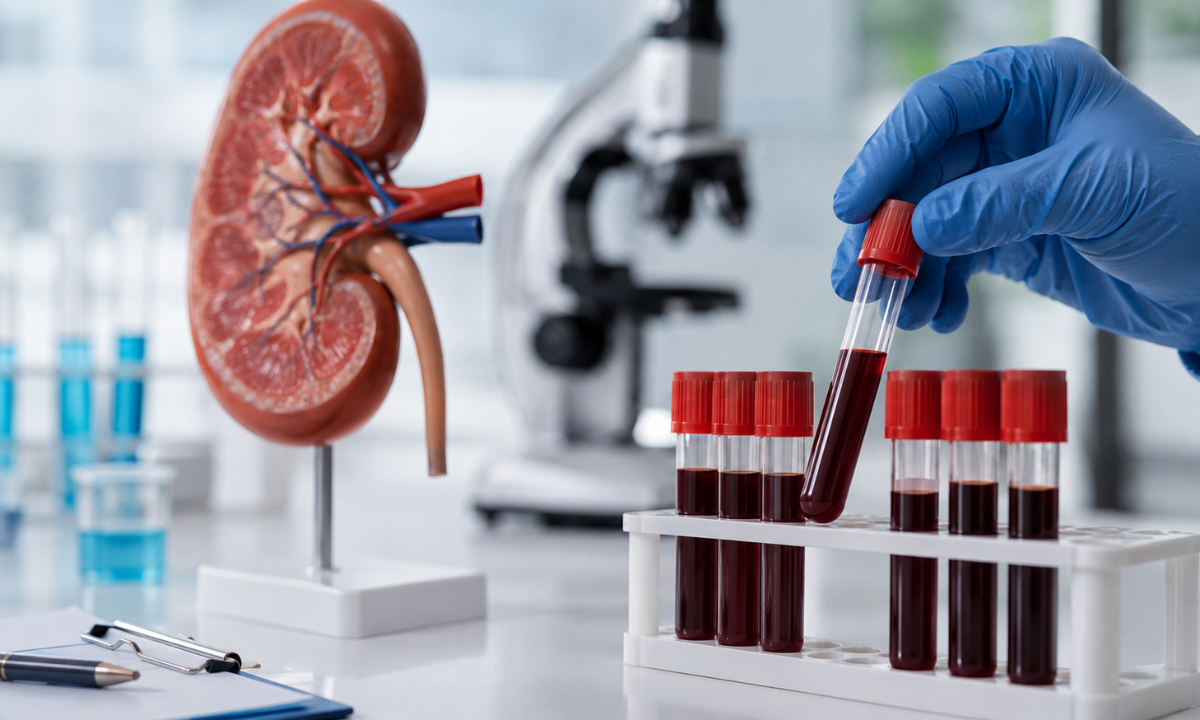
The first half of your essential renal evaluation relies on high-precision blood tests for kidney disease. When your body processes energy throughout the day, your muscles naturally generate a waste product called creatinine.
Healthy kidneys filter this compound out of your bloodstream and flush it out through your urine. However, if your kidneys are under stress or facing structural decline, creatinine begins to build up in your blood.
Instead of just looking at raw creatinine numbers, which vary based on your age, gender, and muscle mass, medical teams calculate your Estimated Glomerular Filtration Rate (eGFR). Think of your eGFR score as a precise percentage score of your kidneys’ current filtering capacity.
When you receive your Koshikaa report, your eGFR score will fall into one of these distinct clinical categories:
- An eGFR of 90 or Above (Normal/Optimal): This indicates that your kidneys are operating at peak efficiency, successfully filtering toxins and balancing your body’s chemistry.
- An eGFR between 60 and 89 (Mild Decline): This is a critical baseline warning phase. While not yet considered chronic kidney disease, a score in this range indicates a slight slowdown in filtration. At this stage, simple, proactive modifications such as optimizing your hydration, controlling blood pressure, and reducing processed sodium can easily protect your remaining function.
- An eGFR Below 60 (Flagged for Medical Evaluation): If your score drops below 60 for more than three months, it is a formal indication of chronic kidney disease. This score means your kidneys are working at less than 60% capacity, requiring immediate, specialized medical guidance to protect your long-term wellness.
Tracking your eGFR through regular, proactive blood screenings, you remove all ambiguity about your inner health, giving yourself the data required to maintain a powerful, uncompromised internal filtration system.
Detecting Damage: The Role of Urine Testing
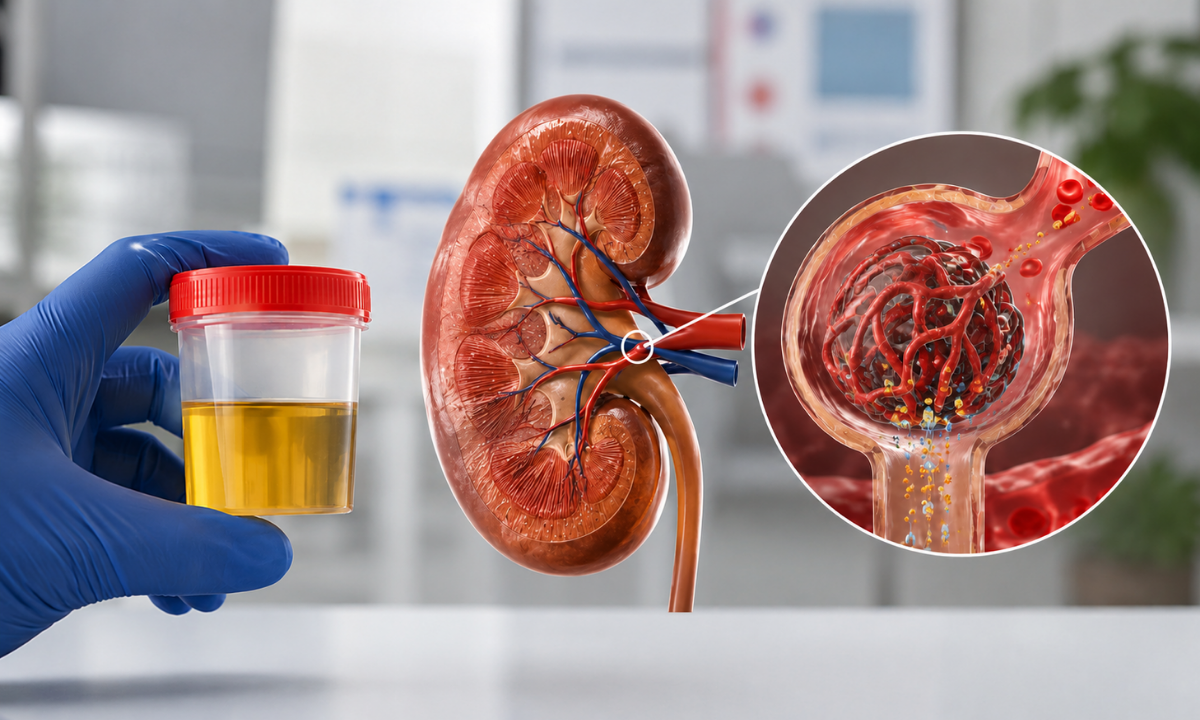
While blood tests measure the overall speed and efficiency of your body’s filtration, urine tests for kidney disease evaluate the physical integrity of the filters themselves.
It is entirely possible to have a completely normal eGFR blood score while still having microscopic structural damage in your kidneys. This is why the urine examination in Bangalore is the non-negotiable second half of your diagnostic duo.
To understand how this works, imagine a high-quality coffee filter. Its job is to let liquid pass through while keeping the solid coffee grounds perfectly contained. Your kidneys have millions of microscopic filters (called glomeruli) that act the exact same way.
They let waste and extra water pass into your bladder, but they are designed to keep essential, large molecules like a crucial protein called albumin securely inside your bloodstream.
If those microscopic filters become stressed or damaged by high blood pressure or elevated blood sugar, that protein begins to leak.
Medical professionals measure this leakage using a test called the Urine Albumin-to-Creatinine Ratio (uACR). This simple, non-invasive test detects even the faintest traces of protein long before a standard urine dipstick would catch it.
Here is how to interpret a standard uACR laboratory result:
| Your uACR Score | The Clinical Meaning | What It Says About Your Kidneys |
|---|---|---|
| Less than 30 mg/g | Normal (Optimal) | Your filters are intact and functioning perfectly. No significant protein is leaking. |
| Between 30 and 300 mg/g | Microalbuminuria (The Early Warning) | Microscopic damage has occurred, allowing trace amounts of protein to slip through. This is a crucial window for early medical intervention to reverse the stress on the kidneys. |
| Over 300 mg/g | Macroalbuminuria (Clinical Damage) | Significant structural damage is present. The filters are actively leaking large amounts of vital protein, requiring aggressive, specialized management to prevent further decline. |
The Koshikaa Insight: Protein in the urine is frequently the very first measurable sign of chronic kidney disease, often appearing years before a patient’s blood tests begin to flag. By proactively checking your uACR, you are looking into the future of your renal health, allowing you to catch and repair minor damage before it becomes a permanent problem.
Beyond the Basics: When is Advanced Imaging Required?
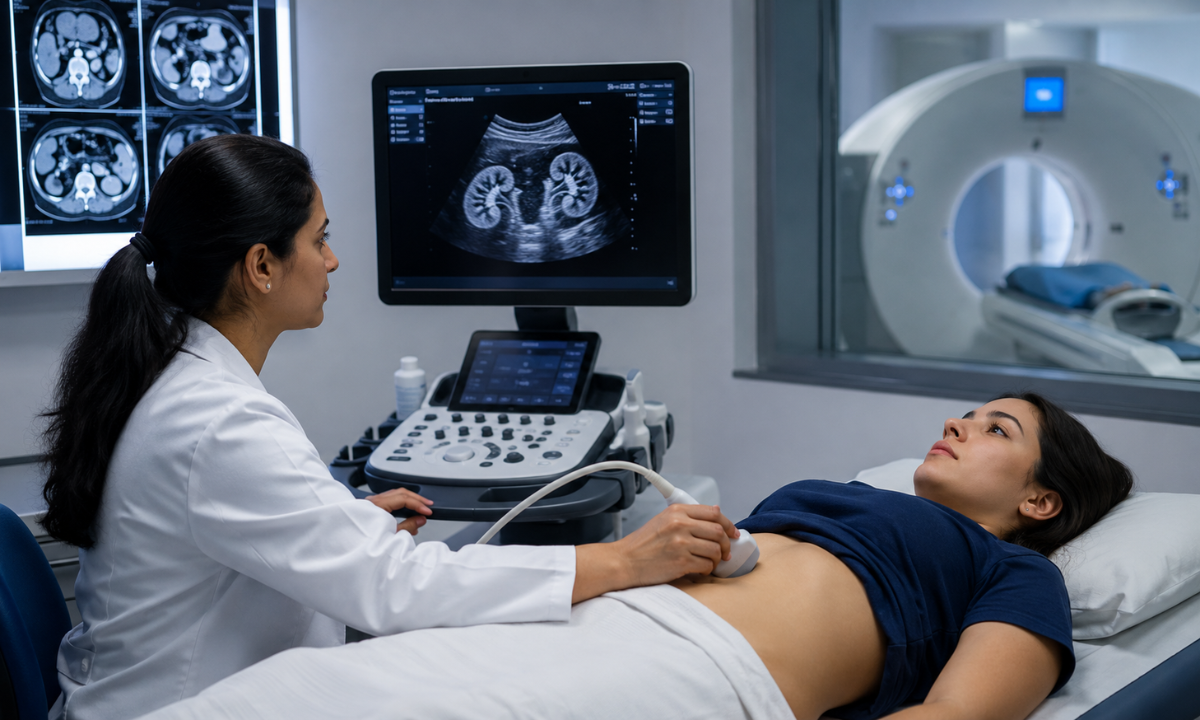
While blood and urine tests are incredible tools for measuring how well your kidneys are functioning, they cannot physically “see” the organs. If your diagnostic duo reveals an abnormality such as a sudden drop in your eGFR or a spike in protein leakage, your medical team will need to understand why the filtration system is struggling. This is when structural evaluation becomes essential.
Advanced imaging allows your physician to look beyond chemical markers and examine the exact physical shape, size, and structure of your kidneys. Depending on your specific symptoms and lab results, your doctor may utilize:
- Renal Ultrasounds: This is typically the first step in visual diagnostics. It is a quick, painless, and radiation-free imaging test that helps doctors measure the size of your kidneys. (Kidneys that have shrunk often indicate chronic, long-term disease). It is also highly effective at spotting major physical blockages or fluid buildup in the urinary tract.
- Computed Tomography (CT): For a more granular, detailed look, a doctor might escalate to advanced imaging. If your physician suspects a complex kidney stone, an obscure blockage, or a deeper structural issue, scheduling a high-resolution CT scan in Bangalore provides them with a highly precise, three-dimensional map of your entire renal system.
By integrating these advanced imaging modalities with your standard lab work, medical professionals can instantly rule out or identify physical threats such as:
- Kidney Stones: Hard deposits of calcium and minerals that can lodge in the ureters, causing intense pain and forcing urine to back up into the kidneys (a damaging condition known as hydronephrosis).
- Polycystic Kidney Disease (PKD): A genetic, progressive condition where multiple fluid-filled cysts grow inside the kidneys, slowly expanding in size and degrading their ability to filter.
- Tumors or Abnormal Masses: Identifying structural growths in their infancy so they can be properly biopsied or treated long before they become a severe threat.
Ultimately, imaging serves as the definitive visual roadmap to accompany your chemical lab results. Together, they ensure that your proactive wellness plan is built on complete, flawless, and actionable medical data.
Why Choose Koshikaa for Your Renal Health Screening?
When it comes to safeguarding your internal filtration system, the quality of your diagnostic partner is just as important as the tests themselves. At Koshikaa, we have completely transformed the healthcare experience from a reactive, anxiety-inducing process into an empowering journey of proactive wellness.
As the best Health Screening Centre in Bangalore, we are committed to making complex clinical diagnostics accessible, accurate, and deeply personalized. Here is why proactive individuals trust Koshikaa with their long-term renal health:
- Comprehensive Age-Wise Packages: We eliminate the guesswork of knowing which tests to ask for. Our carefully curated health packages automatically bundle the essential eGFR blood tests and uACR urine tests based on your specific age bracket, lifestyle, and biological risk factors.
- Uncompromising Accuracy: Renal health requires microscopic precision. Our state-of-the-art laboratory infrastructure ensures that your blood and urine metrics are analyzed with absolute clinical fidelity, giving your medical team the exact data needed to make highly informed decisions.
- Holistic Health Context: Before you ever step foot in our facility, we analyze your personal habits, dietary trends, and family history through our bespoke health questionnaires. This allows us to look beyond raw numbers, contextualize your lab results, and support a truly patient-centric approach to your longevity.
From seamless booking and zero-wait-time appointments to transparent, easy-to-understand reports, we ensure that managing your health is a seamless and highly positive experience.
Conclusion
Your kidneys silently perform one of the most complex, vital jobs in your body. As they do not send out warning signals until they are severely compromised, the best way to protect them is to actively check in on them before symptoms ever arise.
By prioritizing these two simple, non-invasive tests, you are taking absolute control of your health narrative. You are shifting away from a state of hopeful guessing and stepping into a state of clinical certainty. Early detection is not just about avoiding disease; it is about preserving your vitality and independence.
Partner with Koshikaa today, establish your clear renal baseline, and secure the powerful, uncompromised foundation required for a long and vibrant life.