
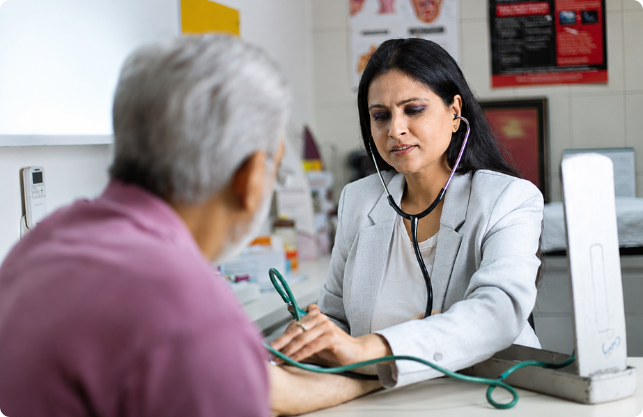
Your sixties bring a different kind of health priority, this is the decade where multiple systems need coordinated monitoring at once, heart, bones, cancer risk, kidney function and cognitive health all warrant closer attention together, rather than in isolation.
Koshikaa’s Health Checkup for 60+ reflects that shift. It brings together an expanded organ function panel, cardiac risk assessment, cancer screening, bone density evaluation, and gender-specific tests, PSA for men and mammogram-linked screening for women, alongside markers that matter more from this age onward, including kidney function trends and general cognitive wellbeing indicators.
This is a screening built for a life stage where prevention and early management matter more than ever, not because health necessarily declines, but because catching changes early makes the biggest difference to quality of life in the years ahead.
Reports are ready within 24 hours, and same-day appointments are available at our Banashankari centre.
Checks how well the thyroid gland is working by measuring its hormone levels in the blood.
Measures your blood sugar level after an overnight fast. Elevated readings could be a sign of prediabetes or Type 2 diabetes
This test provides a broader picture of your average blood sugar control over the past 2-3 months, offering a more comprehensive assessment of diabetes risk.
This test measures your total cholesterol, LDL (“bad”) cholesterol, HDL (“good”) cholesterol, and triglycerides. An abnormal lipid profile increases your risk of heart disease and stroke. Early detection allows for lifestyle adjustments and potentially medication to manage cholesterol levels.
Assesses glucose levels after meals to help manage diabetes.
Provides a complete picture of blood’s health, focusing on red cells, white cells, and platelets.
Enhances the quality of samples for examining cells, primarily used in research contexts.
Regular monitoring to prevent hypertension, which can lead to serious cardiovascular problems.
Primarily used to detect liver diseases and as a tumor marker to guide cancer therapy.
Monitors and manages certain types of cancers, including colorectal, pancreatic, and breast cancers.
Typically used to monitor ovarian cancer in women but can help diagnose certain gastrointestinal cancers in men.
Helps diagnose and monitor pancreatic and gastrointestinal cancers.
Examines the characteristics of blood cells, aiding in the diagnosis of blood disorders.
Detects hidden blood in the stool, an early indicator of colorectal cancer.
Essential for prostate health screening, helping detect prostate cancer early.
This painless test records your heart’s electrical activity to detect potential heart rhythm problems or abnormalities in the heart’s structure.
Non-invasively visualizes abdominal organs, assisting in diagnosing pain, swelling, and infection.
A less invasive imaging test used to screen for colorectal cancer and polyps.
Getting screened is straightforward and takes just a few steps.

Enter your name, phone number and email address.

Our team will contact you to confirm your appointment and explain any preparation instructions.

You will receive appointment confirmation, center address and reporting time through SMS or email.

Our staff will guide you through the complete health assessment process.
Koshikaa pairs modern diagnostic equipment with a clinical team experienced in preventive health screening for all age groups.

Our center uses modern imaging systems and laboratory technology to deliver accurate and efficient testing.

Qualified doctors, radiologists and laboratory specialists ensure high-quality diagnostic evaluation and reporting.

Our packages include blood tests, imaging studies and preventive screening for complete health evaluation.

Most reports are delivered within 24–48 hours with detailed interpretation and recommendations.

Koshikaa serves patients across Bangalore including Whitefield, HSR Layout, Koramangala, Jayanagar, Indiranagar, JP Nagar and nearby areas.
“I booked Koshikaa’s 60+ health check-up for my yearly screening. The process was simple, the staff were caring, and the reports arrived on time. The doctor explained everything clearly. Highly recommended.”
Ramesh Rao
“I chose the 60+ health screening package to monitor my health. The entire experience was smooth, the team was supportive, and the detailed reports gave me confidence and peace of mind.”
Savitri Devi
“Koshikaa made my preventive health check-up easy and comfortable. The tests were well organized, the staff were professional, and the consultation helped me better understand my overall health.”
Krishnamurthy S
“I had a wonderful experience with Koshikaa’s 60+ health package. Booking was easy, the health check-up was comprehensive, and the staff ensured I was comfortable throughout the visit.”
Anitha Menon
The core panel includes Complete Blood Count, Kidney Function Tests, Liver Function Tests, Thyroid Function Tests, Fasting Blood Sugar, HbA1c, PPBS, Lipid Profile, Urine Routine and Microscopy, Haemogram and ECG. This is combined with a cancer risk panel (AFP, CEA, CA 19.9, Stool Occult Blood, CT Colonography), Whole Abdomen Ultrasound and Bone Density Assessment, plus PSA for men or Mammogram, CA-125, CA 15.3 and Pap Smear for women.
Yes. The Health Checkup for 60+ shares a common core and cancer-screening panel for all adults, with PSA added for men and mammogram, CA-125, CA 15.3 and Pap Smear added for women, all covered in the same visit.
At this age, several systems need coordinated monitoring rather than isolated testing, kidney function, bone density, cardiac risk and cancer screening all interact more closely, and the emphasis shifts toward maintaining quality of life alongside catching new conditions early
Yes. Colorectal cancer risk remains elevated through the sixties, and most guidelines recommend continued screening at regular intervals regardless of previous clear results, since new polyps or changes can develop over time.
Kidney filtration capacity naturally declines gradually with age, and this decline can accelerate with conditions like diabetes or hypertension. Regular kidney function testing helps catch this trend early, before it affects medication dosing or overall health.
Yes. Prostate cancer incidence remains high through the sixties and seventies, and continued PSA monitoring, generally annually, remains one of the most effective ways to catch changes early.
Yes, for most women. Breast and cervical cancer screening guidelines generally continue through the mid-sixties and beyond for breast screening, though your doctor at Koshikaa can advise on the right frequency based on your individual history.
Yes, fasting for 10-12 hours is required before blood sugar, lipid profile and liver function tests. The Whole Abdomen Ultrasound also requires fasting, and CT Colonography or Colonoscopy preparation will be shared separately. Our team will provide a full checklist once your booking is confirmed.
This typically takes 3-4 hours for the core panel and imaging. If CT Colonography or Colonoscopy is included, additional time and separate preparation are required, and your team will help you schedule this efficiently.
You can book by filling in the form on this page, calling +91 7996666106, or visiting our centre in Banashankari, Bengaluru. Same-day appointments are available subject to slot availability, and our team will share the full preparation checklist on confirmation.