
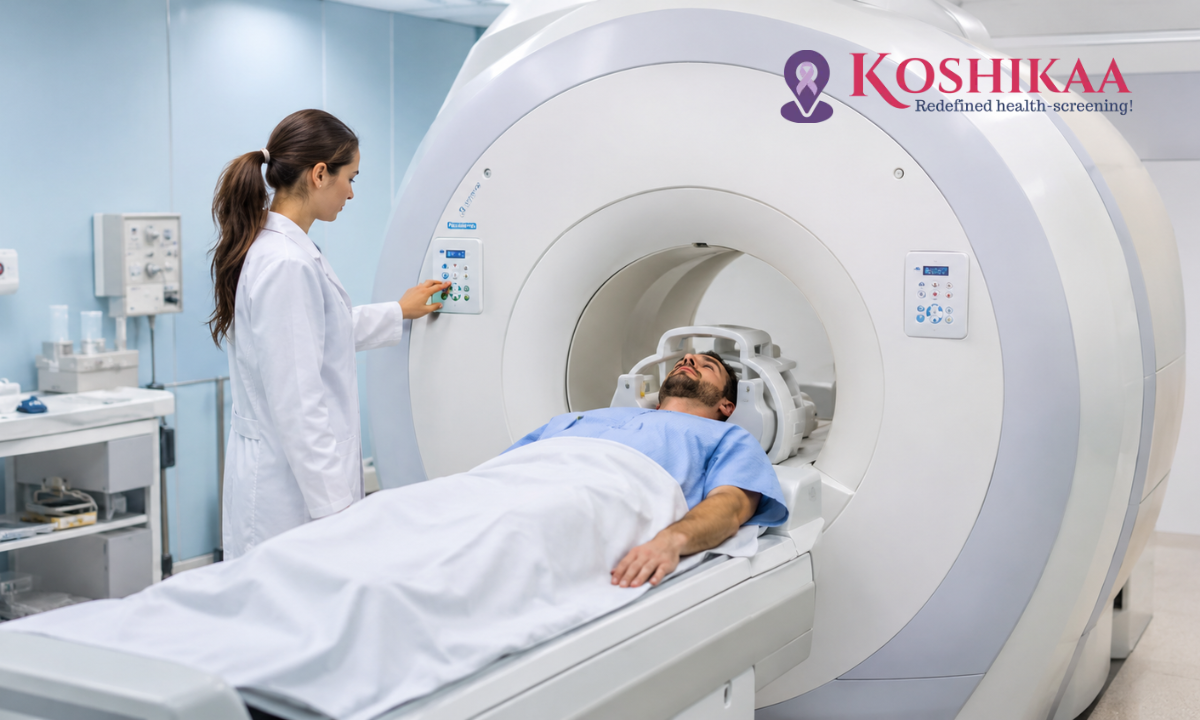
An MRI scan is one of the most detailed imaging tests available, and it is completely painless. Even so, many people feel uncertain about what to expect, especially if it is their first scan. Good MRI scan preparation makes the experience smoother, helps you feel more relaxed and ensures the images are as clear as possible.
MRI uses a powerful magnet and radio waves rather than X-rays. Because the magnet is always on, safety checks for metal are an essential part of every appointment. Some scans also need fasting, a full bladder or an injection of contrast dye, depending on the part of the body being examined.
This practical checklist explains what to wear, whether you need to fast, what to tell the radiology team, what happens during the scan and how to manage anxiety. Always follow the specific instructions you receive when you book, as preparation varies from one scan to another.
How to Prepare for an MRI Scan
Use this quick checklist in the days before your appointment:
- Confirm the body part being scanned and whether contrast will be used
- Ask whether you need to fast or arrive with a full bladder
- Make a list of any implants, medical devices or previous surgeries
- Bring your doctor’s prescription, previous scan reports and images, and a list of current medicines
- Plan to arrive 15 to 30 minutes early to complete a safety questionnaire
- Leave jewellery, watches and valuables at home where possible
- Arrange for someone to accompany you if you may need medication to help you relax
You can find details of the scans we offer on our MRI scan in Bangalore page.
What Should You Wear for an MRI?
Choose Metal-Free Clothing
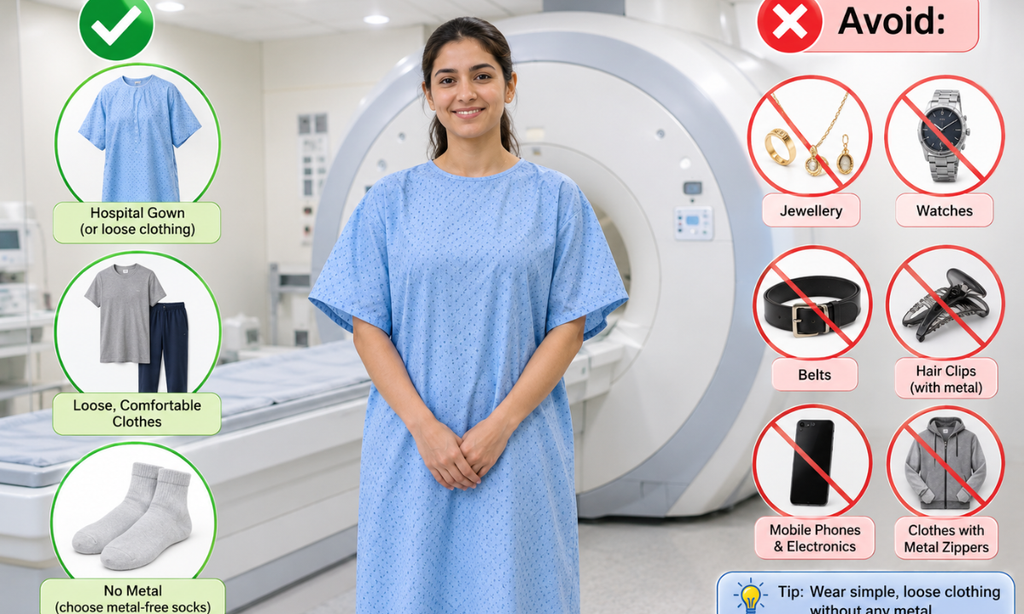
Wear loose, comfortable clothing without metal zips, buttons, hooks, studs or underwire. Track pants and a cotton T-shirt are ideal. Many centres will ask you to change into a hospital gown to make sure no metal enters the scan room.
Remove Metal Items Before the Scan
You will be asked to remove:
- Jewellery, including earrings, rings, nose pins and body piercings
- Watches, fitness trackers and mobile phones
- Hairpins, hair clips and hair accessories
- Spectacles, removable dental work and hearing aids
- Belts, keys, coins and wallets
Bank cards and other cards with magnetic strips can be damaged by the magnet, so leave them outside the scan room.
Make-Up, Hair Products and Medicine Patches
Some cosmetics, such as certain eye make-up and hair products, contain tiny metal particles that can affect image quality or cause skin irritation, so it is best to avoid them on the day of the scan. Tell staff about all skin patches, including nicotine, pain-relief or hormone patches, because some have a metallic backing and may need to be removed under your doctor’s guidance. Most people with tattoos or permanent make-up can have an MRI, but mention them beforehand, as some pigments contain metal and may rarely cause warmth or affect the images.
Do You Need to Fast Before an MRI?
Most MRI Scans Do Not Require Fasting
For many MRI scans, such as those of the brain, spine or joints, you can eat, drink and take your usual medicines as normal.
When Fasting May Be Needed
Fasting may be required for certain scans, particularly:
Some abdominal MRI scans, including scans of the liver, pancreas and bile ducts
Some pelvic MRI scans
Scans where sedation is planned
For pelvic scans, you may also be asked to arrive with a partly full bladder. Most MRI scans do not require fasting, but some abdominal, pelvic or sedation-related scans may. Follow the instructions provided when you book, as the duration varies by scan and centre.
Should You Take Your Usual Medicines?
In most cases, yes. Continue your regular medicines unless your doctor or the radiology team advises otherwise. If you have diabetes and have been asked to fast, ask for specific advice about your medicines and meals.
What Should You Tell the Radiology Team?
Before your scan, you will complete a safety questionnaire. Answer it carefully and ask questions if you are unsure.
Metal Implants and Medical Devices
Tell the team if you have:
A pacemaker, defibrillator or other implanted electronic device. Some devices are not MRI-safe, while others may be scanned only under specific conditions and after a safety review
A cochlear implant, nerve stimulator or insulin pump
Brain aneurysm clips
Artificial joints, metal plates, screws or rods
Heart valves or stents
Any metal fragments, for example from a past injury or work with metal
Many modern implants are designed to be safe in MRI under specific conditions, but this must be confirmed for each device before you enter the scan room. Bring any implant card or device details you have. If you are unsure whether you have metal in your body, for example from an old injury, the team may recommend an X-ray before the MRI to check. Most dental fillings and intrauterine devices (IUDs) are not a problem, but mention them anyway.
Pregnancy and Other Relevant Medical Details
Tell the team if you are pregnant or might be pregnant. MRI does not use radiation and can be used during pregnancy when needed, but contrast is usually avoided. Also mention if you are breastfeeding, have had recent surgery or have any condition that makes it difficult to lie flat for a long time, such as back pain or breathing problems.
Previous Contrast Reactions and Kidney-Related Concerns
Some MRI scans use a contrast agent containing gadolinium, injected into a vein. Tell the team if you have:
• Had a reaction to contrast dye in the past
• Kidney disease or reduced kidney function
• Diabetes, high blood pressure or a kidney transplant, as the team may arrange a kidney function blood test before the scan
• Allergies or asthma
These details help the team decide whether contrast is needed and whether extra precautions are required.
What Happens During an MRI?
Before the Scan
A radiographer will check your safety questionnaire, explain the procedure and answer any questions. If contrast is needed, a small cannula will be placed in a vein in your arm.
During the Scan
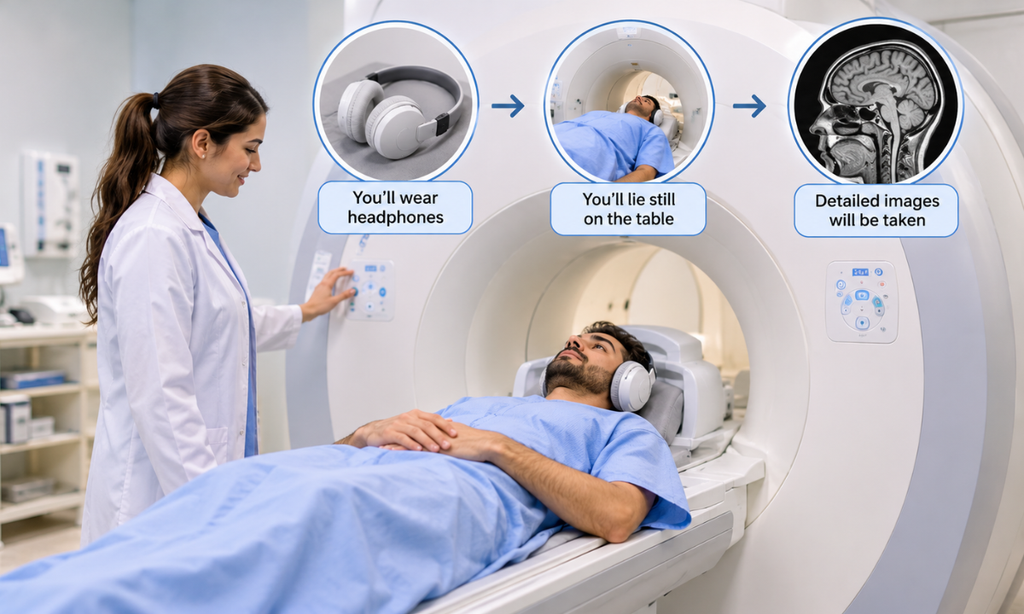
You will lie on a padded table, which slides into the scanner. Depending on the area being examined, a lightweight frame called a coil may be placed over or around that part of your body to improve the images.
The scanner makes loud knocking, tapping and buzzing noises while images are taken, so you will be given earplugs or headphones. You need to keep as still as possible, as movement blurs the images. For some scans, you may be asked to hold your breath for a few seconds at a time.
The radiographer can see and hear you throughout, and you will be given a call button to press if you need help. Most scans take about 20 to 60 minutes, depending on the area and the number of images needed.
After the Scan
If you did not have sedation, you can usually go home and return to your normal activities straight away. If you received contrast, drinking water afterwards can be helpful unless you have been advised to limit fluids. A radiologist will review the images and send a report to your doctor.
If you would like to understand how MRI compares with other scans, read our guide on MRI vs CT scan differences.
What If You Feel Anxious in the Scanner?
Tell the Team in Advance
Feeling nervous about an MRI is very common, particularly for people who dislike enclosed spaces. Let the team know when you book, so they can plan extra time and support.
Simple Ways to Feel More Comfortable
• Ask about scanning feet first, which is possible for some examinations of the lower body, such as the knee or ankle, and may allow your head to stay outside the scanner
• Keep your eyes closed or use an eye mask
• Listen to music through headphones if available
• Practise slow, steady breathing
• Ask the radiographer to talk you through each stage
• Bring a family member or friend, who may be allowed to wait nearby after a safety check
Medication to Help You Relax
If your anxiety is severe, speak to your doctor before the appointment. They may prescribe a mild sedative. If you take one, you must not drive afterwards, so arrange for someone to take you home.
Preparing a Child for an MRI
Children may find an MRI easier if they know what to expect. Explain the noises, show pictures of the scanner and practise lying still at home. Young children who cannot keep still may need sedation, which requires specific fasting instructions. Your child’s doctor and the radiology team will advise you.
When Will You Receive Your MRI Report?
After your scan, a radiologist, a doctor specialising in interpreting medical images, carefully reviews all the images. Because an MRI produces hundreds of detailed pictures, this review can take some time, particularly for complex scans or when comparison with previous scans is needed.
Report timing depends on the type of MRI, whether contrast is used and whether a specialist review is required. The centre will confirm when your report will be available, and it is usually shared with you and your referring doctor.
MRI reports use technical language, so it is best to go through the findings with the doctor who requested the scan. They will explain what the results mean, whether any further tests are needed and what the next steps are. Keep a copy of your report and images, as they can be useful for comparison if you need another scan in the future.
Frequently Asked Questions
Can I eat before an MRI scan?
For most MRI scans, yes. Fasting is usually needed only for certain abdominal or pelvic scans, or if sedation is planned. Follow the instructions given when you book.
Can I wear jewellery during an MRI?
No. All jewellery, including piercings, must be removed before entering the scan room, as metal can be pulled by the magnet or heat up during the scan.
Can I have an MRI with a pacemaker?
It depends on the device. Some pacemakers are not MRI-safe, while some modern devices can be scanned only under specific conditions and after a safety review. Tell the team the make and model of your device well before your appointment.
How long does an MRI scan take?
Most MRI scans take about 20 to 60 minutes, depending on the area being examined and whether contrast is used. Allow extra time for paperwork and preparation.
Is MRI contrast safe?
For most people, yes. Reactions to gadolinium contrast are uncommon and usually mild. People with significant kidney disease need extra assessment before contrast is given.
Can I drive after an MRI?
Yes, unless you have been given a sedative. If you take medication to help you relax, arrange for someone else to drive you home.
Conclusion
Good preparation makes an MRI scan simpler, safer and more comfortable. Wear metal-free clothing, follow any fasting instructions, complete the safety questionnaire carefully and tell the team about implants, pregnancy, kidney problems or anxiety. With the right preparation, most people find the scan far easier than they expected.
To book an MRI scan or ask about preparation for your specific scan, contact Koshikaa in Banashankari, Bengaluru, on +91 7996666106.