
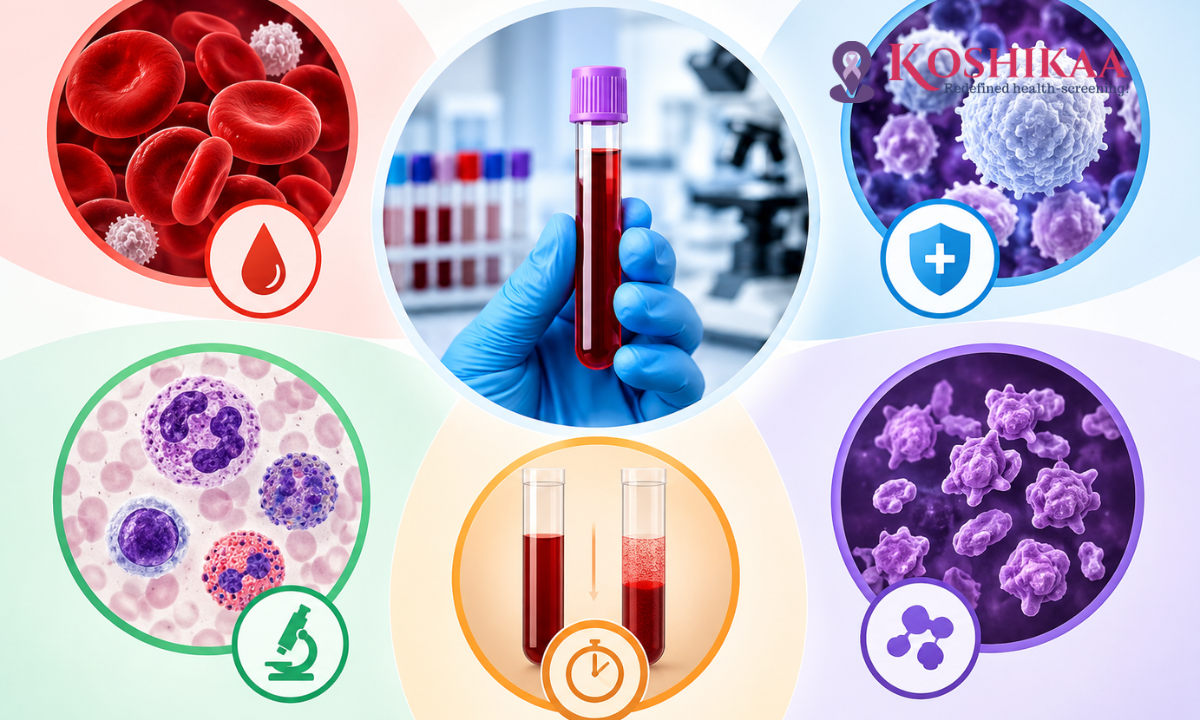
The Hb, TC, DC, ESR and platelet test is a group of five common blood tests that doctors often order together. Hb measures haemoglobin, TC is the total white blood cell count, DC is the differential count of white blood cell types, ESR is the erythrocyte sedimentation rate and the platelet count measures the cells that help your blood clot. Together, these tests can help doctors look for signs of anaemia, infection, inflammation and bleeding problems. Results always need to be interpreted alongside your symptoms and medical history.
If you have seen these abbreviations on a prescription and wondered what they mean, this guide explains each test, typical normal ranges, what high or low results may suggest and how to prepare. For broader background, see our guide to understanding different blood tests.
What Is the Hb, TC, DC, ESR and Platelet Test?
What Is the Full Form of Hb, TC, DC, ESR and Platelets?
• Hb: haemoglobin
• TC: total count, meaning the total leukocyte (white blood cell) count, sometimes written as TLC
• DC: differential count, also called the differential leukocyte count or DLC
• ESR: erythrocyte sedimentation rate
• Platelets: platelet count, sometimes written as PLT
An important clarification: in this test combination, TC does not mean total cholesterol. Total cholesterol is part of a lipid profile, which is a completely different test. Some online sources mix up the two, so if your prescription lists Hb, TC, DC and ESR together, TC refers to the white blood cell count.
Is This Test the Same as a CBC or Haemogram?
These five tests overlap closely with a complete blood count (CBC). A CBC usually includes haemoglobin, red blood cell count, red cell indices, total and differential white cell counts and the platelet count. A haemogram is a term often used in India for a CBC, sometimes with ESR added.
The key difference is ESR. It is not part of a standard CBC, so it is usually added separately. Exact test panels vary between laboratories, so check what is included when you book.
Why Might a Doctor Recommend These Tests Together?
Ordering these tests together gives a quick, inexpensive overview of your blood. It helps doctors check for anaemia, look for signs of infection or inflammation and assess the platelets that control bleeding, all from a single blood sample.
What Does Each Test Measure?
Hb Test: Haemoglobin and Oxygen Transport
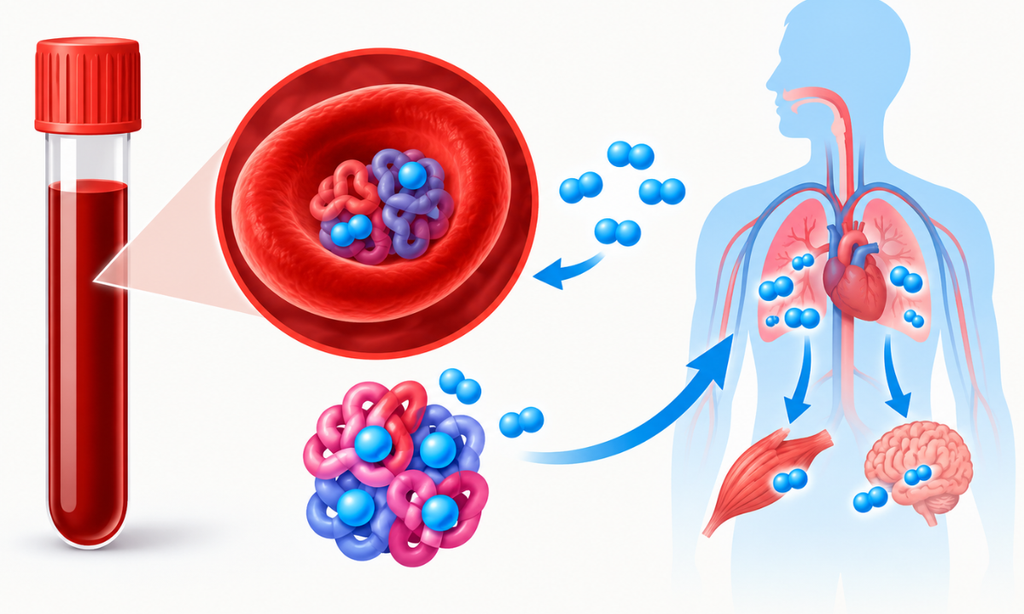
Haemoglobin is the iron-rich protein inside red blood cells that carries oxygen from your lungs to the rest of your body. Measuring haemoglobin is the main way doctors check for anaemia.
TC Test: Total Leukocyte (White Blood Cell) Count
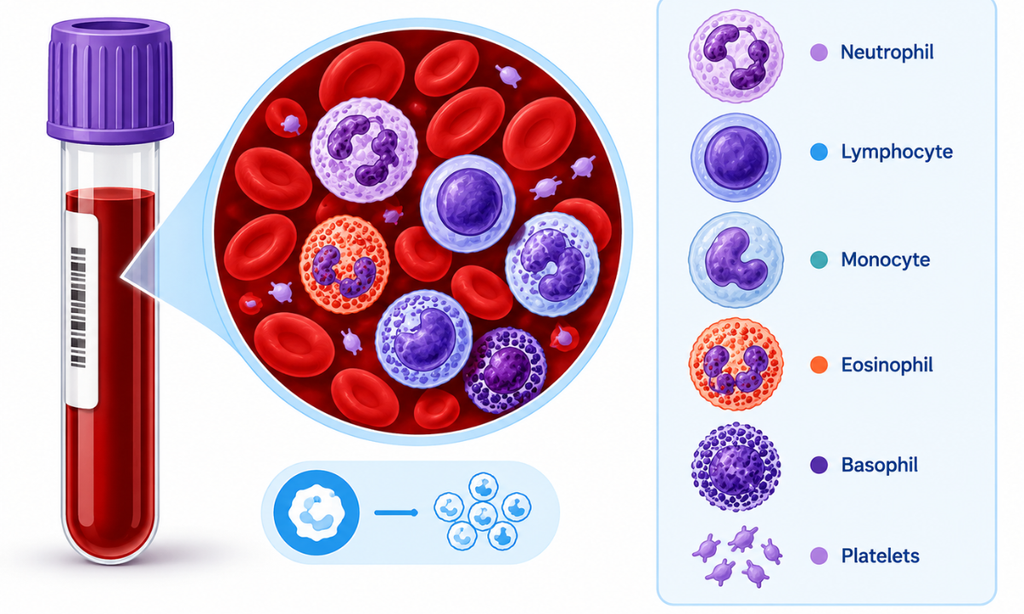
White blood cells are part of your immune system and help fight infection. The total count measures how many white blood cells are present in a given volume of blood.
DC Test: Differential White Blood Cell Count
There are five main types of white blood cells, each with a different role. The differential count shows what percentage of your white blood cells each type makes up:
• Neutrophils: often the first responders to bacterial infections
• Lymphocytes: often involved in fighting viral infections and support long-term immunity
• Monocytes: help clear infection and damaged cells
• Eosinophils: involved in allergies and parasitic infections
• Basophils: involved in allergic and inflammatory responses
ESR Test: Erythrocyte Sedimentation Rate and Inflammation
ESR measures how quickly red blood cells settle to the bottom of a tube of blood over one hour. When there is inflammation in the body, certain proteins cause red cells to clump together and settle faster, raising the ESR. ESR is a general marker: it shows that inflammation may be present, but not where it is or what is causing it.
Platelet Count Test: The Role of Platelets in Blood Clotting
Platelets are small cell fragments that help your blood clot and stop bleeding. The platelet count shows whether you have too few or too many.
| Test | Full Form | What It Helps Doctors Investigate |
| Hb | Haemoglobin | Anaemia and oxygen-carrying capacity |
| TC | Total leukocyte count | Infection, inflammation and immune response |
| DC | Differential leukocyte count | Type of infection, allergy and other blood conditions |
| ESR | Erythrocyte sedimentation rate | Presence of inflammation |
| PLT | Platelet count | Bleeding and clotting problems |
What Is the Normal Range for Hb, TC, DC, ESR and Platelets?
The ranges below are typical adult reference values. Always use the reference range printed on your own report, as ranges vary between laboratories, analysers, age groups and during pregnancy.
| Parameter | Typical Adult Reference Range |
| Haemoglobin (men) | 13.0 to 17.0 g/dL |
| Haemoglobin (women) | 12.0 to 16.0 g/dL |
| Total leukocyte count | 4,500 to 11,000 cells/µL |
| Neutrophils | 40 to 75 per cent |
| Lymphocytes | 20 to 40 per cent |
| Monocytes | 2 to 10 per cent |
| Eosinophils | 1 to 6 per cent |
| Basophils | 0 to 2 per cent |
| ESR, men under 50 (Westergren) | Up to 15 mm/hr |
| ESR, men 50 and over (Westergren) | Up to 20 mm/hr |
| ESR, women under 50 (Westergren) | Up to 20 mm/hr |
| ESR, women 50 and over (Westergren) | Up to 30 mm/hr |
| Platelet count | 1.5 to 4.0 lakh/µL (150,000 to 400,000/µL) |
ESR Normal Range and Age-Related Differences
ESR tends to rise naturally with age and is generally higher in women, which is why the upper limits above increase from the age of 50. It can also be higher during pregnancy. A mildly raised ESR in an older adult may not be significant on its own.
What Do High or Low Results Mean?
An out-of-range result is a reason for further assessment, not a diagnosis. Many abnormal results are mild, temporary or easily explained.
What Can Low Haemoglobin Indicate?
Low haemoglobin means anaemia. Common causes include iron deficiency, vitamin B12 or folate deficiency, blood loss, chronic illness and inherited conditions such as thalassaemia. Iron deficiency anaemia is particularly common in India, especially among women. High haemoglobin is less common and may occur with dehydration, smoking or certain lung or bone marrow conditions.
What Can High or Low Total WBC Counts Indicate?
A high total count is most often linked to infection or inflammation, but it can also follow stress, intense exercise, smoking or certain medicines such as steroids. Rarely, a very high count may indicate a blood disorder. A low total count may occur with some viral infections, certain medicines or conditions affecting the bone marrow.
What Can Changes in Differential Counts Indicate?
The differential count helps narrow down the cause. Raised neutrophils often suggest a bacterial infection, while raised lymphocytes are common in viral infections. Raised eosinophils may point to allergies, asthma or parasitic infections. Your doctor reads these percentages together with the total count.
What Can a High ESR Indicate?
A high ESR suggests inflammation somewhere in the body. Possible causes include infections, autoimmune conditions such as rheumatoid arthritis, anaemia, kidney disease and, less commonly, certain cancers. Because ESR is non-specific, a raised result usually needs further tests to find the cause.
What Can a Low or High Platelet Count Indicate?
A low platelet count can occur with viral infections such as dengue, which is an important consideration in Bangalore during the monsoon months. However, dengue cannot be diagnosed from a platelet count alone; specific tests are needed. It may also follow certain medicines, immune conditions or bone marrow problems. A high platelet count may be seen after infection, inflammation, iron deficiency or, less commonly, a bone marrow disorder.
Why Do Doctors Recommend This Blood Test?
Investigating Fatigue, Weakness or Suspected Anaemia
Tiredness, breathlessness, dizziness or pale skin may prompt a haemoglobin check.
Evaluating Fever or Possible Infection
TC and DC help doctors judge whether a fever is more likely to be bacterial or viral, and the platelet count is closely monitored during illnesses such as dengue.
Investigating Inflammation
ESR can support the assessment of joint pain, unexplained fever or suspected inflammatory conditions.
Assessing Unexplained Bruising or Bleeding
Easy bruising, frequent nosebleeds or bleeding gums may prompt a platelet count.
Monitoring Selected Medical Conditions and Treatments
These tests are also used to monitor chronic conditions and treatments that can affect blood counts, such as chemotherapy. Blood count testing may also form part of broader health check-up tests when clinically appropriate.
How Is the Hb, TC, DC, ESR and Platelet Test Performed?
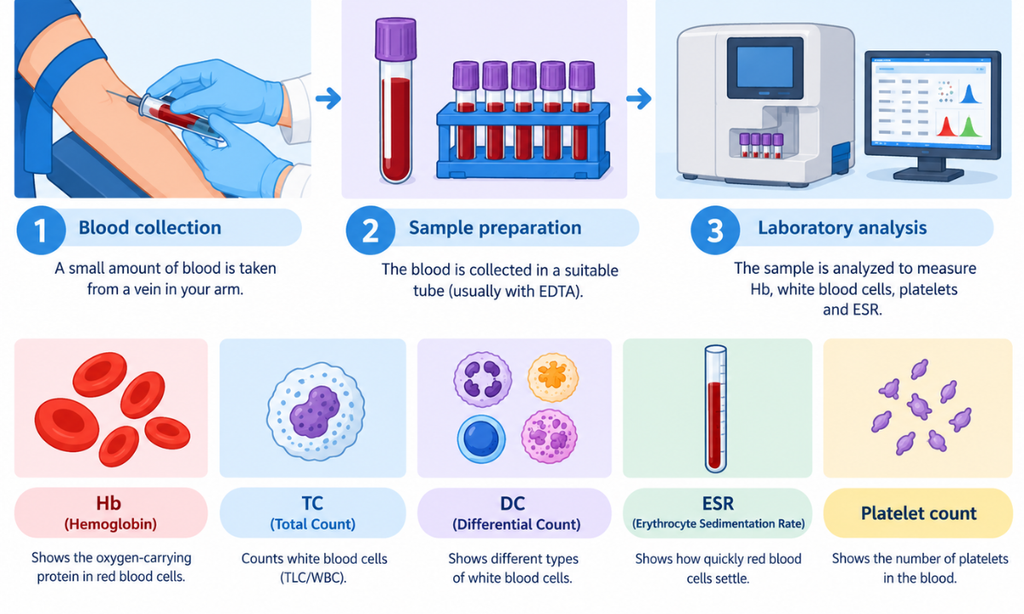
Blood Sample Collection Procedure
A trained phlebotomist takes a small sample of blood from a vein in your arm. You may feel a brief pinch, and the collection takes only a few minutes.
Does the Test Require Fasting?
Fasting is generally not needed for these tests on their own. However, if other tests, such as blood sugar or a lipid profile, are being collected at the same time, you may need to fast. Follow the instructions you are given when you book.
How Long Does the Test Take?
The sample collection takes about five to ten minutes. The ESR itself is measured over a set period in the laboratory.
When Can You Expect the Report?
Blood test reports at Koshikaa are usually available within 24 to 48 hours.
Hb, TC, DC, ESR and Platelet Test Cost in Bangalore
What Affects the Price of a Haemogram Test?
The price depends on whether ESR is included, whether the sample is collected at home or at the centre, and whether the test is part of a wider package.
Does the Test Cost Differ Between Laboratories?
Yes. Prices vary between laboratories depending on their equipment, processes and services, so compare what each panel includes rather than the price alone.
How Can You Confirm the Current Price at Koshikaa?
At Koshikaa, a haemogram is currently listed at ₹349 at the centre and ₹399 with home sample collection.Explore our blood test services in Bengaluru to book or check the latest prices.
How to Understand Your Blood Test Report
What Does an Out-of-Range Result Mean?
A result marked high or low means it falls outside the laboratory’s reference range. Because reference ranges are designed to include most, but not all, healthy people, a small proportion of healthy people may fall just outside them. A single mildly abnormal result is therefore not necessarily a cause for concern.
Why Can Reference Ranges Differ Between Laboratories?
Laboratories use different analysers and methods, and they may set reference ranges based on their own populations. This is why you should always compare your result with the range on your own report.
When Should You Discuss Your Report With a Doctor?
Discuss your report with a doctor if any result is clearly abnormal, if several values are outside the range, or if you have symptoms such as fever, unusual bleeding, persistent tiredness or unexplained weight loss. Our guide to understanding your reports and next steps explains what to do after a health check-up.
Frequently Asked Questions
Is Hb, TC, DC, ESR and platelet testing included in a CBC?
Hb, TC, DC and platelet count are usually included in a CBC. ESR is a separate test and is often added alongside it. Check with your laboratory exactly what their CBC or haemogram includes.
Is fasting required for this blood test?
Usually not. These tests can generally be done without fasting, unless other tests requiring fasting are collected at the same time.
Can this test detect an infection?
It can suggest an infection, for example through a raised white cell count or changes in the differential count. However, it cannot identify the exact infection, so your doctor may recommend further tests.
Does a high ESR always mean infection?
No. ESR can rise with infection, autoimmune conditions, anaemia, pregnancy, older age and other causes. It shows that inflammation may be present but not the reason.
Can a platelet count be abnormal without symptoms?
Yes. Mildly low or high platelet counts often cause no symptoms and may be found on a routine test. Your doctor will decide whether repeat testing or further investigation is needed.
Where can I get a haemogram test in Bangalore?
You can have a haemogram test at Koshikaa in Banashankari, Bengaluru, either at the centre or with home sample collection.
Book a Blood Test at Koshikaa in Bangalore
The Hb, TC, DC, ESR and platelet test offers a quick, valuable overview of your blood health, helping doctors check for anaemia, infection, inflammation and bleeding problems. Results are most useful when interpreted in context, so always review them with a qualified doctor.
Visit Koshikaa at 2nd Floor, 2227, 9th Main Road, Karesandra, Banashankari Stage II, Bengaluru, or call +91 7996666106 to book your test.
References:
•MedlinePlus: Complete Blood Count (CBC)