

Most chronic metabolic conditions and malignant cell changes develop quietly beneath the surface long before visible symptoms arise. Undergoing regular preventive diagnostic screening is the single most effective way to detect underlying physiological disruptions, organ stress, and cellular risks before they escalate into medical emergencies.
Whether you are scheduling an annual health evaluation or a comprehensive Blood test in Bangalore, proactive diagnostic testing shifts your personal healthcare strategy from reactive treatment to timely, life-saving prevention.
In conventional healthcare, individuals often seek medical advice only when pain, persistent fatigue, or noticeable physical discomfort occurs.
However, conditions such as hypertension, fatty liver changes, pre-diabetes, and micro-cellular abnormalities can progress silently for years without causing outward distress. By the time clinical symptoms manifest, managing the condition often requires intensive interventions, invasive procedures, and prolonged medication regimens.
Proactive screening bridges this critical diagnostic gap by analyzing cellular health, biochemical markers, and organ function at baseline stages.
What You Will Discover in This Guide
Taking charge of your long-term health begins with understanding how subtle biomarker changes reveal your body’s internal state:
- The Proactive Health Advantage: Why identifying physiological imbalances early improves recovery rates and reduces long-term medical expenses.
- Essential Diagnostic Biomarkers: How core metabolic, liver, kidney, and inflammatory markers signal systemic stress.
- Targeted Screening Protocols: The role of non-invasive screenings for high-incidence cellular and organ risks.
- Age & Lifestyle-Driven Timelines: Structuring your checkups to match your biological age, daily stress levels, and occupational habits.
The Koshikaa Preventive Philosophy: Derived from the word for “cell” (Koshika), Koshikaa focuses on catching health risks at the micro-cellular level. By combining pathology profiling with digital convenience and doorstep sample collection across Bangalore, we empower individuals to take control of their health long before symptoms appear.
Medical Disclaimer
The clinical insights, diagnostic descriptions, and healthcare recommendations presented in this article are designed strictly for educational and public health awareness purposes. This content does not constitute formal medical advice, clinical diagnosis, or a personalized treatment plan. Every individual’s physiology, family medical history, and risk factors are distinct and require clinical evaluation by a qualified medical practitioner. Always consult a certified physician or healthcare professional regarding specific medical conditions, abnormal biomarker readings, or diagnostic interpretations. Never ignore or delay seeking professional medical evaluation based on general information read online.
The Shift from Reactive Treatment to Proactive Prevention

The traditional medical model is largely reactive: individuals wait for clear symptoms to appear before consulting a physician. While this “sick-care” approach addresses acute infections and injuries, it often fails when dealing with chronic metabolic conditions, cardiovascular blockages, and cellular mutations. These diseases typically develop silently over months or years, progressing through sub-clinical stages without causing pain or outward disruption.
Transitioning to proactive health management through early disease detection fundamentally alters both treatment complexity and clinical outcomes, turning potential medical crises into manageable lifestyle adjustments.
The Clinical & Survival Impact of Early Identification
Detecting cellular and metabolic abnormalities in their earliest phases dramatically increases the likelihood of full recovery while minimizing the need for invasive treatments:
- Higher Long-Term Survival Rates: Malignancies caught at localized stages often show five-year survival rates exceeding 90%, compared to under 20% when detected after regional or distant spread.
- Minimally Invasive Clinical Interventions: Early-stage interventions typically rely on non-invasive medications, targeted lifestyle adjustments, or minor outpatient procedures rather than intensive surgeries or high-dose systemic therapies.
- Organ Function Preservation: Identifying metabolic risks such as elevated fasting glucose or rising serum creatinine allows for early dietary and pharmacological adjustments that protect kidneys, blood vessels, and liver tissue before irreversible fibrosis occurs.
- Significant Financial Savings: Proactive screening minimizes the catastrophic healthcare expenditures associated with emergency hospitalizations, advanced surgeries, and prolonged intensive care stays.
Catching physiological changes before they manifest as chronic disease reduces both the physical strain on your body and the emotional distress experienced by your family. Routine baseline screenings establish an objective personal health history, enabling physicians to spot micro-trends and intervene while conditions are still easily reversible.
Comparing Healthcare Models: Reactive Care vs. Proactive Screening
| Evaluation Parameter | Traditional Reactive Model | Proactive Diagnostic Screening |
|---|---|---|
| Diagnostic Trigger | Physical symptoms, acute pain, or noticeable disability. | Planned, periodic biomarker and cellular assessments. |
| Stage of Detection | Advanced, symptomatic, or metastatic disease stages. | Sub-clinical, asymptomatic, or pre-malignant phases. |
| Treatment Complexity | Invasive surgery, prolonged therapies, and intensive hospitalization. | Targeted medication, lifestyle optimization, and non-invasive monitoring. |
| Overall Prognosis | Guarded; higher risk of permanent organ damage or recurrence. | High probability of full cure, reversal, or long-term disease stabilization. |
The Power of Baseline Tracking: A single normal blood test provides a snapshot; annual testing creates a dynamic trend line. Tracking gradual movements in fasting insulin, lipid sub-fractions, or liver enzymes over time reveals health shifts long before lab values fall outside standard reference ranges.
Essential Diagnostic Biomarkers & Core Blood Panels
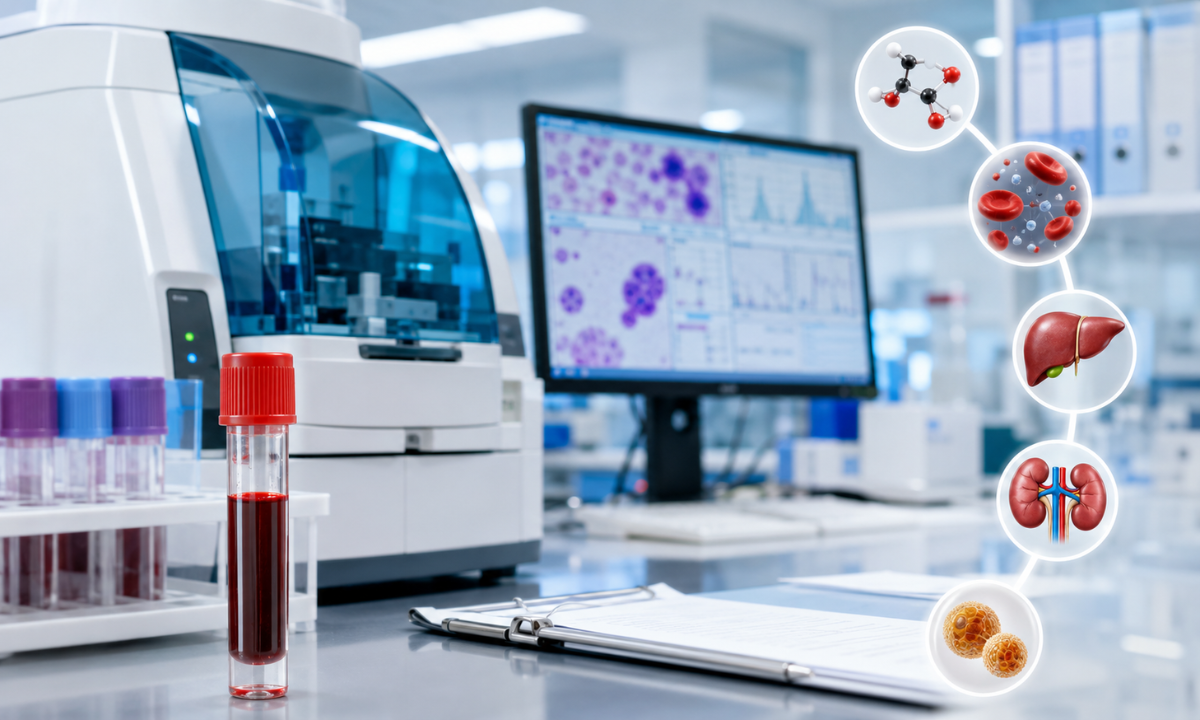
Blood serves as a high-resolution window into your body’s internal environment, reflecting metabolic efficiency, cellular stress, and organ reserve. Long before clinical disease manifests as physical symptoms, subtle chemical shifts take place in circulating hormones, enzymes, and metabolic waste products.
Leveraging modern preventive diagnostics allows clinicians to evaluate these biochemical parameters comprehensively, identifying systemic inflammation, oxidative stress, and early organ compromise at reversible stages.
Core Biomarker Profiles for Comprehensive Health Evaluation
A thorough preventive blood assessment evaluates multiple interconnected physiological systems rather than isolated parameters:
| Organ / System Profile | Key Biomarkers Tested | Early Warning Indicators | Preventable Health Risks |
|---|---|---|---|
| Glycemic & Metabolic Health | Fasting Plasma Glucose, HbA1c, Fasting Insulin | Rising insulin resistance, impaired fasting glucose, elevated 3-month glycation. | Type 2 diabetes, metabolic syndrome, diabetic peripheral neuropathy. |
| Cardiovascular & Lipid Panel | Total Cholesterol, HDL, LDL, Triglycerides, Non-HDL, hs-CRP | High ApoB-containing particles, low HDL ratio, micro-vascular inflammation. | Atherosclerosis, coronary artery disease, systemic endothelial dysfunction. |
| Hepatic (Liver) Function | SGOT (AST), SGPT (ALT), Alkaline Phosphatase, GGT, Bilirubin | Elevated transaminases, biliary congestion, early cellular enzyme leakage. | Non-Alcoholic Fatty Liver Disease (NAFLD/MASLD), hepatic fibrosis. |
| Renal (Kidney) Filtration | Serum Creatinine, Blood Urea Nitrogen (BUN), eGFR, Uric Acid | Declining glomerular filtration rate, elevated waste retention. | Chronic kidney disease (CKD), gout, hypertension, and renal strain. |
| Complete Hemogram (CBC) | Hemoglobin, Total Leukocytes, Platelets, MCV, ESR | Sub-clinical anemia, occult blood loss, chronic low-grade systemic infection. | Iron-deficiency anemia, immune depletion, undetected chronic inflammatory disorders. |
Analyzing these biomarker groups as an integrated physiological panel, physicians can map how one organ system impacts another. For instance, borderline elevations in both triglycerides and fasting glucose often signal early hepatic fat accumulation and arterial stiffness, allowing for targeted nutritional and exercise interventions long before medication becomes mandatory.
How Routine Biomarker Tracking Detects Hidden Risks

Undergoing structured routine screening tests offers clear advantages over sporadic testing during illness:
- Identifying Insulin Resistance Years Ahead: Fasting glucose tests often remain within normal ranges even as the pancreas overproduces insulin to compensate for cellular resistance. Measuring fasting insulin and HbA1c exposes metabolic fatigue years before diabetes develops.
- Catching Asymptomatic Liver Inflammation: Because the liver contains no pain-sensing nerve fibers within its parenchymal tissue, fat accumulation and inflammation go unnoticed until routine liver panels reveal elevated SGPT and GGT levels.
- Uncovering Silent Micronutrient Deficiencies: Sub-optimal levels of Vitamin D3, Vitamin B12, and Ferritin frequently trigger chronic fatigue, brain fog, and poor muscle recovery, yet are rarely checked during standard sick-care visits.
- Tracking Systemic Inflammatory Burdens: High-sensitivity C-reactive protein (hs-CRP) measures low-grade vascular and tissue inflammation, serving as an independent predictor of cardiac events even in individuals with normal cholesterol levels.
Consistently monitoring these essential biomarkers transforms isolated lab values into actionable clinical trends, giving individuals the power to correct biological imbalances before permanent cellular damage takes hold.
Our comprehensive preventive panels utilize state-of-the-art automated clinical chemistry and hematology platforms. With certified phlebotomists providing seamless doorstep sample collection across Bangalore, tracking your vital biochemical markers is accurate, convenient, and built entirely around your schedule.
Targeted Early Cancer Detection Protocols

While routine metabolic panels evaluate systemic organ health, proactive oncology protocols focus on detecting aberrant cellular proliferation before localized tumors turn invasive.
Most common solid-organ malignancies do not develop spontaneously overnight; they typically progress through recognizable pre-cancerous cellular dysplasias over several years.
Undergoing regular cancer screening allows clinicians to intercept these cellular alterations, enabling curative removal or localized therapy before malignant cells can invade surrounding tissues or spread via the bloodstream.
Non-Invasive Screening Modalities for High-Incidence Cancers
Modern preventive oncology relies on standardized, non-invasive protocols tailored to anatomical sites with the highest clinical incidence:
| Cancer Site | Primary Screening Modality | Target Cellular Changes / Biomarkers | Recommended Initiation & Cadence |
|---|---|---|---|
| Oral Cavity | Visual fluorescent examination & mucosal brush biopsy | Leukoplakia, erythroplakia, persistent hyperkeratotic lesions. | Annually for adults; bi-annually for tobacco or alcohol consumers. |
| Breast | High-resolution Digital Mammography & Breast Ultrasound | Micro-calcifications, architectural tissue distortion, non-palpable density. | Baseline at 40 years; annually or bi-annually based on density. |
| Cervix | Liquid-Based Cytology (Pap Smear) & High-Risk HPV DNA Test | Dysplastic epithelial changes, HPV 16/18 viral integration. | Every 3–5 years for women aged 21–65. |
| Colorectal | Fecal Immunochemical Test (FIT) & Screening Colonoscopy | Occult fecal hemoglobin, adenomatous mucosal polyps. | Stool test annually from age 45; colonoscopy every 10 years. |
| Prostate | Serum Total & Free PSA Blood Panel | Elevated prostate-specific antigen, altered free-to-total PSA ratio. | Annually from age 50 (age 45 with family history). |
| Lungs | Low-Dose Computed Tomography (LDCT) | Asymptomatic sub-centimeter pulmonary nodules. | Annually for individuals aged 50+ with high smoking pack-years. |
How Early Cellular Identification Alters Clinical Outcomes
The stage of diagnosis remains the single most decisive factor governing cancer prognosis, treatment invasiveness, and five-year survival:
- Pre-Cancerous Interception (Stage 0): Identifying pre-malignant lesions such as high-grade cervical dysplasia or adenomatous colon polyps allows for simple outpatient excision, preventing invasive cancer from developing entirely.
- Organ-Preserving Localized Interventions (Stage I): Catching small, encapsulated tumors within the breast or prostate enables targeted, organ-sparing treatments that preserve physical function and anatomical integrity.
- Reduced Need for Cytotoxic Therapies: Early-stage malignancies frequently require minimal surgical margins, eliminating the physical exhaustion, hair loss, and immune suppression associated with multi-cycle systemic chemotherapy.
- Dramatically Lower Healthcare Burden: Treating localized disease early avoids prolonged hospital admissions, complex multi-organ reconstructions, and continuous palliative interventions.
Integrating non-invasive oncology screening into routine health checkups gives individuals a clear, measurable advantage over insidious disease. By identifying micro-cellular irregularities while they remain localized, patients preserve their quality of life, maintain their physical independence, and secure long-term health outcomes.
Reflecting our cellular-first (Koshika) ethos, Koshikaa provides comprehensive, non-invasive cancer detection packages and digital tumor marker panels. By pairing advanced laboratory screening with specialized physician consultations, we ensure potential cellular risks are flagged and managed safely.
Age-Wise & Lifestyle-Driven Screening Roadmaps

Preventive medicine is never one-size-fits-all. A diagnostic plan that suits a 22-year-old athlete will not address the physiological vulnerabilities of a 55-year-old executive managing high workplace stress. Designing an effective health assessment requires aligning clinical diagnostics with an individual’s biological age, metabolic history, and environmental risk factors.
Structuring screening milestones according to life stages, individuals can track subtle physiological trends and intervene before minor cellular disruptions turn into clinical disease.
Recommended Diagnostic Milestones by Age Bracket
The diagnostic focus naturally shifts across decades moving from establishing healthy baselines in early adulthood to monitoring cardio-metabolic health and targeted oncology risks in midlife and beyond:
| Age Bracket | Primary Clinical Focus | Core Diagnostic & Pathology Panels | Key Preventive Objective |
|---|---|---|---|
| In Your 20s & 30s | Establishing baselines & metabolic screening. | CBC, Fasting Blood Glucose, Lipid Profile, Thyroid Panel (TSH), Pap smear/HPV (women), Baseline BP. | Identifies early insulin resistance, asymptomatic lipid imbalances, and reproductive cell changes. |
| In Your 40s | Cardio-metabolic strain & early oncology vigilance. | HbA1c, hs-CRP, Liver (LFT) & Kidney (KFT) Panels, Annual Mammography (women), FIT Stool Test. | Detects vascular inflammation, early fatty liver changes, and localized breast/colorectal cellular shifts. |
| In Your 50s & Beyond | Multi-organ reserve, bone density & cellular surveillance. | DEXA Bone Density Scan, Screening Colonoscopy, Serum PSA (men), Low-Dose CT (smokers), ECG/ECHO. | Screens for osteoporosis, structural coronary narrowing, and prostate or pulmonary malignancies. |
Structuring your diagnostic journey through these decade-based tiers ensures you receive the exact tests you need while avoiding redundant investigations. As personal biology evolves, periodic testing provides comparative data that helps clinicians spot subtle deviations from your historical baseline.
Lifestyle & Occupational Risk Modifiers
Age provides a general framework, but daily environmental exposures, occupational habits, and genetic predispositions often require testing to begin earlier than standard age thresholds:
- Sedentary Desk Occupations: Extended sitting and screen time slow metabolic clearance, elevating visceral fat and arterial stiffness. Individuals in high-screen, sedentary roles benefit from bi-annual lipid sub-fraction tracking and fasting insulin checks starting in their late 20s.
- Tobacco & Alcohol Consumption: Regular tobacco exposure (smoked or chewable) significantly elevates oral, esophageal, and pulmonary risks. Users should receive twice-yearly mucosal screenings and baseline lung assessments regardless of age.
- Chronic Workplace Stress & Irregular Sleep: Sustained cortisol elevation drives systemic inflammation and visceral adiposity. Checking high-sensitivity C-reactive protein (hs-CRP) and thyroid profiles helps measure systemic stress and metabolic exhaustion.
- Strong Family History of Chronic Disease: First-degree relatives of individuals with early-onset cardiac events, colorectal cancer, or diabetes should initiate targeted screening protocols 5 to 10 years earlier than standard general guidelines recommend.
Evaluating these daily environmental modifiers alongside your routine blood markers ensures that your preventive health plan accurately reflects your real-world health risks.
Personalized Risk Profiling at Koshikaa: At Koshikaa, we believe health checkups should never be generic checklists. Our digital platform assesses your family history, occupational habits, and age to curate customized preventive screening panels, delivering targeted insights directly to your smartphone.
Why Choose Koshikaa for Preventive Diagnostic Screening
Selecting the right preventive diagnostic partner determines how effectively subtle biochemical changes are flagged, interpreted, and managed before they evolve into medical emergencies. As a pioneering Health screening centre in Bangalore, Koshikaa combines cellular-level diagnostic accuracy, non-invasive early detection protocols, and digital health tracking to make proactive healthcare accessible, seamless, and actionable.
Core Pillars of Preventive Excellence at Koshikaa
At Koshikaa, preventive care moves beyond basic laboratory readouts to deliver a structured, continuous health management experience:
- Cellular-First Diagnostic Focus: Rooted in the biological philosophy of the cell (Koshika), our diagnostic profiles evaluate cellular health, oxidative stress markers, and organ reserves to detect disease pathways at their molecular origin.
- Integrated Multi-Organ & Oncology Panels: Comprehensive health checkup packages combine vital metabolic, cardiac, hepatic, and renal profiles with targeted tumor marker evaluations (such as PSA, Pap smears, CA-125, and FOBT) in a single testing schedule.
- NABL-Standard Laboratory Quality: High-precision automated clinical chemistry, immunoassay, and hematology platforms guarantee reproducible, error-free diagnostic results verified by senior pathologists.
- Convenient Doorstep Phlebotomy: Trained, certified phlebotomists provide sterile, temperature-controlled blood sample collection directly at your home or workplace across Bangalore, eliminating commute times and waiting queues.
- Digital Health Dashboard & Longitudinal Tracking: Interactive digital reports allow individuals to monitor multi-year biomarker trends, helping doctors spot gradual metabolic drift and evaluate the impact of lifestyle modifications over time.
- Post-Screening Clinical Guidance: Every diagnostic report is backed by physician-reviewed insights, ensuring you receive clear explanations, risk stratifications, and actionable dietary or clinical next steps rather than confusing medical jargon.
By uniting advanced laboratory automation with at-home convenience, Koshikaa provides individuals and families with a reliable diagnostic baseline that makes sustained wellness simple, predictable, and stress-free.
Conclusion
Preventive diagnostic screening is the most powerful tool in modern medicine for safeguarding your long-term vitality, financial stability, and peace of mind. Catching silent metabolic disruptions, arterial inflammation, and pre-cancerous cellular dysplasias early transforms complex medical crises into manageable lifestyle adjustments. By establishing regular screening milestones tailored to your age, occupation, and family history, you protect yourself and your family from preventable illness.
Connect with Koshikaa & Schedule Your Health Screening
Take proactive control of your wellness by scheduling a comprehensive preventive checkup or booking a home sample collection in Bangalore:
- Centre Address: 2nd Floor, 2227, 9th Main Road, Karesandra, Banashankari Stage II, Bengaluru, Karnataka – 560070
- Phone / WhatsApp: +91 7996666106
- Email: koshikaascreening@gmail.com
Website: koshikaa.com