

Waking up to find excessive strands of hair on your pillow or clogging your shower drain can be an incredibly frustrating experience.
While most people immediately rush to buy expensive topical oils or change their shampoo, real hair vitality begins deep beneath the surface of the scalp. If you are experiencing unexpected thinning and wondering if a vitamin B12 deficiency can cause hair loss, the answer lies in understanding your body’s internal transport system.
Securing a definitive diagnosis starts with a comprehensive Blood test in Bangalore, allowing you to bypass cosmetic guesswork and look directly at the cellular biomarkers that dictate follicular health.
Your hair follicles are among the most metabolically active and rapidly dividing structures in the human body, making them incredibly sensitive to minor nutritional shortages. When your internal biochemistry is unbalanced, your scalp is often the very first place to reflect the systemic strain.
We treat hair shedding not as an isolated cosmetic inconvenience, but as an insightful biological message from your body. By evaluating your nutritional markers with absolute scientific precision, we help you uncover the root causes of shedding, transform your internal environment, and build an enduring foundation for lasting physical vitality.
Medical Disclaimer
The clinical insights, physiological explanations, and nutritional strategies presented in this guide are intended strictly for educational and informational purposes. This content does not constitute professional medical advice, a formal clinical diagnosis, or a personalized treatment plan. Diffuse hair shedding and underlying nutrient absorption dynamics are highly complex, individualized processes heavily influenced by a patient’s unique genetic profile, metabolic status, and gastrointestinal health history. Always consult a qualified dermatologist, trichologist, or board-certified physician to interpret your specific laboratory findings before initiating or altering any dietary supplement, medical regimen, or therapeutic protocol. Never delay seeking professional medical guidance based on the material read in this article.
How Vitamin B12 Fuels the Hair Follicle Assembly Line
To understand why a systemic drop in nutrients can impact the density of your hair, you have to look closely at the intense metabolic demands of the hair follicle. Your hair does not grow as a single, static thread.
Instead, each hair strand is produced by a miniature biological factory known as the hair bulb, which sits nestled deep within the dermal layer of your scalp.
The cells inside this root assembly line are among the fastest-dividing cells in the entire human body, reproducing continuously to push out new hair tissue. Because this cell division happens at such a rapid pace, your hair follicles demand an uninterrupted supply of two critical resources: oxygen and the molecular building blocks of DNA.
This is exactly where the biological link between a vitamin B12 deficiency and hair loss becomes clear. Vitamin B12, known chemically as cobalamin acts as an essential cofactor for fundamental cellular operations across your entire system.
When your B12 levels drop below a healthy baseline, two major metabolic processes break down, directly impacting your hair health:
1. The Disruption of Red Blood Cell Synthesis
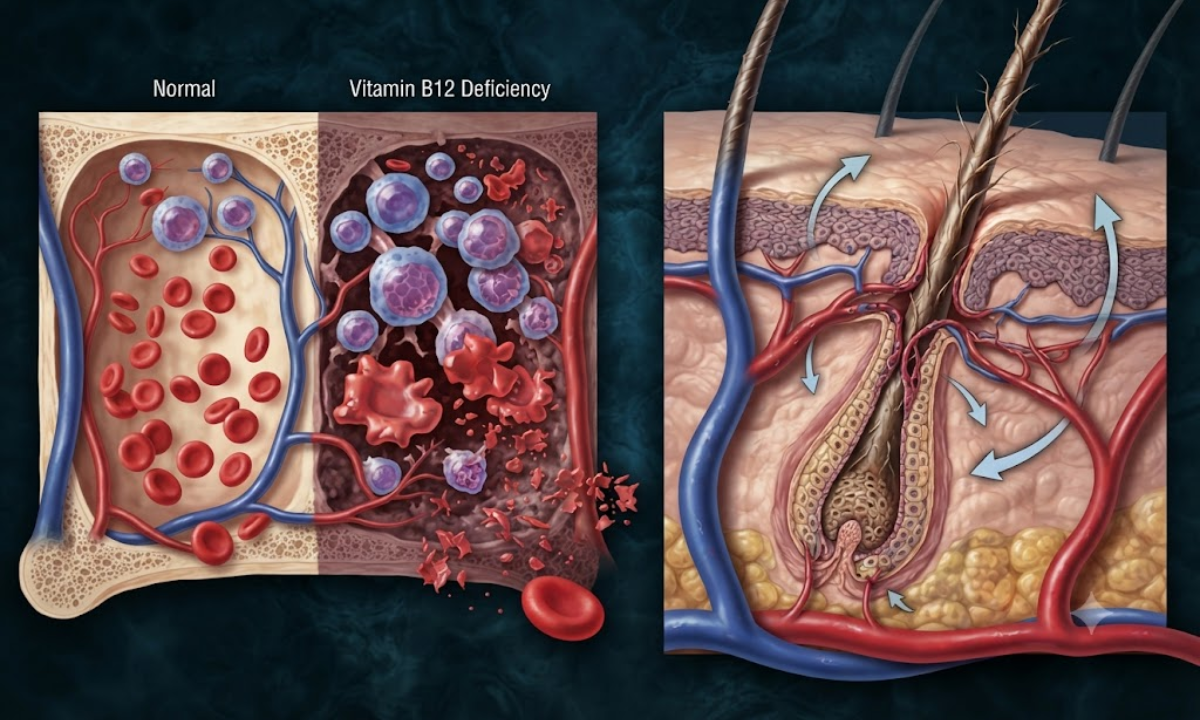
Vitamin B12 is absolutely mandatory for the normal development and maturation of red blood cells inside your bone marrow.
Without adequate cobalamin, your body cannot produce healthy, round, flexible red blood cells. Instead, it begins producing oversized, fragile, and malformed cells that cannot leave the bone marrow efficiently, a condition known as megaloblastic anemia.
As your body has fewer functional vehicles to transport oxygen through the bloodstream, it enters a strict biological triage mode. In this state of survival, your system selectively routes its remaining oxygen supplies to vital organs like your heart, brain, and liver, while cutting off blood flow to non-essential peripheral structures like your hair follicles.
Deprived of oxygen and nutrient-rich blood, the hair roots begin to starve and lose their structural integrity.
2. The Slowdown of DNA Replication
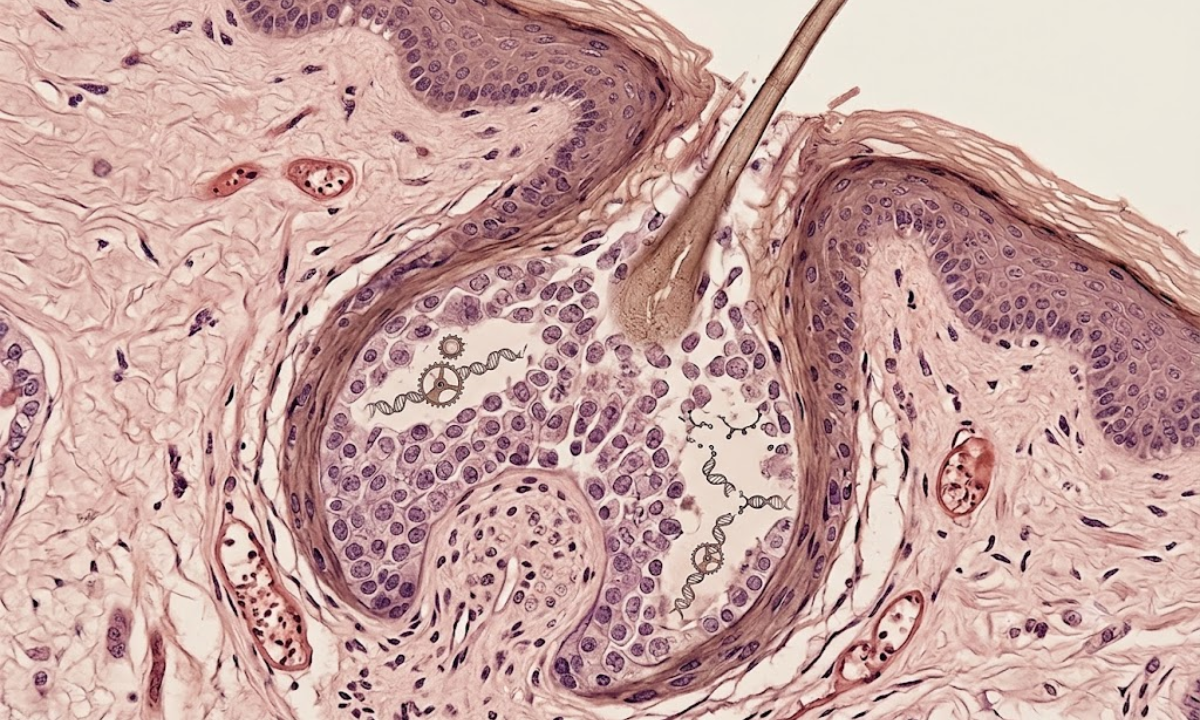
Before any cell can divide and create a new cell, it must first make an exact copy of its DNA. Vitamin B12 plays a direct role in the synthesis of nucleic acids, the core components of our genetic code. When B12 is scarce, the rapid cell division inside the hair bulb grinds to a sudden halt.
The follicle can no longer produce the necessary keratinocytes (the cells that form the actual hair shaft).
Shifting the Follicular Phases
By disrupting both oxygen delivery and DNA replication, a lack of B12 alters the natural life cycle of your hair. Every hair strand on your head goes through three distinct phases:
- The Anagen Phase (The Growing Stage): Under normal conditions, about 85% to 90% of your hair is actively growing in this phase, which typically lasts anywhere from two to six years.
- The Catagen Phase (The Transition Stage): A brief, two-week window where the hair follicle shrinks and detaches from its blood supply.
- The Telogen Phase (The Resting Stage): A three-month resting period where the hair sits loosely in the socket before naturally shedding to make room for a new strand.
When your system is starved of Vitamin B12, the hair follicles are prematurely shocked out of the active growing phase and forced directly into the resting and shedding phases. This widespread biological shutdown triggers a form of rapid, diffuse hair fall known as telogen effluvium.
Understanding this deep cellular connection shows that hair health isn’t about applying topical treatments to the scalp; it’s about fixing the internal metabolic environment that feeds your hair from within.
Identifying the Pattern: Is Your Hair Shedding a Nutritional Warning?
Not all hair thinning looks or acts the same. To effectively address hair loss, you must be able to distinguish between genetic traits, environmental damage, and structural shedding caused by an internal nutritional gap. When you experience widespread hair loss due to vitamin deficiency, your scalp behaves in a highly specific manner that differs entirely from classic male or female pattern baldness (androgenic alopecia).
Genetic hair loss is driven by cellular sensitivity to specific hormones, which causes hair follicles to slowly shrink or “miniaturize” over several years, usually along the hairline or the crown of the head. In contrast, nutritional shedding happens rapidly and uniformly across your entire head.
To help you decode what your hair is trying to tell you, look at how different types of hair loss present themselves:
Hair Loss Presentation Matrix
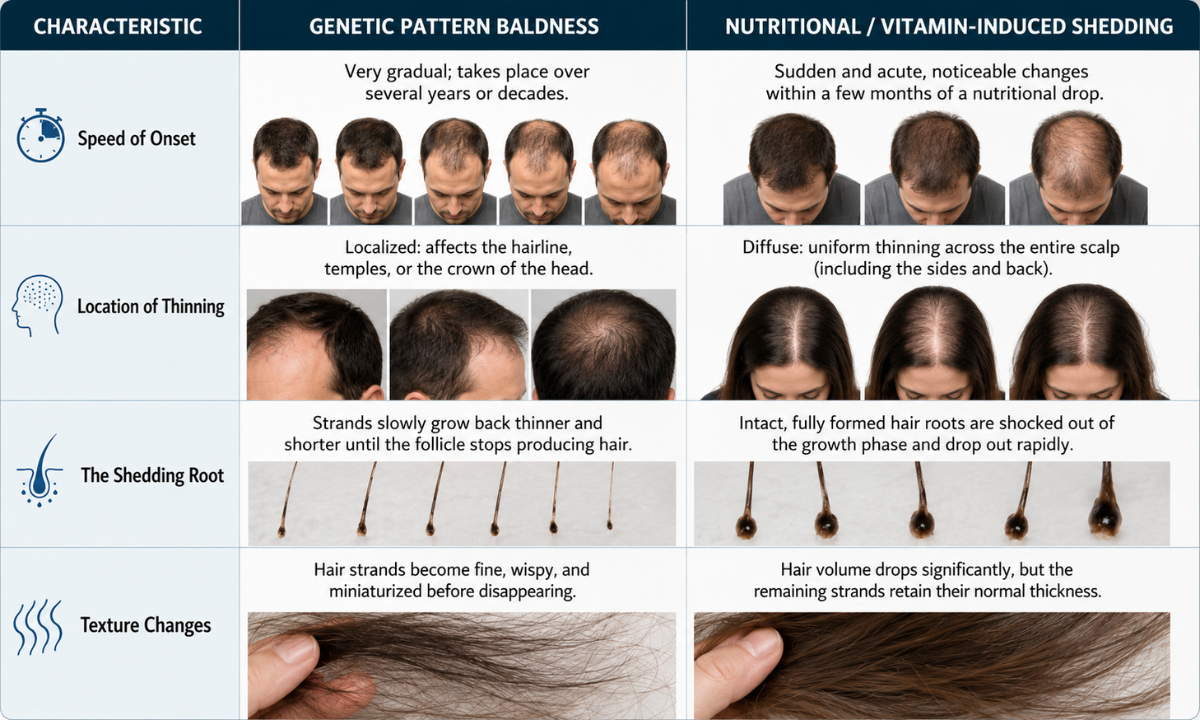
| Characteristic | Genetic Pattern Baldness | Nutritional / Vitamin-Induced Shedding |
|---|---|---|
| Speed of Onset | Very gradual; takes place over several years or decades. | Sudden and acute, noticeable changes within a few months of a nutritional drop. |
| Location of Thinning | Localized: affects the hairline, temples, or the crown of the head. | Diffuse: uniform thinning across the entire scalp (including the sides and back). |
| The Shedding Root | Strands slowly grow back thinner and shorter until the follicle stops producing hair. | Intact, fully formed hair roots are shocked out of the growth phase and drop out rapidly. |
| Texture Changes | Hair strands become fine, wispy, and miniaturized before disappearing. | Hair volume drops significantly, but the remaining strands retain their normal thickness. |
Key Indicators of Nutritional Hair Shedding
- The Multi-Location Increase: You begin finding high volumes of hair strands clumped in multiple daily environments, not just in your hairbrush, but covering your shower drain, scattered across your pillowcase, and pulling away effortlessly when you run your fingers through your hair.
- The Sudden Loss of Tail Volume: For individuals with longer hair, one of the most reliable indicators is a rapid reduction in the physical thickness of a ponytail. You might notice you suddenly need to wrap a hair tie around your hair three or four times instead of two.
- A Tender or Sensitive Scalp: Many individuals experiencing nutritional telogen effluvium report a distinct, low-grade physical sensation of tenderness, burning, or tingling across the scalp (a condition known as trichodynia) right before a major shedding cycle begins.
Recognizing these specific physical markers shifts your approach from frustration to targeted action. When your hair sheds uniformly and suddenly, it is a clear biological signal that your internal cellular assembly line is missing a core resource, highlighting the need to look past the surface of your scalp and audit your internal chemistry.
Looking Beyond the Scalp: Systemic Signs You Shouldn’t Ignore
Hair shedding caused by a nutritional gap is rarely an isolated event. Because your hair follicles are constantly competing for oxygen and energy, they are often the first to experience “budget cuts” when your body is running low on essential building blocks.
However, when your cobalamin levels reach a critical threshold, the symptoms of vitamin B12 deficiency will typically manifest in several other physiological systems simultaneously.
If you are experiencing unexplained hair thinning, pause to evaluate your body for these broader systemic red flags. Ignoring these signals can lead to unnecessary fatigue or, in extreme cases, neurological complications.
1. The Hematological & Energetic Profile
Because B12 is the master regulator of red blood cell production, its absence almost always manifests as an energy crisis.
- Unexplained Exhaustion: Even after a full night’s sleep, you may feel profoundly drained or lethargic during the day. This isn’t just “tiredness”; it is the physical reality of your cells struggling to receive enough oxygen to perform even basic daily tasks.
- Pale or Sallow Skin: A lack of healthy red blood cells can often cause your skin tone to appear paler than usual, sometimes with a faint yellowish, jaundiced tint, reflecting the breakdown of fragile, malformed blood cells.
2. The Neurological Warning System
Vitamin B12 is vital for maintaining the myelin sheath, the protective, fatty coating that insulates your nerve fibers and allows for rapid electrical communication between your brain and your body. When B12 levels are chronically low, this insulation begins to degrade.
- Peripheral Neuropathy: You might experience unusual sensations like “pins and needles” (paresthesia), numbness, or burning feelings in your hands, feet, or lower legs.
- Balance and Coordination: In more advanced stages, you may notice subtle changes in your gait, feel slightly unsteady on your feet, or experience uncharacteristic clumsiness.
3. The Cognitive & Mood Fluctuations
Your brain is one of the most metabolically demanding organs in your body, and it relies heavily on B12 for the synthesis of neurotransmitters that regulate your mood and mental clarity.
- “Brain Fog”: You may find it harder to concentrate, feel like your thoughts are moving through molasses, or struggle with memory retrieval during everyday conversations.
- Mood Instability: Many individuals report a persistent sense of irritability, heightened anxiety, or a dip in their emotional baseline that feels different from their normal personality.
Why You Shouldn’t “Wait and See”
It is incredibly common to dismiss these symptoms as the unavoidable result of a high-stress lifestyle, lack of sleep, or getting older. However, grouping these signs, thinning hair, persistent fatigue, and subtle neurological glitches creates a clear clinical pattern.
If you notice your hair thinning alongside even one of these other systemic shifts, it is your body providing a multi-layered diagnostic warning.
Recognizing these symptoms early allows you to seek a targeted nutritional audit, allowing you to restore your cellular health and halt the hair shedding cycle before it progresses further. Understanding these patterns turns your body’s subtle complaints into a valuable, actionable data set that guides you toward the exact supplementation or dietary strategy you need.
Why Do Vitamin B12 Levels Drop?
To solve nutritional hair shedding for good, it isn’t enough to simply know you are low in Vitamin B12; you must discover exactly why your levels dropped in the first place. Vitamin B12 absorption is one of the most complex, multi-step digestive processes in human physiology. Because of this complexity, a deficiency can occur even if you believe you are eating a balanced diet.
Unlike water-soluble vitamins that enter the bloodstream easily, B12 relies on a highly coordinated sequence of chemical events in your stomach and intestines. When any single step in this digestive chain is disrupted, your body’s ability to absorb this vital nutrient can plummet, eventually cutting off the supply to your hair follicles.
The primary reasons behind a sudden or chronic decline in Vitamin B12 include:
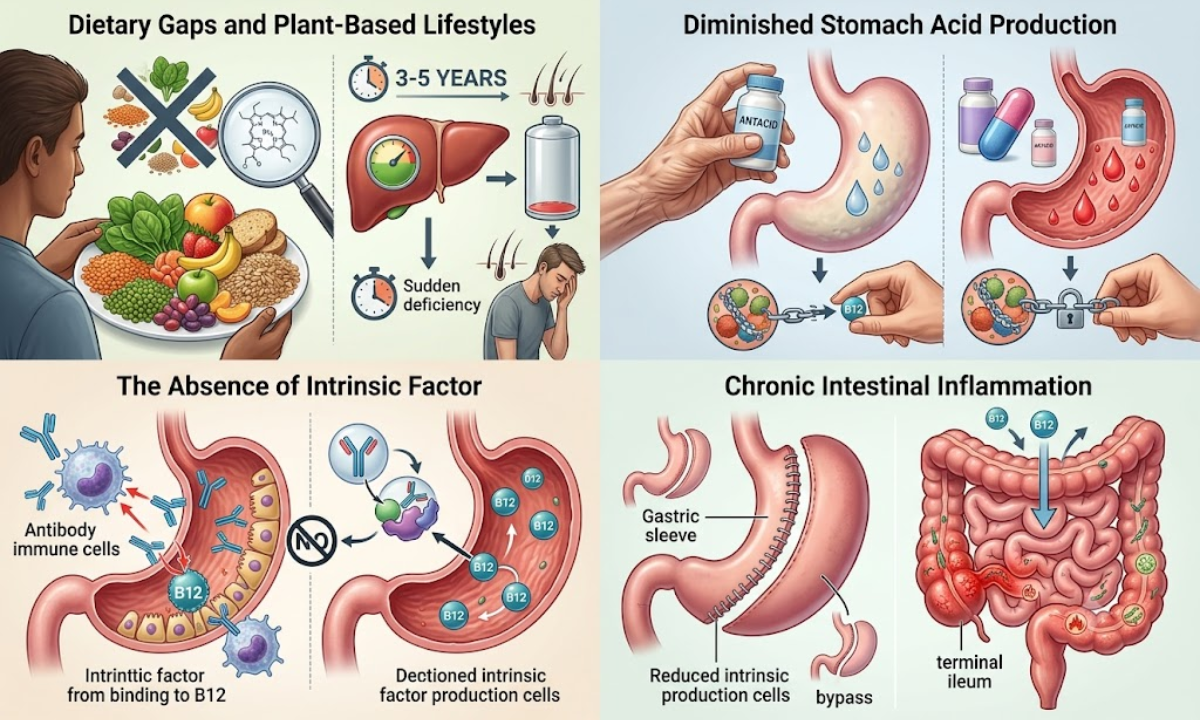
1. Dietary Gaps and Plant-Based Lifestyles
- The Vegetarian and Vegan Challenge: Individuals who follow a strict vegetarian, vegan, or plant-based lifestyle are at a significantly higher risk of developing a deficiency over time. Since plants do not require or produce B12, standard whole foods like fruits, vegetables, grains, and legumes contain zero natural cobalamin.
- The Hidden Timeline: Your liver stores a substantial reserve of Vitamin B12 that can last anywhere from three to five years. Because of this massive buffer, someone shifting to a plant-based diet might feel entirely healthy for the first few years, only to experience sudden, unexplained hair shedding and profound fatigue once their internal storage tanks finally run dry.
2. Diminished Stomach Acid Production
- The Impact of Aging: As we age, the cells lining the stomach naturally produce less hydrochloric acid, a condition known as hypochlorhydria. This makes it incredibly difficult for the body to break down food proteins and unlock the bound B12.
- Acid-Suppressing Medications: Millions of individuals routinely take over-the-counter or prescribed antacids, proton pump inhibitors (PPIs), or H2 blockers to manage acid reflux or heartburn. By chronically suppressing your stomach acid to find relief from reflux, these medications inadvertently lock away the B12 in your food, preventing it from ever being absorbed.
3. The Absence of Intrinsic Factor
- Autoimmune Interference: In certain individuals, the immune system mistakenly attacks these parietal cells or the intrinsic factor protein itself. This condition, known as Pernicious Anemia, completely halts B12 absorption in the small intestine, leading to severe systemic deficiencies regardless of oral intake.
- Gastrointestinal Alterations: Anyone who has undergone bariatric weight-loss surgery, gastric sleeve procedures, or partial stomach removals has a physically altered digestive architecture with significantly fewer cells available to produce intrinsic factor, making lifelong supplementation necessary.
4. Chronic Intestinal Inflammation
The final destination for Vitamin B12 absorption is the very end of your small intestine, a region called the terminal ileum. If this specific neighborhood of your gut is irritated, inflamed, or structurally compromised, the final absorption step fails.
Long-term inflammatory conditions like Crohn’s disease, untreated Celiac disease, Small Intestinal Bacterial Overgrowth (SIBO), or chronic gut dysbiosis can create a physical barrier along the intestinal wall, causing the vital nutrients to pass straight through your system unutilized.
Identifying which of these absorption barriers is active allows you to move past temporary fixes and design a precise, lasting solution for your cellular health.
The Path to Recovery: Restoring Your Cellular Canopy
The permanent resolution of hair shedding is completely dependent on systematic internal nourishment. Because nutritional hair shedding (telogen effluvium) is completely reversible, your hair follicles are not dead; they are simply resting in an extended state of metabolic hibernation.
By strategically flooding your system with targeted vitamins for hair loss and correcting the underlying absorption barriers, you can wake these dormant follicles up, prompting them to re-enter the active growth phase and rebuild your hair’s density from the inside out.
An effective, evidence-based strategy to restore your nutrient levels and revitalize your scalp requires a multi-layered approach:
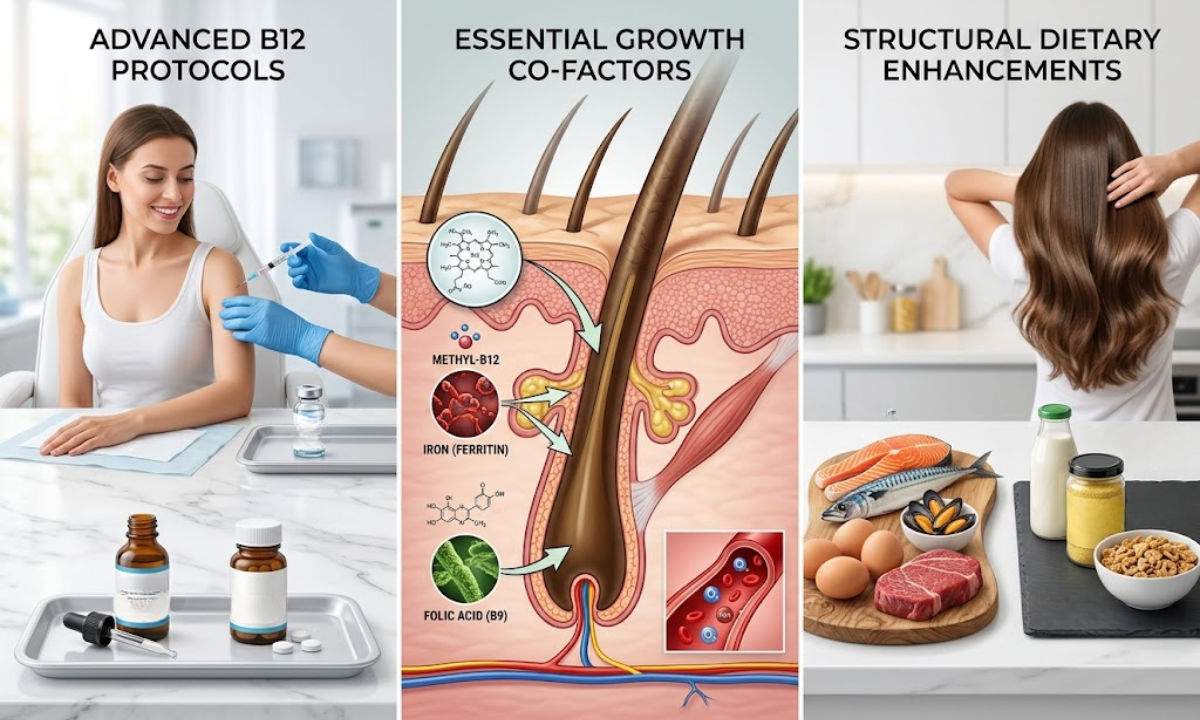
1. Advanced Supplementation Protocols
- Sublingual Therapy: Choosing sublingual (under-the-tongue) tablets or liquid drops allows Vitamin B12 to bypass the complex digestive tract entirely. The nutrient dissolves and is absorbed directly through the mucous membranes under your tongue, entering your bloodstream immediately. Look for the methylcobalamin form, which is the naturally active, highly bioavailable version that your body can use instantly without conversion.
- Therapeutic Injections: If your blood markers reveal a profound deficiency or an autoimmune condition like pernicious anemia, your physician may recommend a brief course of intramuscular B12 injections (typically hydroxycobalamin). These high-dose shots bypass the gut entirely, rapidly saturating your tissues and giving your hair roots an immediate wave of cellular energy.
2. Balancing Essential Growth Co-Factors
Your hair follicles require a symphony of nutrients to build strong, resilient keratin shafts. Replenishing B12 in isolation while ignoring other critical partners can limit your overall recovery:
- Vitamin B12: Drives cellular energy and DNA duplication.
- Ferritin/Iron: Builds oxygen-carrying storage tanks.
- Folic Acid/B9: Works directly alongside B12 to drive nucleic acid synthesis and spark growth.
Ensuring your ferritin (iron stores) and folic acid levels are robust alongside your B12 gives your rapidly dividing hair cells the complete blueprint and fuel supply they need to build thick, strong strands.
3. Structural Dietary Enhancements
If your digestive tract is fully capable of absorbing nutrients from food, optimizing your daily nutrition provides a sustainable, long-term foundation for your hair canopy. For individuals who eat animal products, incorporating high-yield sources like wild-caught fish, eggs, and lean meats provides a natural, direct supply of cobalamin.
For strict vegetarians or vegans, incorporating high-quality B12-fortified plant milks, nutritional yeast, and breakfast cereals is essential, alongside a structured, daily maintenance supplement to ensure your internal storage tanks never run empty again.
As your internal chemistry balances out, the excessive daily shedding will steadily slow down over a period of weeks, clearing the path for an elegant wave of fresh, healthy new growth across your entire scalp.
Why Choose Koshikaa for Your Advanced Nutritional Auditing?
When addressing nutritional hair shedding, pinpointing the exact cellular trigger requires extreme diagnostic accuracy rather than superficial guesswork. At Koshikaa, we move past generic wellness trends to provide an empathetic, scientific environment focused entirely on cellular longevity and root-cause resolution.
Choosing the Best health screening centre in Bangalore equips you with a precise, patient-first diagnostic experience:
- High-Fidelity Biomarker Tracking: We analyze active B12 (holotranscobalamin) along with metabolic markers like methylmalonic acid (MMA) and homocysteine to detect hidden cellular deficiencies long before they reflect on standard blood tests.
- Comprehensive Hair-Loss Panels: Our targeted audits seamlessly cross-reference cobalamin levels with ferritin, thyroid profiles, vitamin D, and complete hormonal metrics to identify the exact overlapping triggers behind your hair thinning.
- Deep Biological Mapping: Every screening integrates your unique digestive health history, prescription drug use, and lifestyle habits into your final report, giving your doctor a complete, multi-dimensional view of your nutrient absorption.
From our comfortable, modern lounge spaces and zero-wait-time testing appointments to clear, transparent pricing, we transform routine medical checkups into an empowering, stress-free wellness milestone.
Conclusion
Experiencing sudden, diffuse hair shedding is not an avoidable cosmetic decline; it is a clear, instructional communication from your body’s internal systems. Because your hair follicles depend heavily on a steady supply of oxygen and DNA building blocks, a drop in Vitamin B12 effectively forces your scalp’s growth cycle into temporary hibernation.
Prioritizing definitive diagnostic metrics over expensive surface-level remedies, you take back the reins of your health narrative. Correcting internal absorption barriers, optimizing your daily nutrition, and conducting regular checks on your essential biomarkers are the ultimate steps toward a vibrant, full canopy of hair.
Partner with Koshikaa today, map your baseline data, and secure the robust structural foundation your body needs to thrive from the inside out.