
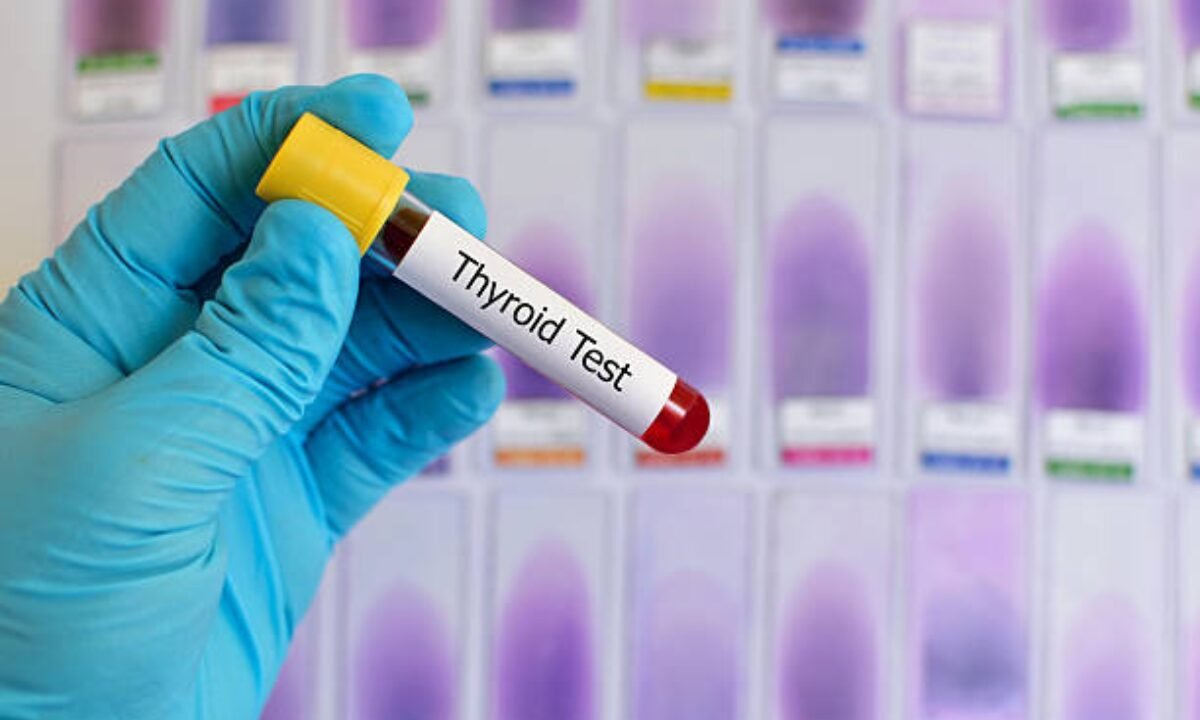
At Koshikaa, Thyroid Function Test (TFT) is included in our Standard Health Check-up at ₹1,599 — available with same-day appointments at Banashankari, Bangalore.
A butterfly-shaped thyroid gland exists at the base of the neck. The tiny gland carries out critical tasks which include metabolism adjustment and energy metabolism while maintaining hormone equilibrium. People often rely on the thyroid function test (TFT) for thyroid function assessment. Medical practitioners rely on this straightforward test as their main approach for understanding thyroid gland functionality to both diagnose and treat thyroid disorders.
The article will give you information about thyroid function tests and their critical value including assessment details and long-term health protection features.
What is the Thyroid Function Test?
Thyroid function tests exist as blood examinations that measure vital thyroid hormones throughout the bloodstream. Tests during this measurement involve assessments of T3 (triiodothyronine) and T4 (thyroxine) quantities as well as TSH (thyroid-stimulating hormone) level evaluations. Each hormone has a unique role in the preservation of bodily health.
This test helps determine whether someone has a hypothyroid condition (underactive thyroid) or hyperthyroidism (overactive thyroid) together with detecting proper thyroid gland functionality.
What makes thyroid health an essential priority?

The thyroid gland spreads its influence throughout all major organ systems operating in the human body. The gland controls bodily metabolism together with energy production while managing protein synthesis. The symptoms of thyroid hormone imbalance include unexplained weight changes together with fatigue depression and rapid heart rate as well as hair thinning.
Thyroid function testing identifies thyroid problems at early stages therefore individuals receive treatment without symptom progression. The moment patients receive an early hypothyroidism or hyperthyroidism diagnosis their treatment outcomes substantially improve.
The Benefits of a Thyroid Function Test
Thyroid function test which occurs regularly enables many advantageous outcomes for patients. Here are some key benefits:
1. Early Diagnosis of Thyroid Disorders
An individual’s main reason for getting a thyroid function test is to identify thyroid disorders at an early stage when treatment proves more effective. The absence of distinct symptoms from thyroid disorders leads to their misdiagnosis unless medical tests are performed. Early treatment becomes possible when health professionals measure T3, T4, and TSH concentrations in blood tests.
A person with elevated TSH levels would generally need to be tested for hypothyroidism. A very low measurement of TSH signals the presence of hyperthyroidism. An early diagnosis through thyroid function testing helps stop damage to the heart system along with energy levels and other body functions.
2. Assists in Monitoring Treatment
Someone receiving thyroid condition treatment must get regular thyroid function tests to evaluate their treatment advancement. Medical professionals must base dosage alterations of hypothyroidism hormone therapy and hyperthyroidism medicines on thyroid blood test outcomes. Doctors can verify treatment effectiveness through checks of T3, T4, and TSH levels to decide appropriate treatment modifications when necessary.
3. Aids in Managing Related Health Problems
When thyroid dysfunction becomes present it has the potential to generate additional health problems that also include heart complications and infertility as well as mood disorders. Thyroid testing conducted regularly reveals advancing signs which indicates potential severe complications thus allowing healthcare providers to react before conditions deteriorate.
4. Relatively Simple and Non-Invasive Process
Treated through a thyroid function test which runs as a simple easy blood procedure. This basic blood examination requires a medical professional to take a tiny blood sample which lab personnel analyze through testing. Each hormone has a distinct role in maintaining the body’s health.
Doctors advise the thyroid function test to determine proper thyroid gland operations. Thyroid function tests reveal if thyroid activity falls within normal boundaries or shows either hypothyroidism signs from an underactive gland or signs of hyperthyroidism from an overactive gland.
5. Empowering People to Take Charge of Their Health
Real knowledge about thyroid health enables people to implement proactive actions that secure their future wellness. Medical advice combined with test outcomes enables you to make dietary and stress management decisions that promote your thyroid health.
What Does the Thyroid Function Test Measure?
The thyroid function test examines three essential hormonal levels which include TSH total T3 and total T4.
1. TSH (Thyroid-Stimulating Hormone)
The pituitary gland produces TSH to control thyroid gland operation. Testing this hormone allows healthcare providers to easily evaluate the condition of the thyroid gland. Hypothyroidism diagnosis normally arises when physicians detect elevated TSH levels within the blood whereas hyperthyroidism diagnosis usually occurs with low TSH readings.
2. T3 (Triiodothyronine)
Among the two main hormones the thyroid gland produces T3 stands as one of them. The thyroid gland controls both metabolic processes inside the body and provides energy to perform daily functions. The results of the T3 examination help medical professionals understand the condition of thyroid gland dysfunction.
3. T4 (Thyroxine)
The thyroid gland releases the essential hormone T4. The thyroid gland functions as an important storage system that supports T3 hormone release and plays a vital role in maintaining good physical condition and mental health. Serious health problems result from either high or low T4 measurements in the body.
Knowing the thyroid function test normal value enables you to comprehend the meaning of your test outcomes effectively. The normal ranges for T3 T4 TSH consist of:
- T3 between 4.3 to 8.0 pmol/L
- T4 between 12 to 22 pmol/L
- TSH between 0.4 to 5.0 mIU/L
The normal reference values show some variation depending on which laboratory performs the testing. The interpretation of blood test results depends on reference ranges received by doctors regardless of which city conducts the testing whether it be Bangalore or elsewhere.
How to Get Tested For Thyroid Function?
Getting evaluated for thyroid functions requires conducting a test during a simple visit to diagnostic facilities or medical centers. The blood collection process conducted by a health care provider leads to result availability within 24-48 hours.
The major cities of India which include Bangalore maintain sophisticated laboratories that perform accurate tests to determine thyroid function status. The city of Bangalore provides numerous affordable blood testing laboratories that deliver comfortable testing services to residents.
When Should You Get a Thyroid Function Test?
Medical professionals will order thyroid function tests under three different situations.
- You should look out for unexplained exhaustion as well as abnormalities in weight and changes in your hair during your health checkup.
- The health condition of both mother and baby during pregnancy becomes affected by thyroid disorders.
- For individuals with a family history of thyroid disorders.
- Patients must undergo tests to check the progress of current thyroid condition treatments.
You Should Monitor Your Thyroid Health Regularly
Many important body functions receive control from your thyroid gland. A thyroid function test stands as a basic yet important instrument that helps protect your entire body’s health. Early detection of thyroid problems, effective treatment monitoring, and health prevention strategies all stem from this essential test.
Knowledge about thyroid function test standard values needs to be combined with understanding the T3 T4 TSH normal range indicators. Routine testing alongside awareness about thyroid gland health will help you protect your gland as well as your entire body system.
Final Thoughts
The general condition of your thyroid remains out of sight yet directly affects your total well-being. Thyroid function testing regularly puts you in control of quick healthcare responses to possible issues that may arise. People located in Bangalore alongside all other regions should make thyroid health their priority today so they can achieve superior health in the future.
New patients should immediately ask their doctor about thyroid function tests while obtaining essential details for proper thyroid gland maintenance. Your health matters!
Koshikaa operates as a trusted healthcare institution that provides reliable blood tests in Bangalore including thyroid tests for accurate diagnostic services.