
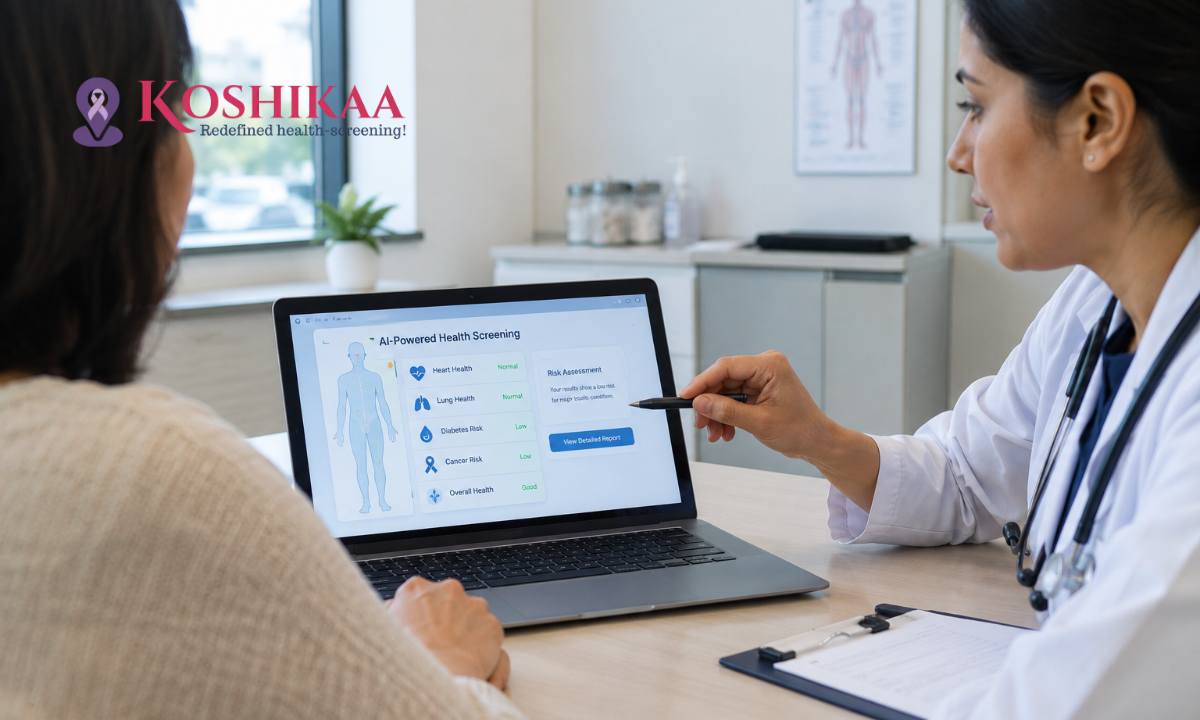
Artificial intelligence is no longer limited to smartphones and search engines. It is increasingly finding a place in hospitals, diagnostic centres and screening programmes around the world. AI-powered healthcare screening uses computer systems that learn from large amounts of medical data to help analyse images, recognise patterns and identify cases that may need a closer look.
For preventive healthcare, this is an exciting development. Screening aims to find certain diseases early, often before symptoms appear, and AI tools may help clinicians review results more consistently and prioritise people who need follow-up.
It is equally important to understand what AI cannot do. AI is a supporting technology, not a guarantee of early diagnosis or disease prevention. Its value depends on how well each tool has been tested, how it is used and whether qualified professionals interpret the results in context. This guide explains how AI is used in screening, where it shows promise, its limitations and what patients should ask.
What Is AI-Powered Healthcare Screening?
How Artificial Intelligence Works in Healthcare
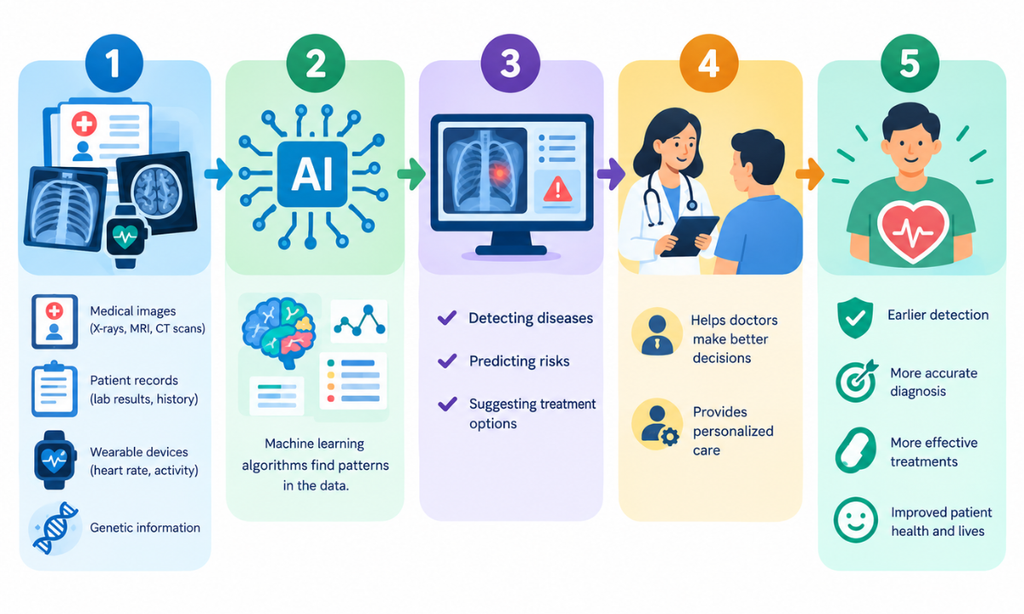
Most medical AI tools rely on machine learning, a type of AI that learns to recognise patterns from examples. A system designed to analyse chest X-rays, for instance, may be trained on thousands of images that have already been reviewed by specialists. Over time, it learns to recognise features associated with particular conditions.
Once trained and tested, the system can analyse new images or data and flag areas that may need further review, measure specific features or help organise clinical information for the care team. In many countries, AI tools intended for diagnosis or screening are regulated as medical devices, which means they must show evidence of safety and performance for a defined purpose before they can be used clinically.
AI Screening Versus Traditional Screening
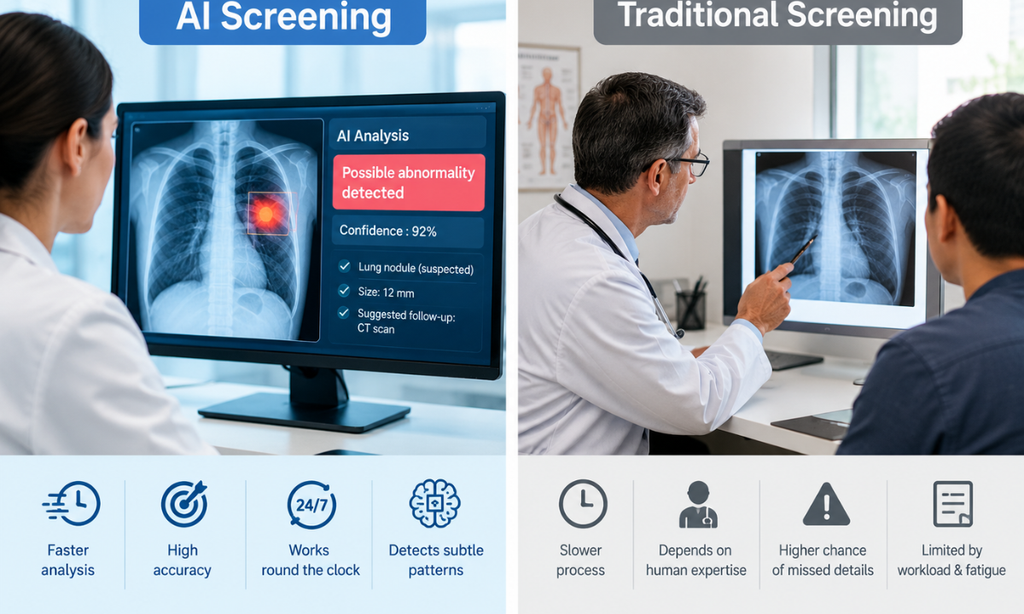
Traditional screening uses established tests, such as mammography, blood tests or stool tests, interpreted by trained professionals according to clinical guidelines. AI does not replace these tests. Instead, it can support selected steps within the process, such as reviewing images or estimating risk.
In other words, AI is not itself a screening test. It is a tool used within a specific clinical pathway. As the US Government Accountability Office has noted, AI tools must be properly validated in the populations and settings where they are used to perform reliably.
How AI Is Used in Preventive Healthcare Screening
AI-Assisted Medical Imaging
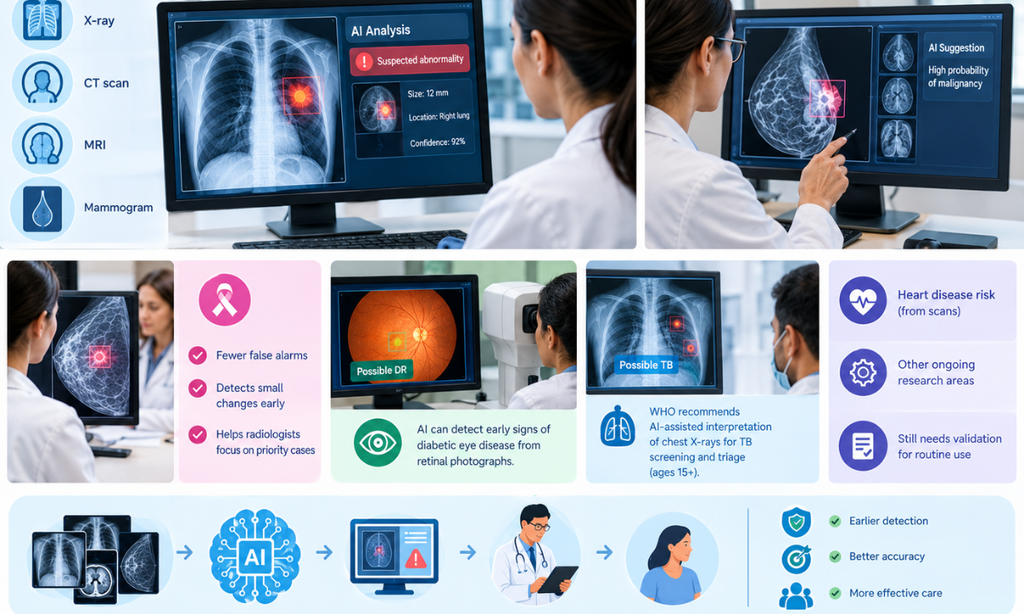
Medical imaging is one of the most active areas for healthcare AI. Software can help analyse X-rays, CT scans, MRI scans and mammograms by highlighting areas that may need attention, measuring structures or comparing images over time. A qualified clinician then reviews these findings and decides what they mean.
Not every imaging centre uses AI, and AI does not benefit every type of scan equally. Its usefulness depends on the specific task, the quality of the tool and how it fits into the clinical workflow.
AI-Supported Cancer Screening
Breast cancer screening is one of the most studied applications. Large studies in Europe have reported that AI-supported reading of screening mammograms can reduce radiologists’ workload while maintaining cancer detection rates. AI-supported mammography should still be used within established screening programmes and interpreted by qualified clinicians. AI is also being explored for lung imaging, including the assessment of lung nodules on CT scans.
However, screening recommendations still depend on the type of cancer, individual risk and validated clinical guidelines. AI can assist with image review and prioritisation, but it does not change who should be screened or which tests are appropriate. Learn more about cancer detection tests in Bangalore and how they are chosen.
Screening for Eye Disease, Tuberculosis and Other Conditions
AI has been authorised for specific tasks in some countries. In 2018, the US Food and Drug Administration authorised an AI system to detect signs of more-than-mild diabetic eye disease from retinal photographs. The World Health Organization recommends computer-aided detection software for interpreting chest X-rays in tuberculosis screening and triage for people aged 15 and over, in populations where TB screening is recommended. This is particularly relevant in India.
Many other applications, such as predicting heart disease risk from routine scans, are still being researched. Patients should distinguish established, authorised uses from experimental ones. A tool that performs well in a research study may still need further testing before it is ready for routine clinical use.
Key Benefits of AI-Powered Healthcare Screening
Faster Review and Better Workflow
In suitable settings, AI can help prioritise urgent cases and reduce repetitive review tasks. This allows specialists to spend more time on complex findings.
Support for Consistent Image Analysis
Human reviewers can be affected by fatigue and high workloads. AI tools can apply consistent analysis across images, highlighting patterns and measurements that support clinical interpretation.
Helping Identify People Who May Need Follow-Up
Validated risk tools may help identify people who would benefit from further assessment. A risk score is not a diagnosis, however, and it should always be interpreted alongside other clinical information.
Supporting Access to Healthcare
In areas with limited access to specialists, some AI tools may help extend screening support. This works only when there are clear pathways for follow-up, referral and treatment.
These benefits depend on the specific tool and setting. AI does not automatically mean faster reports, lower costs or more accurate results for every patient.
AI Screening vs Traditional Healthcare Screening
AI and traditional screening are not competitors. AI is most useful as part of a complete, well-designed clinical pathway.
| Area | Traditional Screening | AI-Supported Screening |
| Main role | Uses established tests and clinical assessment | Assists selected steps in the screening process |
| Image review | Clinician interprets the images | AI may flag or measure selected findings |
| Clinical decisions | Based on results, guidelines and professional judgement | AI output is considered alongside clinical evidence |
| Limitations | Tests can miss disease or produce findings that need follow-up | AI can also miss findings or generate false alarms |
Limitations and Risks of AI in Healthcare Screening
False-Positive and False-Negative Results
Like any test, AI can flag something that turns out not to be disease, or fail to identify a real abnormality. False positives can cause anxiety and unnecessary further tests, while false negatives can provide false reassurance.
Bias and Differences Between Patients
AI systems learn from the data they are trained on. If a tool has not been tested across different populations, age groups, scanning equipment or clinical settings, its performance may vary. A tool developed in one country may not perform the same way elsewhere.
Data Privacy and Responsible Use
Medical data are highly sensitive. Patients should understand how their information is stored, used and protected. The World Health Organization’s guidance on AI for health highlights privacy, transparency and accountability as core principles. In India, the Digital Personal Data Protection Act, 2023 also sets out how personal data, including health information, should be collected and handled. Do not hesitate to ask a provider how your data will be used.
Why Medical Professionals Remain Important
Clinical history, examination, appropriate testing and professional interpretation remain essential. Most AI tools are designed to support healthcare professionals, although the exact workflow depends on how each specific system has been validated and authorised.
Who Can Benefit from AI-Assisted Screening?
Whether AI-assisted screening is relevant depends on the specific screening programme and the technology available. It may support people who qualify for recommended cancer screening, people with particular risk factors and patients whose doctors recommend further evaluation.
AI should never be a reason to order unnecessary scans or tests. The right tests depend on your age, sex, family history and personal risk, so discuss these with a qualified healthcare professional. Bring details of any previous test results and your family’s medical history to your appointment, as this helps the doctor recommend the most useful checks. If you have symptoms, you may need diagnostic evaluation rather than routine screening. Our guide to early cancer detection and preventive health screening explains the difference in more detail.
How to Choose a Healthcare Screening Centre
Questions to Ask Before Choosing a Screening Provider
Whether or not AI is involved, these questions will help you choose a provider with confidence:
• Which screening tests are appropriate for my age and health risks?
• Is AI actually used for the test I am considering?
• If so, has the technology been validated for that specific purpose?
• Who reviews the findings and explains the results to me?
• What happens if the test identifies a possible abnormality?
• Are additional tests or follow-up consultations available when needed?
A good screening centre will explain clearly which tests suit you and why. You can explore Koshikaa’s health screening packages and discuss your needs with our team.
The Future of AI-Powered Preventive Healthcare
Research is exploring how AI might combine medical images, health records and risk factors to support more personalised screening and more efficient referral pathways. Some tools may eventually help identify people at higher risk earlier, so screening can be better targeted. AI may also help connect screening results more quickly with the right specialist, reducing delays between an abnormal finding and the next step in care.
Wider adoption, however, depends on strong clinical evidence, safety, data protection and proven real-world effectiveness. Much of this work is still emerging and is not yet routine care for every patient.
Frequently Asked Questions About AI-Powered Healthcare Screening
What is AI-powered healthcare screening?
It is the use of artificial intelligence to support selected screening tasks, such as analysing medical images, measuring findings or estimating risk. AI works within an established screening process rather than replacing the test itself.
Can AI detect cancer early?
Certain validated AI tools can support specific cancer-screening tasks, such as reviewing mammograms. However, AI cannot detect every cancer and does not guarantee early diagnosis.
Is AI screening more accurate than traditional screening?
Not universally. Performance depends on the condition, the test, the software and the clinical setting. In some tasks AI performs well alongside clinicians, while in others it is still being evaluated.
Does AI replace doctors in healthcare screening?
In most applications, no. AI tools usually support healthcare professionals, who interpret findings in the context of each patient’s history and other test results.
Should I choose an AI-powered full-body health checkup?
A full-body imaging scan is not automatically the right choice for someone without symptoms, as the US Food and Drug Administration explains. Lab-based preventive checks may be appropriate for some people, but tests should be chosen based on medical need and established evidence, not because a provider advertises AI.
Conclusion
AI-powered healthcare screening is a promising support tool for selected tasks, from reviewing mammograms to analysing chest X-rays and retinal images. Its value depends on careful validation, responsible use and expert interpretation. The most effective screening still begins with choosing evidence-based tests that suit your individual risk.
To understand which preventive health checks are right for you, speak to the team at Koshikaa in Banashankari on +91 7996666106.
• WHO: Ethics and Governance of Artificial Intelligence for Health