
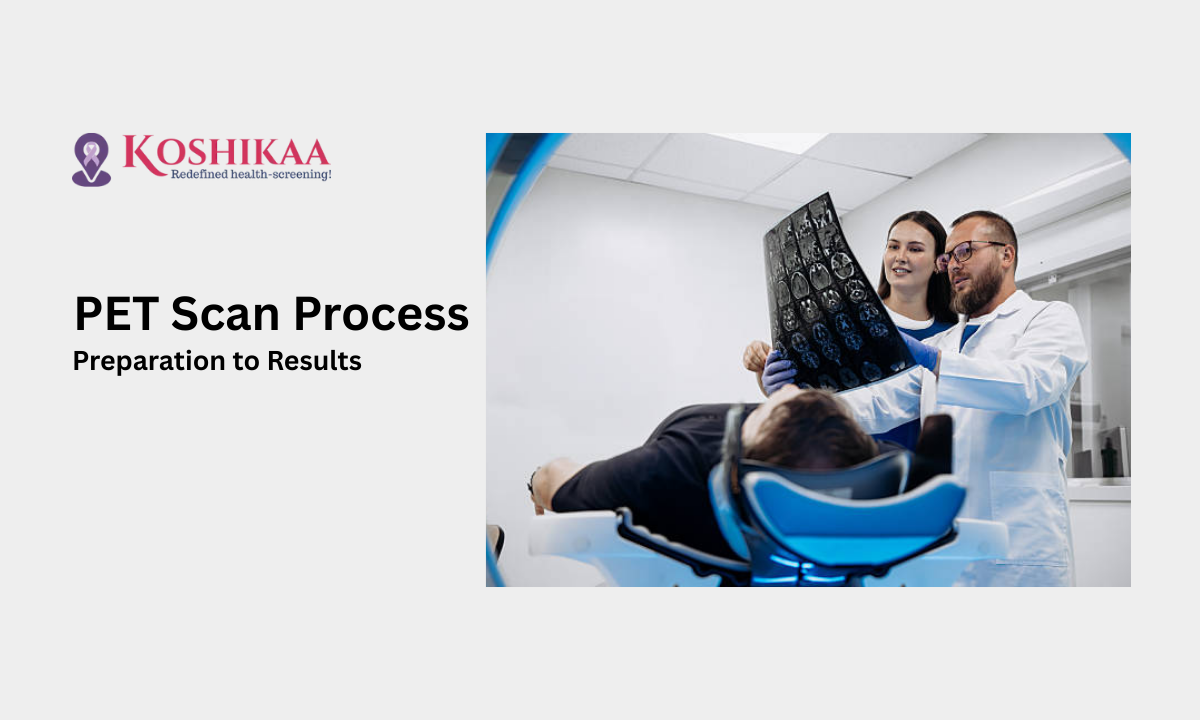
As a doctor at Koshikaa, I often meet patients who feel anxious before undergoing advanced imaging tests. One such test is the PET scan process, which, although highly informative, is frequently misunderstood.
This blog is written to guide you clearly and calmly through every stage, from preparation to results, so you know exactly what to expect, especially if you are planning a PET scan in Bangalore at a trusted diagnostic facility.
Introduction to the PET Scan Process
The PET scan process (Positron Emission Tomography) is a sophisticated imaging technique that helps doctors look at how organs and tissues are functioning, not just how they look. Unlike CT or MRI scans, a PET scan highlights metabolic activity in the body, which makes it extremely valuable for detecting cancer, heart conditions, and neurological disorders at an early stage.
Patients visiting a health screening centre in Bangalore often come with concerns about safety, preparation, and results. Let me reassure you, when done correctly, a PET scan is safe, minimally invasive, and incredibly informative.
PET Scan Working Principle Explained Simply
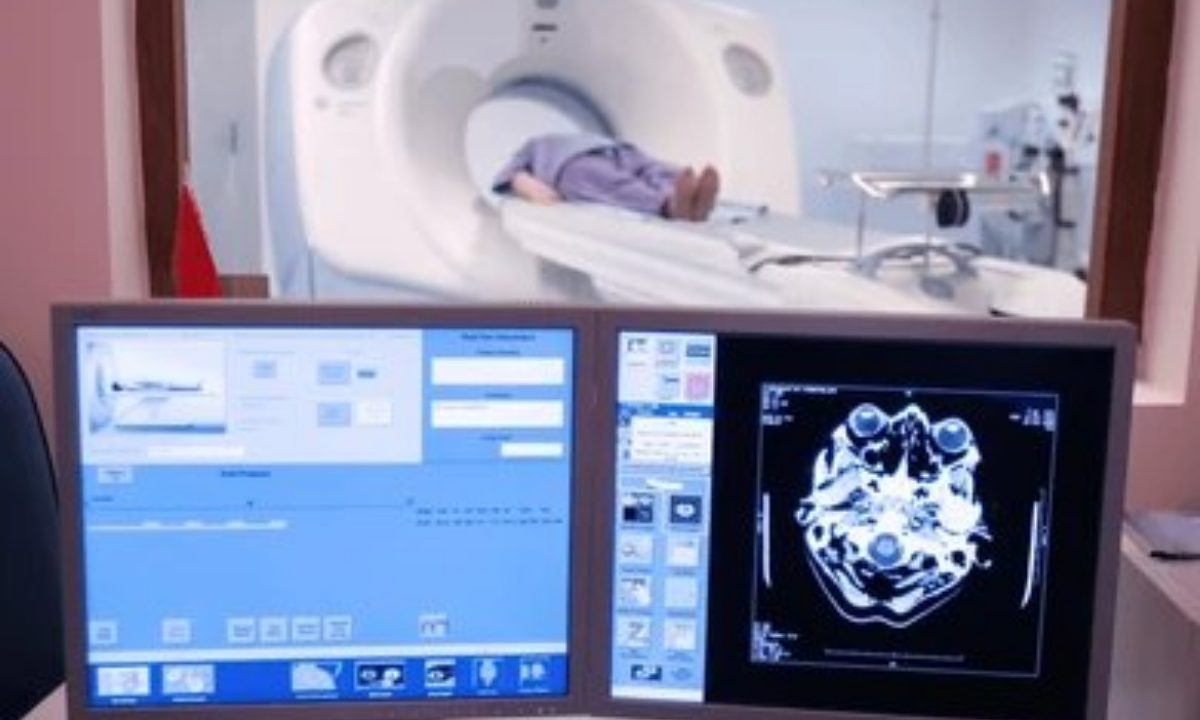
To understand the PET scan working principle, imagine taking a picture of how active your cells are. During the scan, a small amount of radioactive tracer (commonly FDG, a glucose-based substance) is injected into your bloodstream. Active cells, such as cancer cells or inflamed tissues, use more glucose and absorb more tracer.
The PET scanner detects this activity and converts it into detailed images. These images help doctors identify abnormal metabolic patterns long before structural changes appear.
PET Scan Before Procedure: How to Prepare
Proper preparation plays a vital role in obtaining accurate results. The PET scan before procedure guidelines are usually as follows:
- Fasting for 6 hours before the scan (water is allowed)
- Avoid sugary foods and strenuous exercise 24 hours prior
- Inform your doctor about diabetes, pregnancy, or medications
- Wear comfortable clothing without metal parts
At Koshikaa, we ensure that every patient receives personalized instructions, especially those undergoing a PET scan in Bangalore for complex conditions such as cancer or cardiac evaluations.
Step-by-Step PET Scan Test Procedure
The PET scan test procedure is straightforward and patient-friendly:
- Tracer Injection – A small injection is given intravenously.
- Resting Phase – You’ll rest quietly for 45–60 minutes while the tracer circulates.
- Scanning – You lie on a table that moves through the scanner.
- Completion – The scan itself takes about 20–30 minutes.
Throughout the procedure, our medical team closely monitors your comfort and safety.
PET Scan Procedure Duration: How Long Does It Take?
One of the most common questions I hear is about the PET scan procedure duration. While the scanning time is short, the entire appointment typically lasts 2–3 hours, including preparation and resting time.
Patients often appreciate knowing this in advance so they can plan their day without stress.
PET Scan Procedure for Cancer Diagnosis
The PET scan procedure for cancer evaluation is one of the most powerful uses of this technology. It helps in:
- Detecting cancer early
- Determining the stage of cancer
- Monitoring response to chemotherapy or radiation
- Checking for recurrence
Because cancer cells are metabolically active, PET scans can identify even small or hidden tumors, making them invaluable in oncology care.
PET Scan Heart Procedure: Assessing Cardiac Health
The PET scan heart procedure is commonly used to evaluate blood flow to the heart muscle. It helps doctors determine:
- Areas of reduced blood supply
- Viability of heart tissue after a heart attack
- Effectiveness of previous treatments
This scan is especially useful when other cardiac tests give inconclusive results.
PET Scan Pre-Surgery: Why It Matters
A PET scan pre-surgery is often recommended to help surgeons plan treatment more precisely. By mapping active disease areas, surgeons can avoid unnecessary tissue removal and ensure complete treatment, particularly in cancer surgeries.
This step improves surgical outcomes and reduces the risk of recurrence.
What Happens After the Scan? Understanding Results
After the scan, a nuclear medicine specialist analyses the images. Results are usually available within 24–48 hours. At Koshikaa, we believe in clear communication—patients are guided through their reports so they understand what the findings mean and what the next steps are.
Final Thoughts
From my experience, the PET scan process is one of the most reliable tools in modern medicine. When performed at a reputable health screening centre in Bangalore, it offers clarity, confidence, and direction for both patients and doctors.
If you or your loved one is advised to undergo a PET scan in Bangalore, remember that preparation, understanding, and choosing the right centre make all the difference. At Koshikaa, our goal is not just diagnosis but reassurance, precision, and compassionate care.
FAQs
1. What is the process of a PET scan?
The process involves injecting a radioactive tracer, allowing it to circulate, and then scanning the body to detect metabolic activity in organs and tissues.
2. Will a PET scan show all cancers?
No. While PET scans detect many cancers, some slow-growing or very small tumors may not show up clearly.
3. How many hours is a PET scan?
The entire procedure usually takes 2–3 hours, though the actual scan lasts about 30 minutes.
4. Is a PET scan procedure painful?
The procedure is painless, except for a minor needle prick during tracer injection.